India’s Chip Ambition Accelerates, 200 Design Companies Emerge Under Semiconductor Mission 2.0
India Semiconductor Mission 2.0 has supported 200 chip design companies, trained 70,000 engineers and expanded global partnerships in manufacturing and packaging.

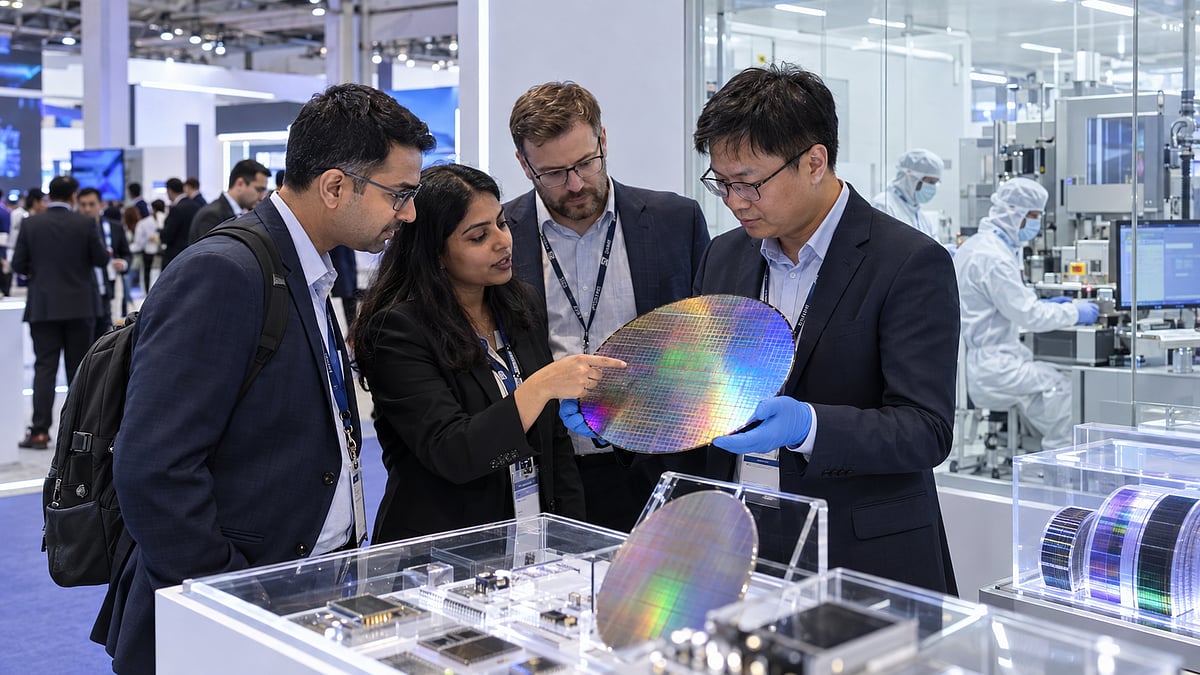
India’s Chip Ambition Accelerates |
New Delhi: India’s semiconductor ecosystem is expanding, with at least 200 chip design companies emerging under the India Semiconductor Mission 2.0, according to Electronics and Information Technology Minister Ashwini Vaishnaw.
The programme is expected to strengthen semiconductor intellectual property and reduce India’s dependence on imported chip technologies.
Startups Gain Advanced Design Tools
More than 105 semiconductor startups have received access to Electronic Design Automation tools. Of these, 20 startups have secured venture capital funding.
ALSO READ
India has trained around 70,000 chip design engineers over four years, moving closer to its target of creating a talent pool of 85,000 engineers.
Five Semiconductor Plants Begin Production
Vaishnaw said global competitiveness would depend on delivering high-quality products at competitive costs.
Five of the 12 semiconductor plants approved under India Semiconductor Mission 1.0 have started commercial production. The development signals progress from project approvals towards domestic manufacturing and commercial output.
The minister also highlighted India’s growing reputation as a trusted semiconductor partner and its record of protecting intellectual property.
Global Interest Rises At SEMICON India
SEMICON India 2026 attracted participation from major semiconductor economies and generated several business-to-business discussions.
Foreign Secretary Vikram Misri said resilient semiconductor supply chains require trusted international partnerships. He identified reliability, credibility, incentives and value creation as important pillars of cooperation.
India Deepens International Partnerships
The India–Singapore roundtable, attended by 142 participants, examined collaboration in manufacturing, advanced packaging and supply-chain management. India offered engineering skills and market scale, while Singapore brought established manufacturing expertise.
The India–Europe session drew 139 participants and focused on investment, equipment, materials, localisation, research, chip design, manufacturing and talent development.
The India–South Korea roundtable attracted 115 participants. Discussions covered manufacturing, technology, materials, packaging, investment and supply chains.
Officials said these engagements show rising global interest in India’s semiconductor industry and its ambition to combine domestic capabilities with international expertise.
RECENT STORIES
-
-
-
-
-