Indian Domestic Airlines To See 10-15 Per Cent Profit Decline This Fiscal Year Amid Higher Fuel And Lease Costs: CRISIL
CRISIL Ratings has projected a 10% to 15% decline in Indian domestic airlines' operating profits this fiscal, with earnings expected to fall to Rs 16,000-17,000 crore. Rising ATF prices, a weaker rupee and higher aircraft lease costs are increasing operational expenses. While airlines have introduced fuel surcharges, only part of the cost burden can be passed on to passengers.

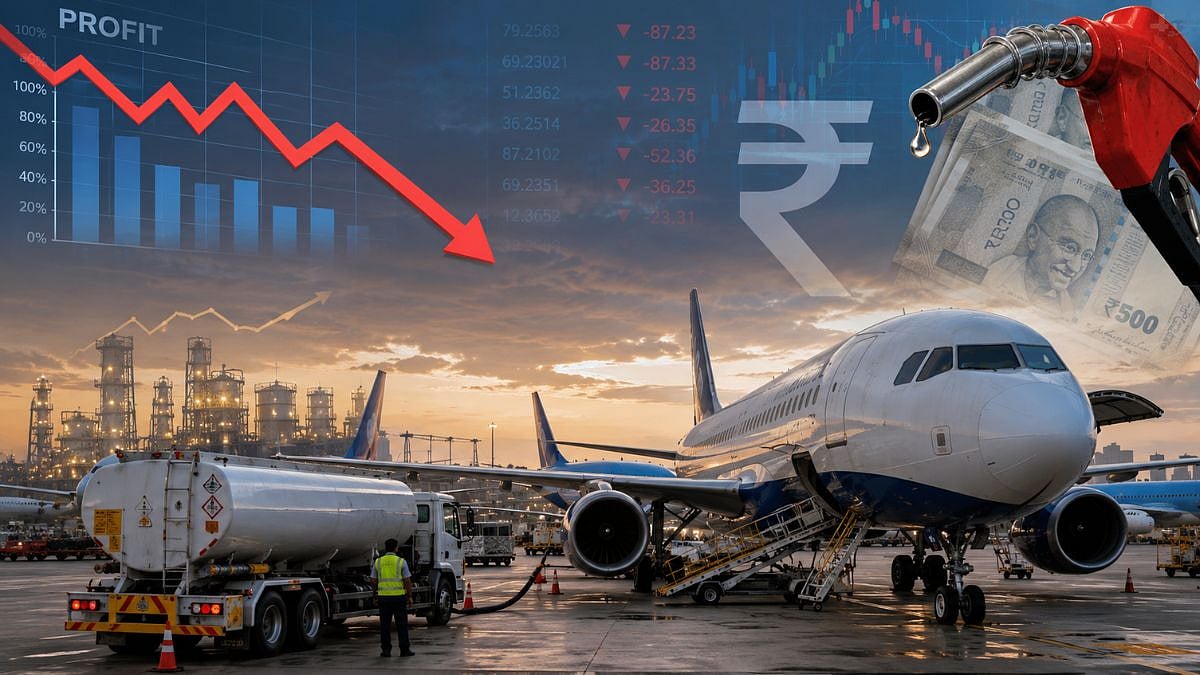
Rising fuel costs, lease expenses and currency pressures are expected to weigh on Indian airlines' profitability this fiscal year | AI Generated Representational Image
Mumbai, June 17: The aggregate operating profit of domestic airlines is projected to plummet by 10% to 15%, dropping to Rs 16,000-17,000 crore, down from approximately Rs 19,000 crore last fiscal, according to a detailed sector analysis released by CRISIL Ratings.
The projection is driven by rising jet fuel prices, a weakening rupee and soaring aircraft lease rentals, which are collectively straining airlines’ cash flows.
Indian airlines are facing an intense financial squeeze this fiscal year as a toxic cocktail of elevated fuel prices, a weakening rupee and airspace restrictions stemming from the West Asia conflict takes its toll. As a result, the country’s domestic airlines are expected to see a 10% to 15% decline in operating profit.
West Asia Conflict Pushes Up Fuel Costs
The primary disruptor this fiscal has been the West Asia conflict, which sent global Aviation Turbine Fuel (ATF) prices soaring by more than 50% above pre-conflict benchmarks. Because fuel typically accounts for 40% to 50% of an airline’s total operating expenditure, the spike dealt an immediate blow to carrier balance sheets.
Although there are signs of relief on the horizon, with global ATF prices having receded from a peak of around $145 per barrel in early June 2026 to below $125 currently, they remain well above last year’s average of $90.
According to CRISIL Ratings, the reopening of the critical Strait of Hormuz energy transit corridor could pull prices down further. However, because carriers bore the brunt of peak prices through the first quarter, full-year fuel expenses are locked into an elevated trajectory.
Airlines have found some shelter under a policy umbrella. The Government of India’s implementation of a 25% cap on domestic ATF price hikes, effective from April 1, alongside the newly launched ATF Price Stabilisation Fund, has successfully cushioned local players from the worst of the international market shock.
Weak Rupee Adds to Financial Pressure
The pain at the pump is being severely compounded by foreign exchange volatility. A depreciating Indian rupee has inflated the cost of dollar-denominated expenses, which make up the vast majority of an airline's ledger, including fuel imports, aircraft lease payments, and international maintenance, repair and overhaul (MRO) contracts.
CRISIL Ratings’ Deputy Chief Ratings Officer Manish Gupta said, "The surge in global fuel prices following the onset of the conflict has increased the operating cost of airlines significantly. Even with the expected moderation in fuel prices, they will remain above last fiscal's levels. Coupled with currency-related pressures, this will push up the overall cost per available seat kilometre (excluding forex) to Rs 4.8 to Rs 5 per km this fiscal from Rs 4.3 per km last fiscal, thereby weighing on overall profitability."
Airlines Raise Fares but Face Market Constraints
To counter the cost avalanche, airlines have aggressively implemented fuel surcharges. This tactical pricing manoeuvre is expected to nudge Revenue Per Available Seat Kilometre up to Rs 5.2 to Rs 5.4 per km this fiscal, compared to Rs 4.9 per km last year.
However, the rating agency noted that passing the full burden onto travellers is a dangerous game because the Indian aviation market remains fiercely price-sensitive. Carriers have only been able to achieve a partial cost pass-through.
Instead, airlines are forced to look inward, trimming capacity and rationalising routes, particularly on international corridors plagued by airspace bans and elongated flight times.
Lease Costs Set to Rise with Fleet Expansion
Simultaneously, the industry is caught in a capital-intensive growth cycle. Indian carriers are slated to induct 90 to 100 new aircraft this fiscal year to meet expansion targets and replace ageing aircraft. This aggressive capacity push is expected to drive industry-wide lease rental costs up by 15%, hitting Rs 27,000-28,000 crore.
Compounded by thinner operating margins, carriers will find it increasingly difficult to service these lease obligations out of their internal cash generation, the agency stated.
Also Watch:
Industry Expected to Remain Financially Stable
Despite the immediate structural strain, credit analysts do not anticipate a systemic collapse. Industry experts point out that structural buffers such as deep-pocketed corporate parentage, robust liquidity reserves and access to credit via the government's Emergency Credit Line Guarantee Scheme will act as vital shock absorbers.
"The gap between operating profits and lease obligations will gradually narrow over the medium term as operating efficiencies improve," said CRISIL Ratings’ Senior Director Gautam Shahi.
To get details on exclusive and budget-friendly property deals in Mumbai & surrounding regions, do visit: https://budgetproperties.in/
RECENT STORIES
-
-
-
-
-