India-US Ties: Trade Agreement Could Help Move Relationship Forward, Says EAM Jaishankar
External Affairs Minister S Jaishankar said a possible India-US trade agreement could help put bilateral relations on a better trajectory, while acknowledging that negotiations faced complex realities. He said expectations of quick progress were challenged by differences in production structures, tariffs and policy issues, including the ongoing Section 301 process.

India-US Ties: Trade Agreement Could Help Move Relationship Forward, Says EAM Jaishankar | ANI
A trade agreement between India and the US, if concluded, could contribute to “better” bilateral ties, External Affairs Minister S Jaishankar said, while noting that expectations of rapid progress in negotiations had been “tested” by a much more complex ground reality.
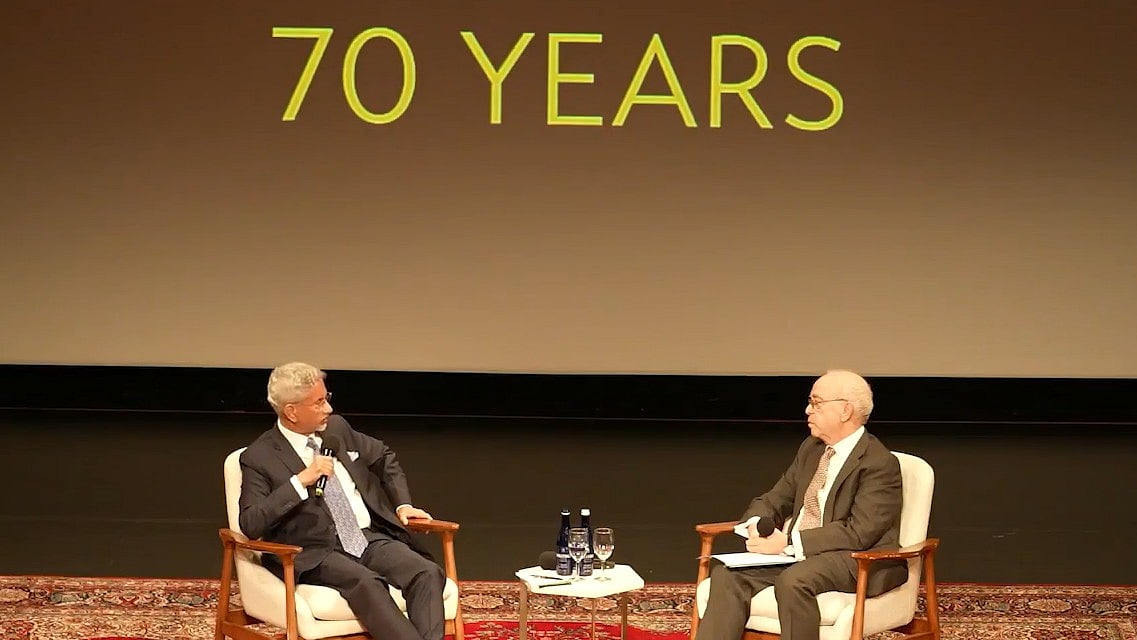
Jaishankar made the remarks while addressing prominent members of the Indian-American and diaspora community and policy experts at a special conversation hosted by the Asia Society on Monday, following the high-level week of the 81st session of the UN General Assembly in New York.
During the conversation, moderated by former American diplomat and Asia Society Policy Institute distinguished fellow Daniel Russel, Jaishankar was asked about India-US relations, particularly developments concerning trade and tariffs over the past year and what would be required to put bilateral ties on a “better track”.
Trade talks face complex ground reality
“Well, I think if I stand back and look at the relationship,... I note that much of the world has had a more difficult relationship with the US. I mean that may not be a consolation, but that's a reality,” Jaishankar said.
ALSO READ
He identified trade negotiations as one of the issues affecting India-US ties and pointed to the “stakes” and “complexity” involved.
“Bear in mind, India is a society of small producers, small agriculture producers, small factories. Apart from the per capita gap between India and the United States, the nature of production, nature of society is very different,” he said.
“A trade negotiation required a certain amount of ... patience and detailing to see it through… The expectation that it could rapidly move forward, I think, was tested against a ground reality which was much more complex,” he added.
Jaishankar said there was now “more or less an understanding on the trade agreement”.
India and the US had announced in February the finalisation of the framework for the first phase of their bilateral trade agreement. However, changes in the US tariff regime have led to further negotiations.
The US Supreme Court had struck down President Donald Trump's reciprocal tariffs imposed under emergency powers, following which Washington adopted a different tariff framework. In July, the US imposed an additional 10% tariff on imports from India under Section 301 of the Trade Act after a probe into India's measures concerning goods produced with “forced labour”.
The two countries have since continued negotiations on the trade agreement amid changes in the US tariff regime.
Section 301 process still unfolding
Alluding to comments by Commerce and Industry Minister Piyush Goyal, Jaishankar said the issue now was what had changed on the American side and how the new Section 301 process would affect the agreement.
“The 301 process is still in the works, it's still unfolding. So the issue for us is at what point do you close out an agreement which is very, very far advanced,” Jaishankar said.
“But the period that it took to reach it, that did create bumps last year for the relationship. So presumably, if that agreement is closed out, that would be one point which would contribute to a better relationship,” he said.
Jaishankar also said bilateral ties had, to some extent, been affected by developments within the US.
“For many years mobility was seen as an economic gain. Now, today the economics of mobility and the politics of mobility are at odds with each other,” he said.
He said foreign policy and diplomacy were no longer conducted only by states, leaders, ministers or diplomats.
“In a social media era, there is a very big public opinion factor,” particularly how it plays out in democratic societies, he said.
Also Watch:
Jaishankar seeks upward trajectory in ties
“So I think that's a reality we have to take into account. So yes, we would certainly hope for and expect the relationship to move on an upward trajectory. But I have to be real about the issues that we confront, and to the extent we are able to move ahead on some of these issues, I think we'll have a better relationship,” he said.
Last week, Goyal had said the trade pact between India and the US was “done and dusted” and would be executed once the US gives India the right competitive advantage over its competitors in the American market. India's competitors in the US market include ASEAN countries, China and Bangladesh.
Goyal is scheduled to visit the US from September 29 to October 5 to attend a G20 meeting in Milwaukee and hold discussions with US Trade Representative Jamieson Greer on advancing negotiations for the bilateral trade agreement.
RECENT STORIES
-
-
-
-
-