India May Levy LPG, Natural Gas Users To Fund $42 Billion Strategic Fuel Reserve
India is considering levies on LPG and natural gas consumers to help fund a $42 billion strategic fuel reserve programme over 10 years. The proposal would expand reserves beyond crude oil to include LNG and LPG after recent Middle East supply disruptions exposed India's dependence on imported fuel. The plan is under government consideration and awaits approval.

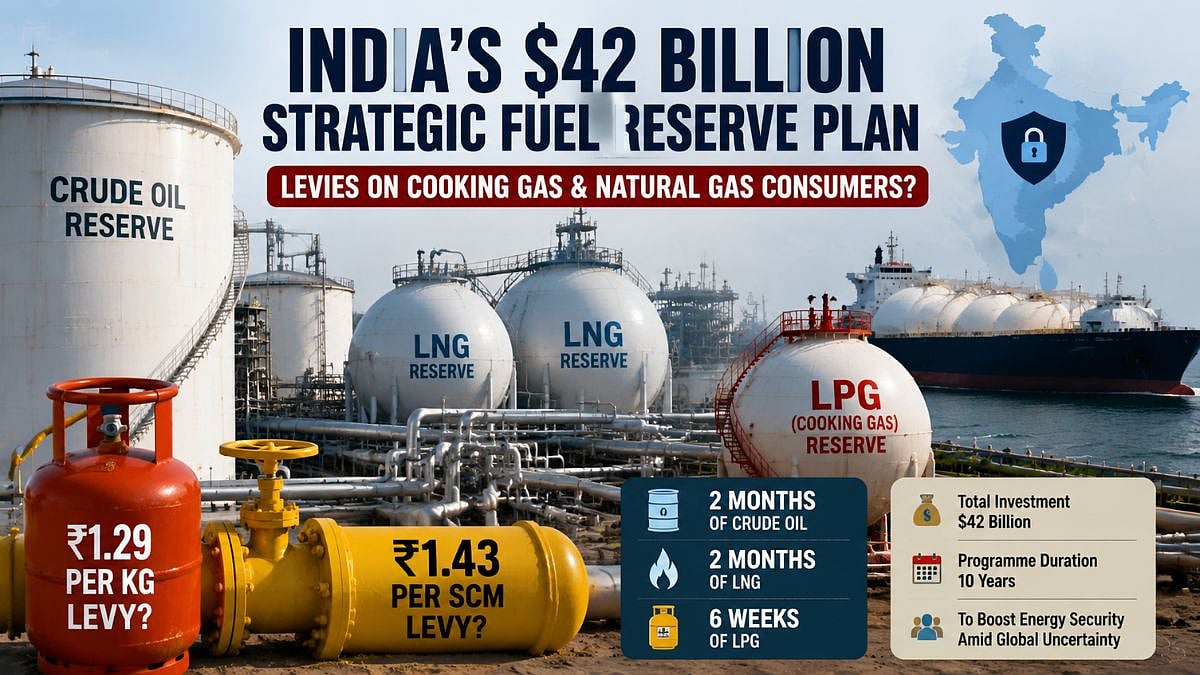
India is considering levies on LPG and natural gas consumers to finance a long-term strategic fuel reserve programme | AI Generated Representational Image
New Delhi, August 5, 2026: India may impose levies on cooking gas and natural gas consumers to finance a planned $42 billion strategic fuel reserve as disruptions caused by the Iran war expose vulnerabilities in the country's energy supply chain, according to two sources with direct knowledge of the matter.
The proposal would expand India's strategic reserves beyond crude oil for the first time. The planned stockpiles are intended to cover about two months of crude oil and liquefied natural gas (LNG) demand and around six weeks of liquefied petroleum gas (LPG), or cooking gas, consumption, the sources said, Reuters reported.
Proposed Consumer Levies
Under the plan, storage infrastructure for cooking gas and natural gas would be financed through levies on consumers, potentially raising about $1.5 billion annually, the sources said.
The Ministry of Petroleum and Natural Gas is considering a levy of Rs 1.29 per kg of LPG, which could generate about $460 million annually at current consumption levels. It would add about Rs 18 to the cost of a standard domestic cooking gas cylinder, the sources said.
For natural gas, the ministry has proposed a levy of Rs 1.43 per standard cubic metre, which could raise about $1 billion annually at current consumption levels.
It was not immediately clear how the levies would be collected. The proceeds would mainly finance natural gas and cooking gas storage infrastructure, while crude oil reserves and strategic fuel inventories would continue to be funded by the Government of India, the sources said.
The sources requested anonymity because the proposal is under discussion across ministries and has not received final approval from Prime Minister Narendra Modi's Cabinet.
The proposed levies would increase household gas bills by about 2 per cent, the sources said, making the measure politically sensitive for the government as millions of consumers already face elevated fuel prices.
The proposed funding mechanism, including levies on cooking gas and natural gas consumption, has not previously been reported. The Ministry of Petroleum and Natural Gas and the Finance Ministry did not respond to Reuters' requests for comment on Tuesday.
$42 Billion Reserve Plan
The strategic reserve programme, planned over 10 years, would require about $42 billion, the sources said. More than half of the amount would be used to build storage infrastructure, with the remainder going towards stocking the reserves.
The government estimates that India will need an additional 28 million metric tonnes of crude oil storage capacity, nine million tonnes of LNG storage and four million tonnes of LPG storage over the next 10 years, according to the sources.
The plan was developed after supply disruptions linked to the Middle East crisis pushed up import costs and highlighted India's dependence on overseas fuel supplies.
India, the world's third-largest oil importer and consumer, imports nearly 90 per cent of its crude oil. This has left the country heavily exposed to turmoil caused by the US-Israeli war on Iran and subsequent disruptions in the Strait of Hormuz, a crucial route for oil and gas shipments from Gulf producers to global markets.
Emergency Reserves Lag Peers
New Delhi currently has 5.33 million tonnes of government-owned strategic crude oil storage capacity, while another 6.5 million tonnes is under construction. India, however, does not have dedicated strategic reserves for LPG and LNG.
Also Watch:
ALSO READ
The country's emergency fuel buffers remain significantly smaller than those of major Asian peers. Government-controlled reserves currently cover less than 10 days of demand, compared with more than 100 days in Japan and South Korea.
To get details on exclusive and budget-friendly property deals in Mumbai & surrounding regions, do visit: https://budgetproperties.in/
RECENT STORIES
-
-
-
-
-