From Survival To 30 GW: How Faruk Patel Built KPI Green & Why Battery Storage Is His Next Big Bet
From starting small at 22 to targeting 30 GW, Faruk G. Patel shares KPI Green’s growth story, renewable-energy strategy, funding challenges and future ambitions.

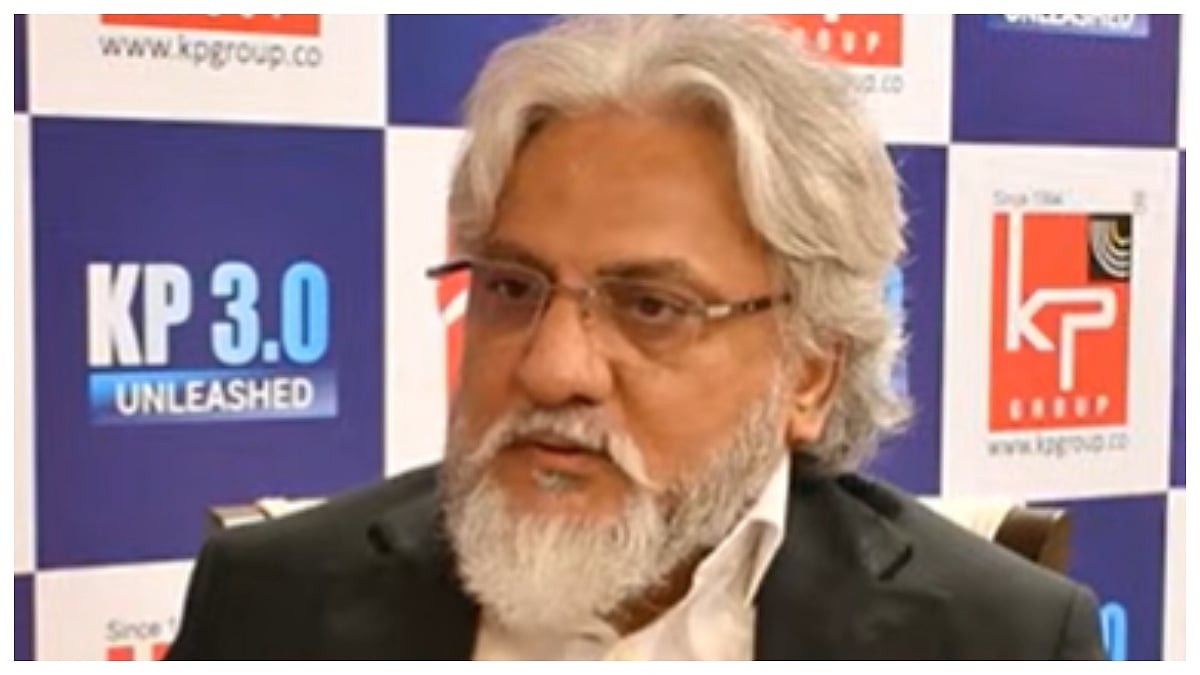
From starting small at 22 to targeting 30 GW, Faruk G. Patel shares KPI Green’s growth story. |
Mumbai: From starting a small logistics business at the age of 22 to building a renewable-energy group with a 30 GW ambition, Dr. Faruk G. Patel says his journey was driven first by survival, and later by a larger goal: building sustainable power for India.
When Dr. Faruk G. Patel started his entrepreneurial journey in 1994, he was not thinking about building a renewable-energy empire.
He was thinking about something much more basic: how to support his family.
The son of a state transport bus conductor, Patel started his first business at the age of 22. His initial ventures included small logistics activities before he moved into construction and telecommunications.
“I was 22, and at that time survival was the issue,” Patel recalled during an interview with Free Press Journal’s Business Correspondent, Shipra Rana.
But over time, Patel realised that construction was not where he wanted to build his long-term future. He was looking for a business that could be sustainable in the literal sense of the word.
That search eventually took him towards renewable energy.
From 250 KW to a Multi-Gigawatt Business
Patel entered solar in 2008 and wind in 2010. The group's journey then moved through multiple public-market milestones, including an IPO in wind in 2016, a solar IPO in 2019 and the listing of the group's engineering business in 2023.
The scale of the business today is dramatically different from where it began.
Patel recalled that KPI Green's renewable journey started in 2010 with around 250 KW. By 2026, he said the company had reached around 6.47 GW of capacity, including about 1.1 GW in its IPP business.
The next target is considerably bigger.
Patel said the group has a 30 GW target, with more than 10 GW already in the pipeline. Over the next three years, he expects the company to reach roughly half of that 30 GW ambition, with the planned additions spread across IPP(Independent Power Producer), captive projects and battery energy storage.
Why Solar Alone Is No Longer Enough
For Patel, the future of renewable energy is not about choosing between solar and wind.
It is about combining them.
As renewable power becomes a larger part of India's electricity mix, the challenge is also to provide power when it is needed, not simply when the sun is shining or the wind is blowing.
Patel's answer is a combination of solar, wind and battery energy storage systems.
He said the group has decades of experience in solar and wind and has now entered battery storage, including bringing in a CEO from Israel and working with Israeli technology. The group is also preparing for a major battery-storage expansion.
For Patel, battery storage is not a separate story from renewable generation.
“Solar is generating power, while battery storage is not generation,” he explained, arguing that the two need to work together to provide a more complete energy solution.
The Big Challenge: Funding Growth Without Overloading the Balance Sheet
Rapid expansion in renewable energy comes with a major financial challenge: capital.
Renewable projects require significant upfront investment, and scaling a portfolio across solar, wind and storage can put pressure on a company's balance sheet.
ALSO READ
Patel, however, argues that KPI Green has tried to build projects and arrange financing in a way that gives the company enough time to manage its debt obligations.
He pointed to the company's IPP portfolio and its approach of arranging projects and financing ahead of execution as a way of avoiding excessive pressure from interest during construction and cost overruns.
The message from Patel is clear: growth is important, but how that growth is financed matters just as much.
Protecting Margins in a Crowded Renewable Market
Another challenge is competition.
India's renewable-energy sector has attracted companies of all sizes, including some of the country's largest business groups. More competition can mean greater pressure on project pricing and margins.
Patel says KPI Green's approach is to secure equipment and materials around the time orders are received, helping the company execute projects without being excessively exposed to supply-side delays.
He described the approach as similar to a goldsmith having the required material ready when an order arrives.
Transmission: The Other Piece of the Renewable Puzzle
India's renewable-energy expansion also faces a less visible challenge: transmission infrastructure.
Generating renewable power is only part of the equation. That electricity also has to reach the grid and ultimately the consumer.
Patel identified transmission lines as one of the biggest challenges facing the sector.
His answer again comes back to storage. He believes battery energy storage can help address some of the challenges created by the intermittent nature of renewable generation, while transmission infrastructure itself also needs to expand.
From Founder-Led to Professionally Managed
Perhaps one of the biggest changes Patel sees in KPI Green is not in its megawatts, but in its management structure.
As the group has grown, Patel says the company is increasingly relying on professional management and a younger second line of leadership.
The group now has more than 3,000 employees, including more than 600 engineers, according to Patel. He also pointed to employees who have spent 10 and 15 years with the company as evidence of an increasingly established organisational structure.
His philosophy is that a founder can take a business to a certain point, but the next phase requires a professional team capable of carrying the organisation forward.
That transition could become increasingly important as KPI Green moves towards its larger capacity ambitions.
What Does the Future of Indian Energy Look Like?
Patel believes India's energy requirements will make renewable energy increasingly important.
With a large population and growing electricity demand, he argues that India cannot depend indefinitely on fossil fuels and needs to continue expanding sustainable sources of power.
He also sees an interesting connection between renewable energy and the next wave of India's technology economy.
Data centres, artificial intelligence and other new technologies require enormous amounts of electricity. For Patel, that makes renewable power infrastructure an essential part of India's future economic growth.
His argument is simple: if India can generate more of that electricity domestically through the sun and wind, it can reduce its dependence on imported energy.
'Success Is Not to Reach Somewhere'
For Patel, however, the 30 GW ambition is not necessarily the final destination.
When asked how his definition of success has changed after decades in business, his answer was straightforward: success creates new goals.
He said his ambition is to continue working on sustainable power for India and for people around the world.
His personal philosophy is built around an idea of intergenerational responsibility: the Earth, he said, is not something inherited permanently from previous generations, but something borrowed from the next one.
That philosophy also explains why he sees renewable energy as more than a business opportunity.
For Patel, it is also a long-term mission.
'Start Small, Think Big and Achieve Big'
His message to young entrepreneurs entering the renewable-energy sector is equally direct.
Start with hard work. Then use smart work, technology, AI and data.
Patel believes the next generation of technologies including data centres and AI will all require one fundamental resource: power.
And his long-term bet is that an increasing share of that power will come from the sun and wind.
His final business philosophy perhaps sums up his own journey best: “Start with the small, think big and achieve big.”
(By Shipra Rana)
RECENT STORIES
-
-
-
-
-