Derivatives Need Risk-Based Approach: Ashishkumar Chauhan, NSE MD & CEO
NSE MD and CEO Ashishkumar Chauhan discusses the exchange’s listing, its 13 crore investors and why small investors should be cautious about risky derivatives.

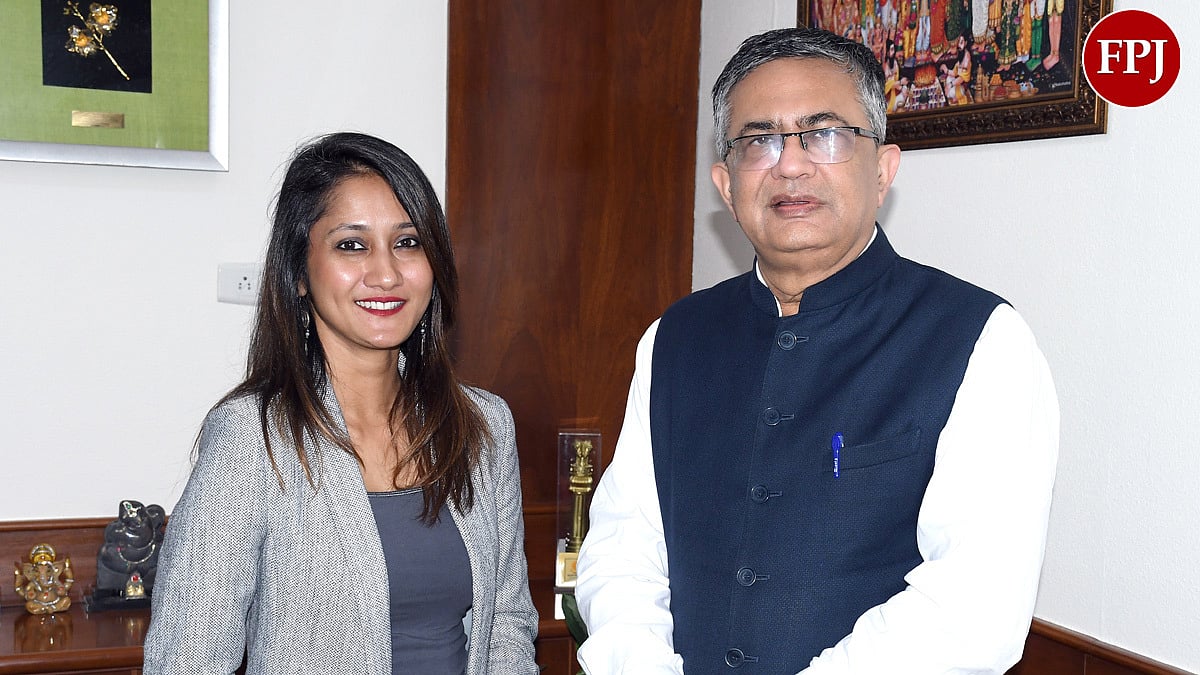
NSE MD and CEO Ashishkumar Chauhan discusses the exchange’s listing. |
NSE Managing Director and CEO Ashishkumar Chauhan says the exchange’s listing marks a major milestone, but its core responsibility remains unchanged: keeping India’s capital markets safe, orderly and accessible. In a discussion with The Free Press Journal’s Sheryll D’Souza, Chauhan spoke about NSE’s growth, financialisation, derivatives risks, retail investors and responsibilities following its stock market debut.
Why is NSE’s listing such a significant moment?
NSE is a very large institution in India’s financial ecosystem. It represents nearly USD 5 trillion of wealth and has around 13 crore unique investors, covering roughly nine crore households. More than 3,000 companies are listed on the exchange.
Over the years, NSE also accumulated nearly two lakh shareholders who wanted better liquidity for their holdings. Some banks and insurance companies were among the original shareholders. The value creation over more than three decades has been substantial, which is another reason why the listing has attracted so much attention.
Where do you see NSE’s investor base over the next five years?
When NSE started, India had around 10 lakh investors. Today, the number is about 13 crore. Even if NSE grows tenfold from here, there would still be many Indians outside the securities market.
The challenge is not merely adding investors. We must train people, make them aware of the pitfalls and help small savers understand what they should and should not do. Financialisation must ultimately benefit households and small investors.
Has India’s financialisation progressed fast enough?
Financialisation has accelerated significantly over the past 12 to 15 years, helped by Jan Dhan, Aadhaar, mobile connectivity, smartphones and UPI.
The first phase was about giving people access to bank accounts and formal finance. That has largely been achieved. As households become more prosperous, they move towards savings products, insurance, fixed deposits, equities, bonds and other asset classes.
India’s equity and mutual fund participation has expanded considerably. Around 12 years ago, NSE had approximately 1.67 crore unique investors. Today, that figure is about 13 crore.
A well-functioning, orderly, fair and transparent stock market is a national asset. The next challenge is using that infrastructure to build a more financially secure society.
What is your advice to young investors attracted to options trading?
Many people think buying a stock in the morning and selling it in the afternoon is investment. It is not investment; it is trading.
ALSO READ
The same distinction is important in options. Data show that an overwhelming proportion of individual participants in derivatives lose money. Investors therefore need to ask themselves why they are entering these products and whether they understand the risks involved.
Some people earn returns from equities, mutual funds or IPOs and then assume that because options trade on the same exchange, they can try those products as well. They may subsequently lose money and leave the market altogether.
NSE has around 13 crore investors, but roughly 20 lakh people trade derivatives every week. Within that, a relatively small group accounts for the overwhelming majority of trading volumes.
Do smaller investors need greater protection in derivatives?
Regulators have tightened the framework substantially over the past three or four years. However, investor education about speculation and its risks must continue.
Markets should consider a risk-based framework determining who can participate in different instruments. Smaller investors should generally access lower-risk products, while sophisticated investors with greater financial capacity, information and professional support may be able to handle higher-risk instruments.
Similar segmentation already exists in pooled investment products. Mutual funds are available widely, while PMS and alternative investment structures have higher entry thresholds.
A comparable philosophy could potentially be considered for derivatives and other high-risk instruments. The objective should be to ensure people are not attracted to high-volatility products without understanding the potential losses.
Is such a framework already being considered for derivatives?
I do not think it is currently under discussion. However, since risk-based segmentation already exists in mutual funds and other investment products, a similar framework could potentially be applicable elsewhere.
Such an approach could help protect smaller investors while allowing sophisticated participants access to instruments appropriate to their risk profile.
What changes for NSE now that it is listed?
Operationally, not much changes. NSE was already answerable to regulators, authorities, investors and shareholders. Even before the IPO, it had around two lakh shareholders and followed disclosure requirements similar to those of listed companies.
We published quarterly results and disclosed material developments. The listing therefore completes another formal step rather than fundamentally changing how the organisation operates.
The IPO also did not involve raising fresh funds. Existing shareholders sold a portion of their holdings to facilitate the listing.
Will you now closely follow NSE’s share price?
My job is not to focus on NSE’s daily stock price. My responsibility is to ensure the market operates safely and remains consistently available to investors across India.
Think of it like traffic police. Their primary job is to keep traffic moving, not to drive the cars themselves.
Every transaction must be completed correctly. Money has to reach the right participant and securities must reach the right demat account on time. Even a one-paisa mismatch cannot be allowed.
NSE is among India’s most technology-intensive organisations. Keeping its systems upgraded, operational and resilient every second of every trading day is a demanding responsibility.
For many companies, becoming listed fundamentally changes their journey. For NSE, it is another step. Our prime focus remains running a safe, efficient and reliable marketplace.
RECENT STORIES
-
-
-
-
-