Tome And Plume: Bhopal’s Millennium: From Master’s Plan In 1047 To Masses Blueprint Of 2047
As Bhopal prepares for Master Plan 2047, its urban story stretches back nearly a millennium to Raja Bhoj and the creation of the Upper Lake. From the Nawabi era to modern planners, the city has continuously evolved while retaining the lake and its layered cultural heritage at the heart of its identity.

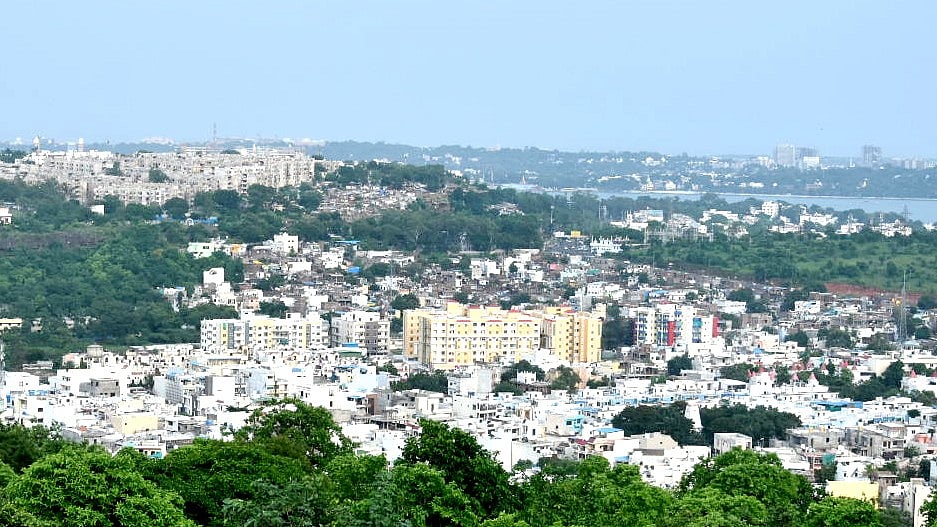
Tome And Plume: Bhopal’s Millennium: From Master’s Plan In 1047 To Masses Blueprint Of 2047 | FP photo
Bhopal (Madhya Pradesh): Khuda ne mujhe ghazal ki sultanat bakhshi hai, aur main ye sultanat Bhopal ke naam karta hoon (God gifted me the kingdom of ghazals, and I dedicate this sultanate to the name of Bhopal) – Bashir Badr
It remains a question. How was Bhopal from 1047 to 1947, and how will it be in 2047 after the Master Plan comes into vogue? By the time the city enters 2047, the Generation Beta, armed with more advanced AI, will have taken it over.
As the city’s draft master plan emerges from its years of slumber, it is time to look at how the then master of the city, Raja Bhoj, thought about its planning.
Then Bhopal was not even a small town. It had a population of nearly 1,000. The official records, however, remain silent over the number of people living in the then Bhopal. Bhopal has evolved into a modern city since a millennium.
The present masters have prepared the city’s development plan up to 2047 as Raja Bhoj visualised it in 1047. It was the time when the Upper Lake, planned by the king, came into being. Its work, however, continued until 1053.
All plans for the city’s structural development have moved around the iconic Upper Lake. So, the present masters cannot avoid their past icon of development. The King Bhoj may not have had access to the AI system, but he had a modern mindset.
The city has been through many phases of development since the days of the King Bhoj, but its core remains intact, which represents the successive layers of history.
Yet, its development continued for aeons because we cannot ignore the contributions of early men who lived in caves at Lal Ghati and the paintings they made, though they lie in ruins now.
In 1047, the king focused on nearly 1,000 people. Building temples, water supply, security, and cultivation of food grains remained the focal point of town planning. Hence the Upper Lake. Many temples, including the one built in Bhojpur by the king, stand as epitomes of Indian culture and heritage, and they become part of the town planning.
The city gradually went into the hands of Nawabs. So, its population grew. In 1847, when the city’s command of administration was in the hands of Nawab Sikandar Begum, it had nearly 35,000 people.
An architectural wonder, Moti Masjid, came up. The city grew around the Old Bhopal. Then, rapid urbanisation did not take place. Thus, the development remained haphazard and concentrated on one particular area. Today’s masters remain concerned about the proper planning of these areas.
The planning became more difficult when rapid urbanisation began in the late 19th century, when the city’s population grew from approximately 1,000 people in 1047 to 75,228 in 1941. In 1951, the number of people living in Bhopal shot up to 102,333.
But if we include the princely territory ruled by the Nawab, the city’s population, according to official records, was nearly between 785,000 and 800,000 people before its merger with India in 1949. Today, nearly 2,700,000 people reside in Bhopal and its nearby areas. It will increase further in 2047.
Dost Mohummad Khan, who conquered Bhopal, developed the Fategarh fort in the 1720s on the north of the Upper Lake. The development of the city, beginning with the construction of the Upper Lake in the 11th century, continued when its command went into the hands of the Nawabs.
The streets were narrow, say four metres wide, and the buildings consisted of three or four floors with verandas, called Pattias, where people sat and interacted for hours.
The present master plan vastly differs from the ones visualised by King Bhoj a millennium ago and the Nawabs nearly two centuries before the present era.
The present plan, however, includes several parts of Sehore, Raisen, Narmadapuram, Vidisha, and other places that belonged to the once-princely state called Bhopal.
The residents cannot forget the architects, like Lt Colonel BJ Ryan, Charles Correa, and HC Sharma, who pencilled the design of the modern city.
The King Bhoj and Nawabs imagined the city’s cultural ethics in their master plans. But the 2047 Master Plan visualises it as a tech-driven modern metropolitan city that Generation Beta will take over.
Yet, they will still enjoy a trip on AI-driven cars and bikes to the banks of the Upper Lake, constructed a millennium ago.
RECENT STORIES
-
-
-
-
-