Bhopal's BMHRC Issues Snakebite Advisory — No Traditional Ritual, Only First Aid Matters
ICMR-BMHRC organised a lecture on snakebite awareness, where Dr. Lalit Kumar stressed that immediate first aid and quick hospital treatment are crucial. He advised against relying on superstitions and said Anti-Snake Venom (ASV) is the only effective treatment.

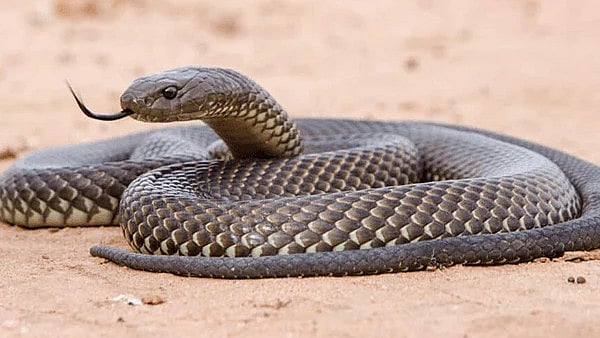
Representational Image
Bhopal (Madhya Pradesh): A lecture series on snakebites was organized by the Hospital Infection Control Team at ICMR-BMHRC. Dr. Lalit Kumar, Head of the Department of Pulmonary Medicine, delivered a talk on first aid and care following a snakebite.
Dr. Lalit emphasised the need for extra caution in snakebite cases, noting that immediate first aid and transport to the nearest hospital are essential for survival.
During the lecture, Dr. Lalit mentioned that snakebite cases are more frequently observed during the monsoon season. He explained that while there are 300 species of snakes, only 50 are venomous, and among those, bites from four specific types are the most common causes of medical concern: the Cobra, Common Krait, Russell's Viper, and Saw-scaled Viper. Bites from these venomous snakes can cause neurotoxic, hemotoxic, and myotoxic effects.
Dr. Lalit advised against resorting to traditional rituals, faith healing, or superstitious practices following a snakebite; immediate medical treatment is mandatory. He further advised keeping the victim calm and preventing panic, prioritizing immediate transport to the nearest hospital for treatment.
ALSO READ
Dr. Lalit stated that the only effective treatment for a snakebite is the administration of Anti-Snake Venom (ASV) injections at a hospital. This injection is effective for victims of all age groups. He also provided detailed information regarding the management of potential reactions following the administration of ASV and the subsequent rehabilitation of the patient.
Addressing the lecture series session, Dr. Manisha Srivastava, the Institute's Director-in-Charge, said, “a significant number of deaths due to snakebites occur among farmers in rural areas and populations in tribal-dominated regions, primarily due to a lack of awareness about treatment and the unavailability of immediate medical facilities.
Government of India provides anti-snake venom (ASV)—which neutralizes the venom of poisonous snakes—completely free of cost at all government hospitals and Primary/Community Health Centres (PHCs/CHCs).
Additionally, there is a provision to provide financial compensation to the family of a snakebite victim under the State Disaster Response Fund (SDRF).
ALSO READ
RECENT STORIES
-
-
-
-
-