Bhopal News: Power, Patriarchy, Camaraderie Fueled Naxal Women Ranks
Why did women join Naxalism, a movement that believes in violence and is outlawed? Shaifali Shrivastawa, wife of Pankaj Shrivastawa, an IPS officer of the Madhya Pradesh cadre who served as Special DG Anti-Naxal Operations, tries to answer this question. Naxalism began from Naxalbari, a village in Darjeeling district of West Bengal, with the rebellion of landless farmers against the landlords.

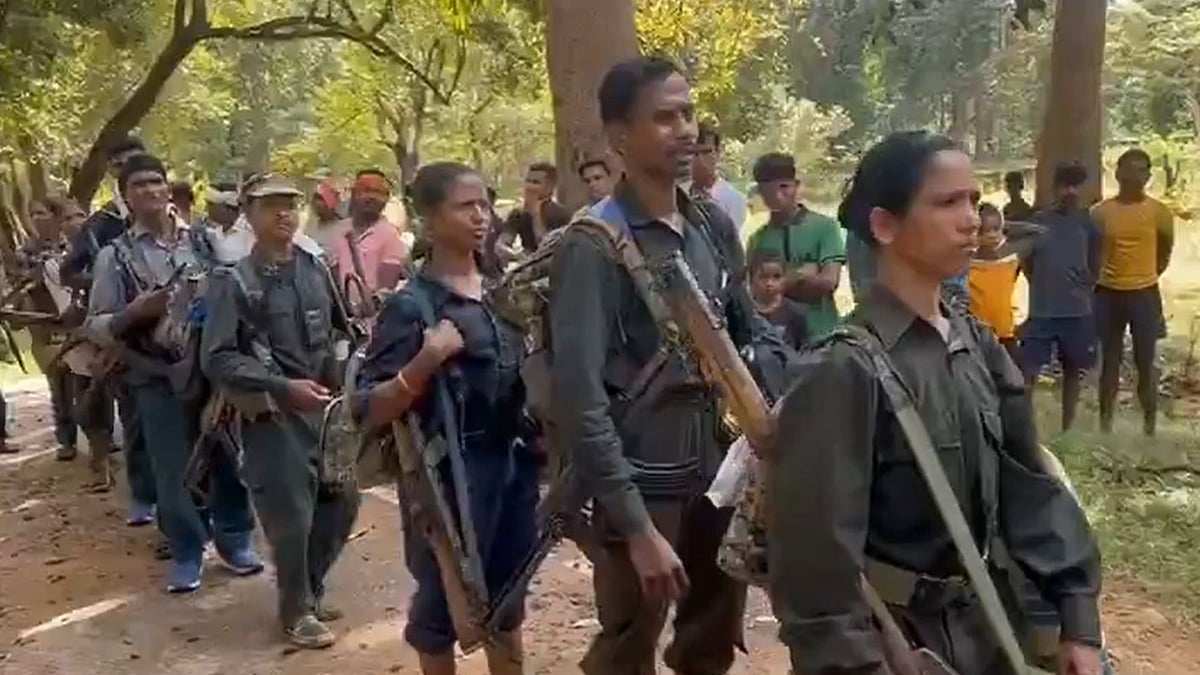
Bhopal News: Power, Patriarchy, Camaraderie Fueled Naxal Women Ranks | FP Photo
Bhopal (Madhya Pradesh): A sense of power and adventure; Maoism, at least theoretically, standing for gender equality, and a feeling of camaraderie were some of the factors that led to women joining the Naxal groups in a big way, says a study by sociologist Shaifali Shrivastawa.
Women had a substantial presence in the Naxal movement. This is evident from the fact that of the 357 Naxals killed in encounters with security forces in the country between July 1, 2024 and June 30, 2025, 136 were women.
These figures were released by the top leadership of the Naxals. Women had almost 40% presence in the People's Liberation Army and they took part in all activities along with men.
Why did women join Naxalism, a movement that believes in violence and is outlawed? Shaifali Shrivastawa, wife of Pankaj Shrivastawa, an IPS officer of the Madhya Pradesh cadre who served as Special DG Anti-Naxal Operations, tries to answer this question.
Naxalism began from Naxalbari, a village in Darjeeling district of West Bengal, with the rebellion of landless farmers against the landlords. On May 23, 1967, police and landless farmers came face to face in a village under Naxalbari police station over the arrest of a farmer. The farmers killed a sub-inspector.
The next day, when a police party reached the village, it was surrounded by women and children. The police opened fire, killing 10 people, of whom six were women.
Coming to the then united Madhya Pradesh, when cadres of the People's War Group entered the forests of Bastar in the 1980s, they realised that women were as much against the Forest Conservation Act, which restricted their access to the forests, as men.
The Naxals realised that women could form a part of their movement. Like other communities, Adivasis too had their own version of patriarchy. Joining Naxal groups freed women from the domination of men. The Naxalites gave slogans like 'Mahilayein Aadhe Aasman Ki Mali Hain' to underline that they believed in gender parity.
But it is also a fact that the presence of women was confined to the low- and mid-level positions in the Naxal outfits. They were never a part of the top leadership. However, the problems they faced in the forests gradually disillusioned women and they began surrendering in large numbers, says Shrivastawa.
RECENT STORIES
-
-
-
-
-