Bhopal News: No Water, No Weddings; 'Parched' MP Forces Migration
In Sehore district, villages located barely 40 km from Bhopal are facing similar distress. As many as 235 families from six villages have already migrated to different cities. Water supply has stopped in several villages in March, with falling groundwater levels rendering many tube wells defunct.

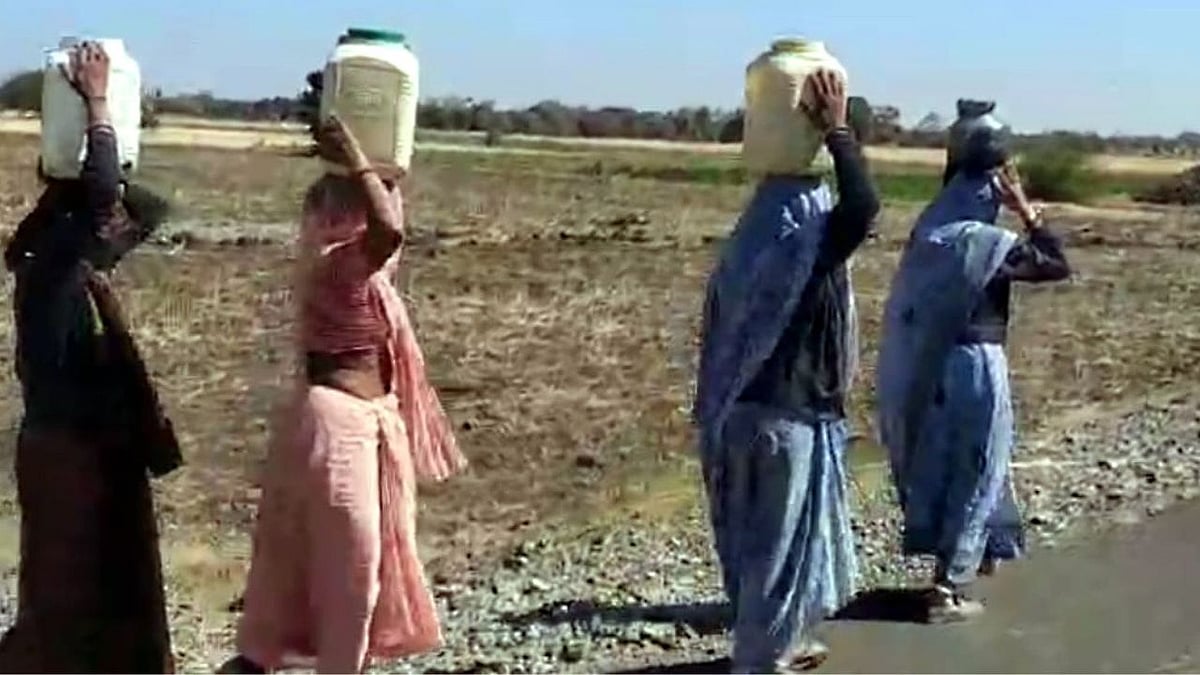
Bhopal News: No Water, No Weddings; 'Parched' MP Forces Migration | FP Photo
Bhopal (Madhya Pradesh): A severe drinking water crisis has begun surfacing across several districts of Madhya Pradesh even before peak summer, disrupting normal life in many villages.
In Sehore, Harda, Shivpuri, Chhatarpur, Sagar and Betul, the lack of assured water supply has forced some families to migrate temporarily for the summer, while others are leaving their villages for longer or indefinite periods. In Harda district, residents said families are now hesitant to fix marriages in villages grappling with acute water scarcity.
In Harda district, Bhirangi Tola under Mandla gram panchayat is among the worst-hit. The village, with around 30-35 families, depends on a single functional handpump, leading to long queues and inadequate supply.
Villagers said the crisis has persisted for years, forcing both seasonal and permanent migration. “I have to return to my parental home for nearly two months every year because there is no water here,” said Durga Yadav. According to locals, seven to eight families have already relocated permanently.
The water shortage has also begun affecting marriages in the village. “People hesitate to marry their daughters into a village where even drinking water is not assured,” said Rakesh Yadav, adding that nearly 30 young men are facing similar difficulties. Santosh Tanwar said families from outside are unwilling to send their daughters due to the hardship caused by the ongoing crisis.
In Sehore district, villages located barely 40 km from Bhopal are facing similar distress. As many as 235 families from six villages have already migrated to different cities. Water supply has stopped in several villages in March, with falling groundwater levels rendering many tube wells defunct.
Chathri Bai from Khamariya village said there is severe water scarcity. “Some people have already migrated, and if the situation continues, people will die,” she said. Residents said women and children are forced to walk long distances to fetch water, while others spend over Rs3,000 per month on private tankers. Migration has been reported from multiple villages, including Khamariya, Raipura, Amrod and Narela.
However, officials from the Public Health Engineering Department said that while there is a shortage of water, there is no migration-like situation, and efforts are underway, including approval for more than 30 tube wells.
The situation is equally alarming in Sagar district’s Deori area, where water scarcity has become a recurring crisis. Villagers are forced to walk nearly five kilometres daily to fetch water, prompting many families to migrate every summer, said local resident Vipin. The issue had earlier triggered public anger, with residents reportedly boycotting voting during the 2024 Lok Sabha elections in protest against the lack of basic water facilities. Despite repeated complaints, visits to the collectorate and written representations, villagers said little has changed and the crisis continues.
'Situation better after Jal Jeevan Mission'
P Narhari, Principal Secretary of Public Health Engineering, said, “We have around five lakh handpumps across the state. We have mapped how many handpumps exist in each village and their exact locations, and have also carried out geo-tagging. As of today, it is practically impossible for any village to have only one handpump. Even if residents of a locality claim there is none, the situation has improved significantly after the implementation of the Jal Jeevan Mission. Water has now reached 75% of villages and about 88 lakh households. If a village falls under a multi-village scheme where the project is yet to be completed, a committee under the district collector has been authorised to install new handpumps wherever required. If any village reports a shortage, the collector can assess the situation and ensure immediate installation.”
RECENT STORIES
-
-
-
-
-