Will Street Agitations Make A Real Political Impact In Elections?
A wave of protests by students, farmers and political groups across India has raised questions over its potential impact on the 2027 Assembly elections. While economic distress, unemployment and institutional concerns are fuelling agitation, the article argues that Opposition unity, alliances and voter mobilisation will ultimately determine whether street protests translate into electoral gains.

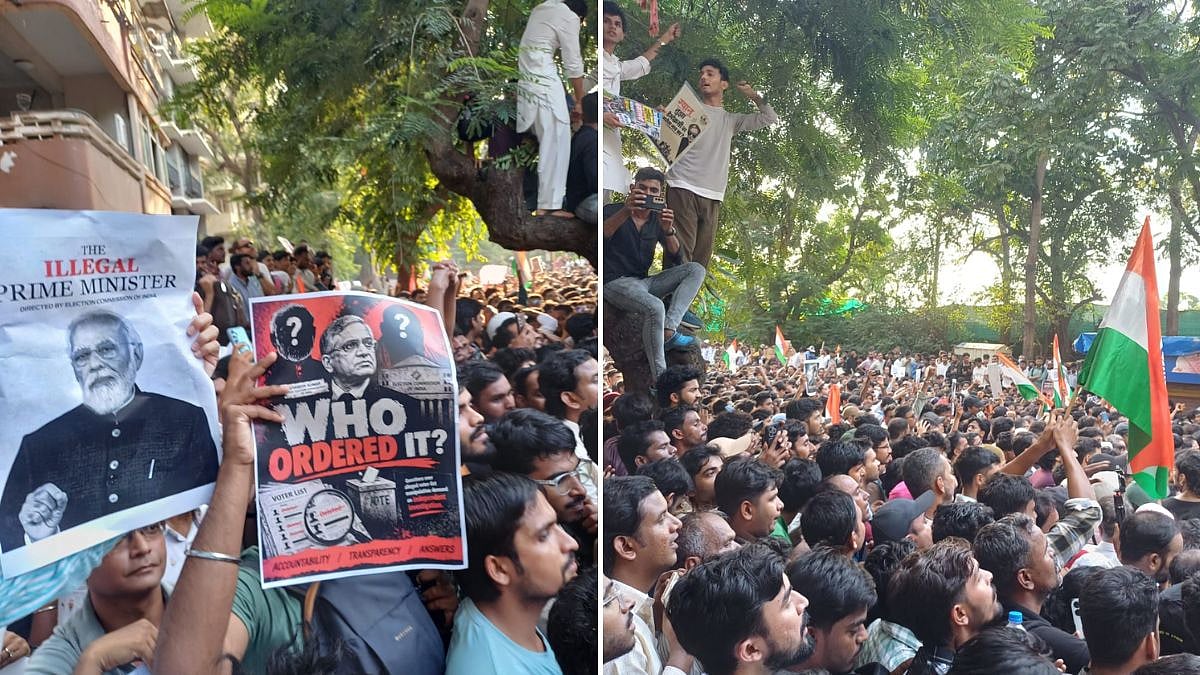
Recent protests across Maharashtra and other states have brought economic and political grievances back into the electoral debate | File Photo
Seems like it's a season of agitation and unrest in various parts of the country! From the national capital, New Delhi, to the financial capital, Mumbai, and from the hinterland of Bihar to the central parts of the country, like the Vidarbha region of Maharashtra, there are protests on the streets everywhere. Dissatisfied and unhappy with the government’s response to their problems, members of certain communities like the Marathas and certain fraternities like farmers and young students, of various ages, have chosen to take out protest marches in cities and rural areas in unison.
One wonders why so many people, especially the young, are taking to the streets now. This is the generation that, until recently, was spending most of its time surfing the Net or was hyperactive on social media. Now, suddenly, one finds the youth participating in protests related to one political issue or the other. Whether these protests will really have an impact on the 2027 elections needs to be seen.
Protests Across Maharashtra
The politically active state of Maharashtra is one place where these protests have been quite vibrant in the past few weeks. This week in Mumbai, the Thackeray cousins, Uddhav and Raj, came out to hold a rally in South Mumbai to demand the resignation of Chief Election Commissioner Gyanesh Kumar over the recent controversies regarding the functioning of the CEC. It was a colourful rally, with people of all ages walking on the street with placards, posters, and boards in their hands, some even singing specially orchestrated theme songs written for the occasion, and some wearing face masks with the CEC’s photo on them. There was enthusiasm seen at the event, and the Thackeray cousins, as usual, delivered forceful speeches at the rally held near the Chhatrapati Shivaji Maharaj Terminus in South Mumbai.
In Pune, the Nationalist Congress Party (SP) and the Congress Party jointly held protests that went on for many days, with thousands of students participating to protest against paper leaks in the various recruitment exams held by the Maharashtra Public Service Commission, or MPSC. While this was happening in Maharashtra, in New Delhi, the Congress-led INDIA alliance went ahead with its proposed march from Parliament to the EC office. Hundreds of MLAs of the INDIA alliance participated in the march led by Leader of the Opposition Rahul Gandhi before being dramatically detained by the police.
Economic Distress Behind Agitations
These protests, which were widely covered by the national and international media, suggest that all is not well in India and that the students, farmers, and citizens at large are unhappy with the way the government and the bureaucracy are working and the way certain institutions, responsible for holding public recruitment examinations or elections in the country, are functioning.
Some observers and senior activists feel that the root cause of these agitations, whether it is student protests or farmer protests, is nothing but the current economic distress that the communities are facing widely. Increasing unemployment and high inflation have brought enormous pressure on the middle and lower-middle class citizens, both in the urban as well as rural sectors. All this started with the agitation in Delhi launched by student leader Abhijit Dipke against the NEET paper leak, which led to the resignation of the education minister, Dharmendra Pradhan. That success provided motivation to other student organisations and even farmers to hit the streets.
Lessons From Farmers’ Agitation
The last time India saw this type of sustained agitation was when thousands of farmers marched from their villages in Punjab and Haryana towards the national capital and blocked highways for months together. Eventually, they succeeded in getting the draconian farm laws revoked by the BJP-led NDA government. Incidentally, this, too, was essentially a financial issue that stemmed from economic distress. This was a common factor between farmers and students, and opposition leaders like Rohit Pawar and the Thackeray cousins were quick to capitalise on it. Though the Mumbai agitation was focused mainly on the alleged mismanagement of elections and manipulation of voter lists, the anger on the streets and the motivation for the lower middle class to come out on the roads were clearly due to economic distress that citizens have been facing currently.
But most political observers and many political leaders are sceptical as to whether these agitations will actually make any significant political impact on the upcoming polls in large states like Uttar Pradesh and Punjab. Their scepticism is based on the following factors:
1. The key to these polls is opposition unity, which seems a bit vague at this stage. With just six months to go for the Assembly polls, the seat sharing between INDIA alliance partners is yet unclear. It is also unclear whether the Left parties, which provided support to the Congress-led UPA alliance when it was in power, are still supporting the Congress party.
2. It is unclear which way student organisations such as the Cockroach Janata Party, or CJP, which has garnered huge support in the digital space as well as the real world, will be politically headed in the next few months. Will the CJP be forming a political outfit at the last minute before the next Assembly polls? If so, will they eat into the Opposition or the INDIA alliance votes?
3. Some of the INDIA alliance partners clearly seem to be losing political steam in their respective states, and they might not be able to provide solid support in terms of getting a large number of votes. Leaders, such as Sharad Pawar in Maharashtra and Mamata Banerjee, may not be able to effectively campaign in the states that are going to polls in 2027. How that will impact the INDIA alliance is a big question.
Electoral Impact Remains Uncertain
In conclusion, it may be said that though social media and the Internet are abuzz with reports of the country going through a phase of agitations, it may not lead to the desired goal. The INDIA Alliance will have to work on many other aspects, and many more things will have to fall in place for the Opposition before these protests make an impact electorally.
Rohit Chandavarkar is a senior journalist who has worked for 31 years with various leading newspaper brands and television channels in Mumbai and Pune.
RECENT STORIES
-
-
-
-
-