Why One Should File Income Tax Return When Income Is Less Than Exempt Limit
Many individuals wrongly believe ITR filing isn’t needed if income is below ₹12 lakh. The article explains that filing remains important for claiming TDS refunds, proving income, carrying forward losses, and avoiding notices. It also highlights lower filing thresholds and mandatory cases, stressing that ITR ensures compliance and financial credibility.

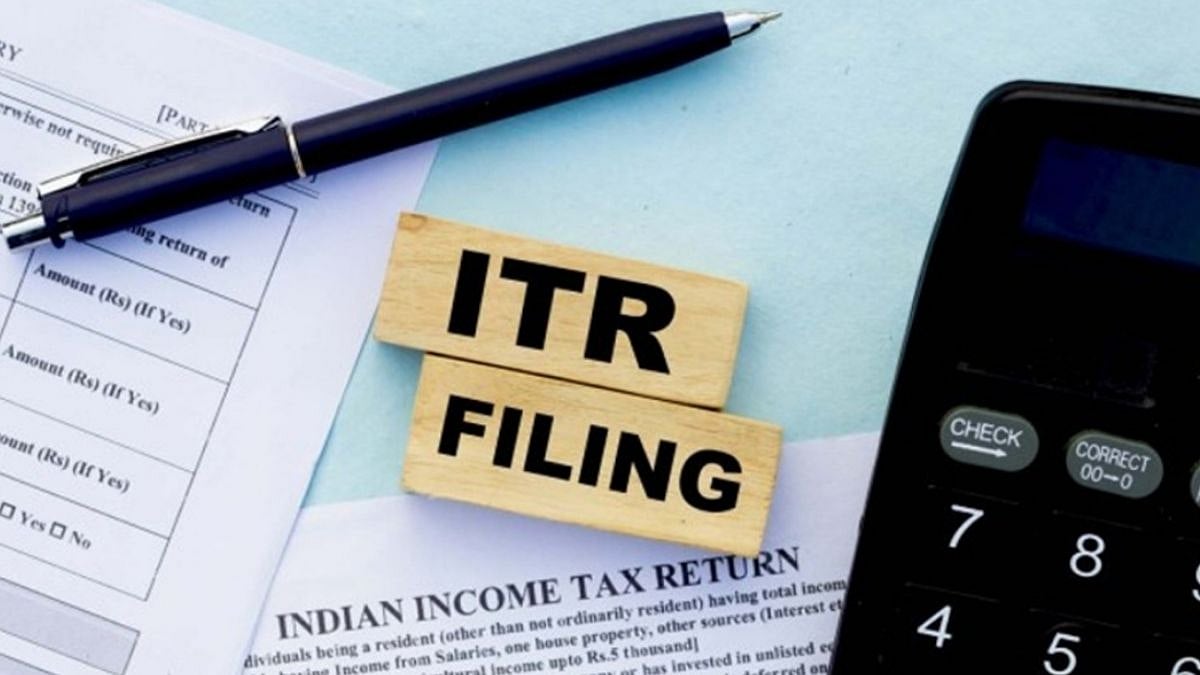
Why One Should File Income Tax Return When Income Is Less Than Exempt Limit | Representational Image
It is a common misconception most individuals have is that one need not file income tax return if the income is less than the taxable limit. For the just concluded financial year 2025-26, the exemption limit for individual tax payer was Rs.12 Lac. Thus if the income for Financial Year 2025-26 is less than Rs.12 Lac should one need to file tax return in the current Assessment Year 2026-27. This article is an attempt to answer these questions.
Even if your income is below the basic exemption limit under the Income-tax Act, 2025 (or earlier Income-tax Act, 1961), filing an Income Tax Return (ITR) can still be very beneficial—and sometimes necessary. Here’s why:
1. To Claim Refund of TDS
Provisions related to Tax Deduction at Source (TDS) are different from provisions relating to taxability of income. For e.g. Banks were required to deduct tax at source on interest payment if the interest payable in the year 2025-26 was more than Rs.50,000 for general residents and more than Rupees one Lac for senior citizens in the year. Similarly, if you are a contractor your client need to deduct tax when payment made to you exceeds Rs.30,000 at a time or exceeds Rupees one Lac in a year. Hence even if your total income does not exceed Rupees 12 Lacs in a year, your clients might have deducted tax at source from the amount payable to you. You can claim refund of this amount only when you file your return on time.
2. Proof of Income
ITR serves as an official income proof for getting Bank loans (home, car, education, personal), Visa applications, obtaining Credit cards, participating in Government tenders or contracts, applying for MHADA and other government housing projects, etc. Therefore, even if you do not have tax liability, it is always prudent to file income tax returns.
3. Exemption limit for not paying tax and exemption limit for filing income tax return are different.
For the Financial Year 2025-26, exemption limit for not filing Income Tax Return under new regime was Rupees four Lac for all age categories and it was Rupees 2.5 Lac under old regime for individuals less than 60 years of age. For senior citizens with 60-80 age bracket limit was Rupees three Lac and it was five Lac for senior citizens above 80 years of age under old regime. This does not mean that they have to pay tax if the income exceeds these limits. For the Financial year 2025-26 no tax is payable if the taxable income does not exceed Rupees 12 Lac under new regime though one needs to file return if the income exceeds Rupees four Lac.
4. To Carry Forward Losses
If you have losses like Business loss, Capital loss from sale of shares, property, etc.
you can carry them forward to future years only if you file ITR on time. In such cases one needs to file return even if there is no taxable income during the year to get the benefit of set off of losses in future years.
5. Avoid Future Notices / Compliance Issues
The Income Tax Department collects third-party data on taxpayers through mandatory reporting from financial institutions and other entities in the form of Statement of Financial Transactions (SFT). Banks, mutual funds, post offices, Registration Authorities and companies are mandated to report high-value financial transactions (e.g., cash deposits, credit card payments, property purchases) exceeding specific thresholds by May 31st of the next fiscal year. This data covers high-value transactions like property, shares, and cash deposits and help Income Tax Department to identify non filers and ensures accurate tax filings. If return is not filed in such cases, it may trigger scrutiny from Income Tax Department and department issue notices. Timely filing of ITR helps avoid unnecessary notices and keeps your financial record clean.
6. Mandatory in Certain Situations (Even Below Limit)
Even if income is below exemption, filing is compulsory if you have:
Deposited ₹1 crore and above in bank in current account or Rs.50 Lac or above in savings account in a financial year
Spent ₹2 lac or more on foreign travel in a financial year
Paid electricity bill ₹1 lac or above in a financial year
Foreign assets or foreign income
7. Conclusion
Regular ITR filing builds a financial track record, making future borrowing and investments easier. Filing ITR is not just about paying tax—it’s about financial credibility and compliance. Government always considers a tax filer as a partner in a country’s development and progress.
(Author: Venugopal Bhandary is a Senior Audit Officer(Retd) in C&AG of India and a tax consultant at Venu’s Income Tax Services, Andheri east, Mumbai. He is a regular faculty at Regional Training Institutes of Indian Audit and Accounts Department and Income Tax Department. He has more than 35 years experience in audit of Income Tax.)
RECENT STORIES
-
-
-
-
-