When Glam And Glitz Overshadowed Mumbai’s Environment Heroes
The Earthshot Prize 2026 in Mumbai honoured five environmental initiatives, including Mahindra’s electric rickshaw plan. Celebrity glamour overshadowed environmental activists and local conservationists, while poor air quality exposed the gap between the event’s environmental message and Mumbai’s worsening ecological realities.

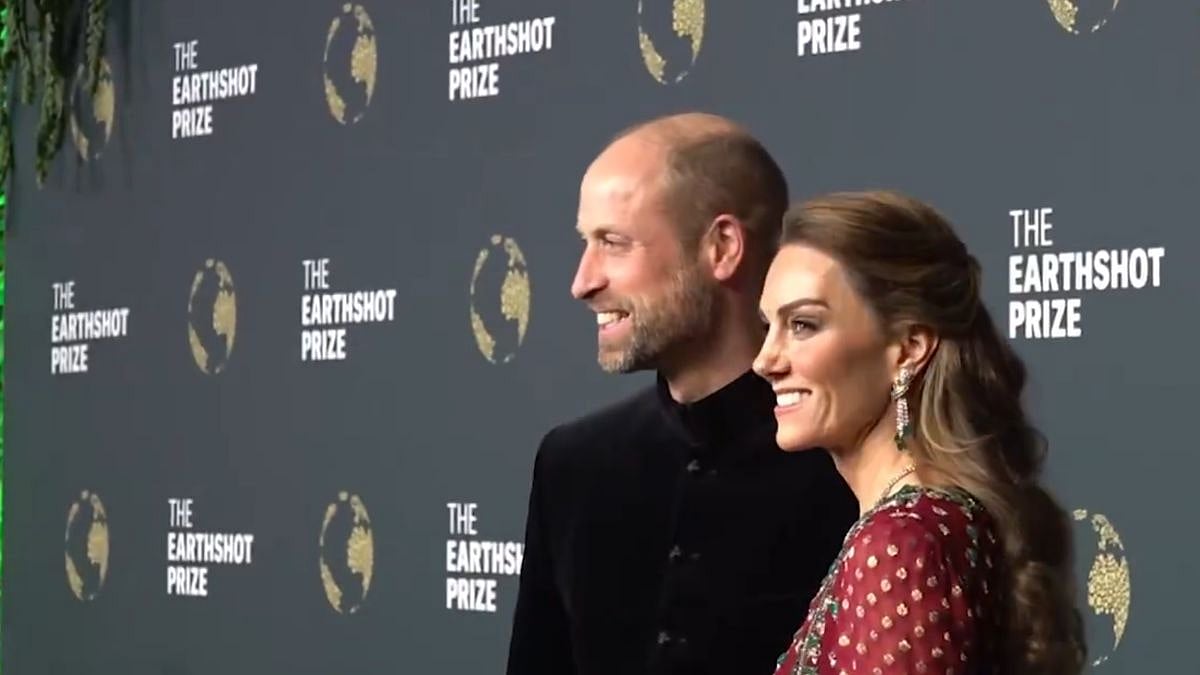
The Earthshot Prize 2026 recognised five environmental initiatives, while questions remain over the visibility given to Mumbai's grassroots conservationists | PTI
After all the brouhaha around the Earthshot Prize 2026—its sixth edition hosted in Mumbai by the Prince and Princess of Wales—has settled down, with the couture dissected and the glamour and glitz wrapped up, it is time to ask what it meant for both the prize and our city. Prince William, who set up the initiative, and Princess Catherine segued from the occasion to spend time in Mumbai doing, well, all the Bombay things—some gully cricket, appearances at a charity organisation, and select slices of cinema and its icons, all alongside the prize razzmatazz at the Jio World Convention Centre.
The event awards £1 million ($1.3 million) each to five winners addressing the world’s most pressing environmental challenges in five categories—Protect and Restore Nature, Clean Our Air, Revive Our Oceans, Build a Waste-Free World, and Fix Our Climate. This edition was brought to India in recognition of the fact that the subcontinent has had more winners and finalists than anywhere else since the initiative was founded in 2020. And which Indian city befits an international non-political event better than Mumbai?
Yet, what was showcased about Mumbai? Why was it so unrepresentative? Which Mumbaikar and how many environmentalists were up there exchanging notes with the royals, even if they or their endeavours did not make it to the list of finalists? The entire spectacle—the visit of the royals and the event—was dystopian, to say the least.
Mumbai’s Air Quality Contradicts The Glamour
The Air Quality Index in Bandra Kurla Complex, on the day of the ceremony on November 17, hovered at an ‘unhealthy’ 198, just shy of the ‘poor’ category by two points. The average AQI during the three-day visit of the royals was also in the ‘unhealthy’ category, with readings in localised areas such as Deonar turning ‘poor’ to ‘hazardous’, but these would not have been on the royal itinerary.
It’s elementary—poor air quality has everything to do with mismanagement of the environment, including cutting down thousands of trees and mangroves, enclosing open spaces with construction, unregulated construction dust, and so on. But who cared to join the dots? Well, we can take heart that the Mumbai-based Mahindra group bagged the Clean Our Air prize for its plan to roll out up to one million electric rickshaws across India to drastically cut on-road air pollution—a prototype of which William rode along the Bandra-Worli sea-link promenade.
Make no mistake, the prize is significant, for it rewards people and organisations that have taken up the challenge to address climate change impact. That so many finalists over six years were from India is a matter of pride. But why were they and their work not the cynosure of attention at the event and in the media that was so lavishly showered on celebrities like actors Alia Bhatt and Sonam Kapoor and filmmaker Karan Johar, among others, who, with due respect, have had little to say about environmental issues in Mumbai and even less to do anything about them?
Where Were Mumbai’s Environmental Warriors?
Where, indeed, were the tree-lovers and tree-huggers of Mumbai, the mangrove warriors who battled on sites and right up to the Supreme Court, the conservationists and children who stood up for Aarey, the environmentalists and tribal activists who challenged the Brihanmumbai Municipal Corporation on its plan to drastically reduce the eco-sensitive buffer zone of the Sanjay Gandhi National Park, the women who have doggedly protected Rani Baug’s trees and botanical gardens, the urban designers and architects who have stepped up for natural areas across the city and pushed back on government plans to commercialise or ‘beautify’ them?
Have Bhatt, Kapoor, Johar and their ilk ever uttered even a whimper for Aarey, for the National Park, for the mangroves slated to be cut, for thousands of trees that were hacked, for salt pans being released for construction, or for the revival of the filthy Mithi river that runs so close to the posh Bandra Kurla Complex? By mapping people who have been consistently insensitive or unconcerned about the environment of the city they live in to the earnest and well-meaning Earthshot Prize, it is the latter’s credibility that risks being dented.
Then what remains but to focus on their glam quotient, their sartorial wins, and their air kisses? The less said about the venue, the better. The organisers may justify that it was merely rented out, but there was an inescapable message in hiring the convention centre of the group that’s nothing if not a global oil and petroleum giant—as fossil fuel as they come—and has been facing criticism for helming a private zoo that hardly inspires ecological trust. Surely, William’s office could have done better.
The Earthshot Prize Winners
The winners? Besides Mahindra Last Mile Mobility, Bhutan picked up the prize in the Protect and Restore Nature category for helping protect the water security of 1.6 billion people across South Asia; PFAS-Free France in the Build a Waste-Free World slot for securing the landmark legislation banning 'forever chemicals' in France by 2030; Niue Ocean Wide Trust in the Revive Our Oceans slot for investing in conservation of marine life; and Ørsted, a global energy company, in the Fix Our Climate slot for cutting its direct carbon emissions by more than 98 per cent.
Mumbai needed to see and hear more of them and their efforts; Mumbai needed to see its ecological warriors up there at the event; Mumbai needed no actor and filmmaker to showcase its environmental and climate change action, especially actors and filmmakers who have never stood up for trees and nallahs in their backyards. Mumbai’s tragedy in recent times is exactly this: the conflation of glamour with perfectly good causes where the former overshadows all else.
Smruti Koppikar, an award-winning senior journalist and urban chronicler, writes extensively on cities, development, gender, and the media. She is the Founder Editor of the award-winning online journal ‘Question of Cities’ and can be reached at smruti@questionofcities.org.
To get details on exclusive and budget-friendly property deals in Mumbai & surrounding regions, do visit: https://budgetproperties.in/
RECENT STORIES
-
-
-
-
-