US Midterm: Setback For The Global Right, Critical Victory For Democracy
Donald Trump's Republican Party suffered a major defeat in the US midterm elections, reflecting voter anger over the Iran war, rising living costs, tariffs and alleged corruption. The results have unsettled far-right leaders in Europe and Latin America, prompting some to distance themselves from Trump.

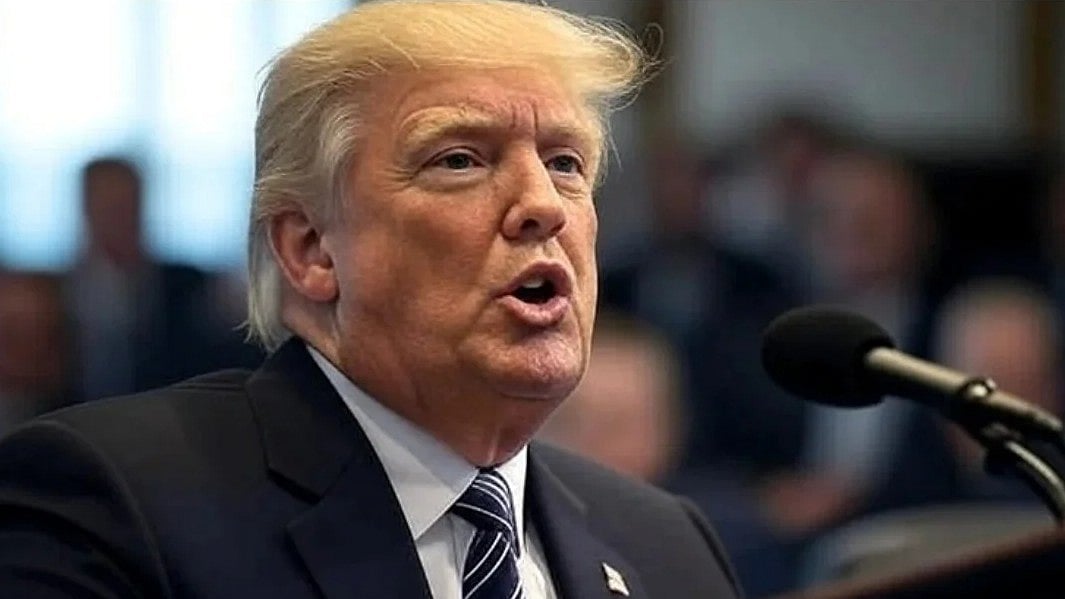
US President Donald Trump | File pic
The word ‘historic’ is often overused in journalism. However, it would not be an exaggeration to describe the scale of defeat for the Republican Party in the US midterm as historic and a critical victory for democracy. The stunning sweep for Democrats possibly explains why even Donald Trump said on election night that he wouldn’t contest the outcome, though last week he raised doubts about the ‘integrity’ of results. The blue wave that powered the Democrats’ extraordinary triumph was not just a huge embarrassment—rather, a humiliation—for the US President, but also a no-nonsense repudiation of his trade policies and America’s illegal Iran war, which has inflicted a deeper economic wound on the US and global economies.
A Political Reckoning For Republicans
It will take a few more weeks to process the fallout of the midterm results. Nonetheless, many are seeing in them a reckoning for Republicans and a seismic shift in American politics. They are also viewed as a considerable setback for the far-right ideology and populist right-wing leaders across Europe and Latin America. The global celebrations that greeted the Democratic tidal wave, which swept the Republicans even out of their deepest heartlands, have their implications. Although a lame-duck president heading into the last two years of his second and final term can no longer do what he wants at home, he, however, wields enormous power abroad, and his radical foreign policy could become even more hyperactive, considering Trump’s autocratic, transactional, and deeply disruptive style of functioning.
There are many reasons for the stinging rebuke to Trump, who, after dominating the national stage for more than a decade and inspiring many right-wing populist leaders across Europe and South America to emulate him, has become so deeply unpopular. Americans were not just angry but felt betrayed by Trump—he promised to end America’s endless wars and bring down prices; instead, he started one and sent prices at gas pumps soaring and grocery bills rising. He promised to ‘drain the swamp’, but media reports say he made more than $2 billion in his first year in office, fuelling voter concerns over corruption to heights they rarely reach.
Democrats Prepare To Rein In Trump
Emboldened Democrats will obviously use their control of the Congress to rein in Trump with their oversight powers to investigate the administration over issues related to corruption, the ‘pardon industry that has emerged around Trump’ and what some commentators call the ‘rivers of cryptocurrency’ flowing into the government and the Trump family. But there are limits to which the Democrats can restrain Trump. Although he is diminished, he still has a lot of powers relating to both domestic issues and foreign policy. Political commentators are of the view that Democrats will likely plan bills which, besides addressing domestic issues, will also try to scrap Trump’s tariffs and force a vote on the war in Iran.
However, the contrarian view of some political observers is that overriding Trump’s vetoes would be difficult for Democrats, and they may struggle to pass legislation or show concrete results on some of their priority issues. When it comes to foreign policy, it may be even harder, since American presidents have enormous powers to act alone. Political commentators also wonder whether Trump’s diminishment at home might even make him roar louder overseas, including escalating the prolonged conflict with Iran. This is because he doesn’t have to worry about electoral consequences and because the war has significantly diminished Trump’s political standing at home. Although this is worrying for the world, it is still early to assess what Trump can achieve—for good or bad.
Global Far Right Faces Setbacks
The question is whether Trump’s defeat has delivered a serious blow to the global far-right. The answer is not simple, as the structural reasons fuelling it have not disappeared. Still, many consider it a setback for European far-right leaders, who had previously highlighted ties with Trump and expressed admiration for his ‘America First’ brand of nationalist politics. Post-midterm, they have all distanced themselves from the US President for obvious political advantage, sensing their closeness to Trump could become a liability. While mostly avoiding criticising Trump directly, most of them have attributed his loss to the Iran war, America’s interventionist foreign policy, and broken poll promises.
This is not surprising, considering Trump’s growing unpopularity, particularly over the cost of living, which is also a growing concern in most European countries and a cause of recent violent protests in France and Italy. Far-right leaders, according to analysts, appeared to want it both ways—to reap the ‘ideological momentum of Trumpism’ without being damaged by the ‘chaos and economic disruption of his presidency’. They are now faced with the reality that supporting Trump and his MAGA allies, who see Europe’s far right as ideological partners in their struggle against the European establishment, risks turning what was once a political asset into an electoral liability.
Right-Wing Surge Remains Intact
The right-wing surge in Europe and elsewhere, though on the back foot, is not receding. It has experienced selective setbacks in a few countries and a tactical shift away from American political ties. An analysis by the European Policy Centre indicates that the principal drivers of the far-right surge, like inflation, distrust in political institutions and the centrist establishment, high living costs, and concerns over immigration, the most exploited issue by right-wing leaders in Europe, are still intact. Some analysts point to localised countertrends, such as left-wing and centrist alliances holding major urban centres in local elections in France or Germany or a narrow defeat for right-wing forces in Slovenia, as signs of pushback against hard-right politics. But others view these as localised ceilings rather than a continent-wide reversal.
Trumpism And Populism Still Pose A Threat
It is too early to speak of Trump in the past tense. It is equally premature to speak of the global far-right as a dying force. The defeat of Trump allies in Serbia and Brazil and earlier in Hungary does not confirm that the European far-right is on the decline. The next election cycle, starting with Spain on November 29, followed by France, Italy, and Poland next year, could reshape the European Union in many ways, depending on who wins. Trump’s defeat in midterms should not be read as the end of Trumpism and right-wing populism. His brand of illiberal politics may be badly damaged, but the threat of Trumpism and nationalist populism, whose sole currency is grievance, will never be gone from politics across the world.
The writer is a senior independent Mumbai-based journalist. He tweets at @ali_chougule
To get details on exclusive and budget-friendly property deals in Mumbai & surrounding regions, do visit: https://budgetproperties.in/
RECENT STORIES
-
-
-
-
-