Twenty-Five Years Of Public Leadership And Global Vision
Narendra Modi completes 25 years in elected office, from becoming Gujarat CM in 2001 to serving as Prime Minister since 2014. His tenure has seen major changes in financial inclusion, digital infrastructure, welfare, taxation, roads, railways, manufacturing and India’s global engagement, while the next phase faces challenges in jobs, skills, healthcare and productivity.

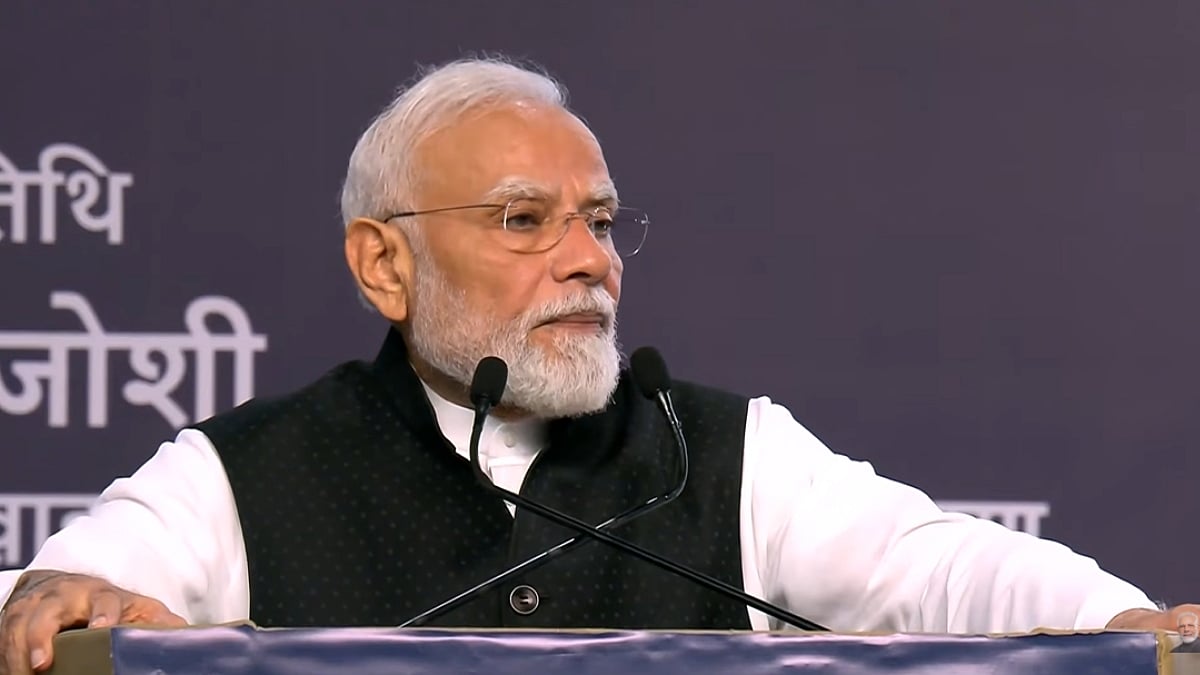
PM Narendra Modi | YT/@Narendra Modi
Today, Prime Minister Narendra Modi completes 25 years in elected public office, beginning as Gujarat’s chief minister in 2001 and moving to the Prime Minister’s Office in 2014. Few leaders get the opportunity to govern continuously for a quarter of a century, first at the state level and then at the national level. It offers an opportunity to examine what this long period of public leadership has meant for the way India works and for the lives of its citizens.
What also stands out across these 25 years is his sheer willpower and extraordinary energy to work day after day, with a relentless commitment to public office. That personal stamina has been a visible feature of his political journey, through periods of opportunity as well as moments of considerable challenge.
Everyday India And Governance
The easiest way to understand these years is to look at everyday India. A bank account that can be opened with far less paperwork, money reaching it directly, a government service accessed through a mobile phone, a highway cutting travel time, a railway station being rebuilt, tap water reaching a household or a small entrepreneur getting formal credit are all visible parts of a larger change. Individually, each may appear incremental. Together, they have altered the citizen’s experience of the state.
That emphasis on delivery was visible during Modi’s years in Gujarat and became much larger after 2014. Financial inclusion through Jan Dhan, digital payments, and digital public infrastructure created new ways for citizens to participate in the formal economy. GST brought most indirect taxes into a common framework. The Insolvency and Bankruptcy Code changed the approach to stressed companies and bad assets. Infrastructure investment accelerated across roads, railways, airports, and logistics, while manufacturing and domestic capabilities became central to the economic policy conversation.
Social Development And Inclusion
The social development story deserves equal attention. Swachh Bharat made sanitation a national priority. Ujjwala sought to move millions of women away from traditional cooking fuels. Jal Jeevan Mission took drinking water to the centre of rural development. Ayushman Bharat expanded access to health insurance. Housing programmes, financial inclusion, and direct benefit transfers sought to bring government support closer to households. These initiatives matter because development is ultimately experienced at home, in the kitchen, at the bank, in the school, and in the hospital. The growing participation of women in financial and economic activities is another important part of this change.
Corporate India has experienced the transformation directly. Businesses today operate in a more formal and digital economy, with electronic payments, integrated taxation, expanding infrastructure, and greater access to formal financial channels. The business environment has also placed greater demands on companies, boards, and promoters around transparency, risk management, and governance.
India’s Growing Economic Confidence
There has also been a visible change in India’s economic confidence. The country increasingly presents itself as a destination for manufacturing, technology, and investment, while simultaneously seeking to build domestic capabilities in strategic sectors. Its digital public infrastructure has attracted global attention. Its physical infrastructure has expanded. Its engagement with the world has become more assertive. India, increasingly, sees itself as a country capable of building, innovating, competing, and contributing at a global scale.
No leader, however, has a perfect journey, and no long period in public office can be expected to have smooth sailing. Human history offers no such example. Modi’s own 25-year journey carries that same universality. There have been difficult decisions, major disruptions, contested policies, crises and periods when expectations were tested. The pandemic, economic shocks, and intense geopolitical challenges were part of the journey too. A mature assessment of any long tenure must have room for achievements as well as challenges.
Scale Of Governance
What remains striking is the scale at which governance has been attempted. India’s size makes implementation a formidable task. A programme reaching a few million people is one thing; building systems that work across hundreds of millions of citizens, thousands of towns and villages, and widely different social and economic circumstances is quite another. The push towards technology, formalisation, and direct delivery has been an important response to that challenge.
The next phase will demand even more. Employment, skills, education, healthcare, urban infrastructure, and productivity will determine whether economic growth translates into wider prosperity. Artificial intelligence will create new opportunities while disrupting established forms of work. India will need stronger enterprises, deeper capital markets, and institutions capable of supporting a more complex economy. The gains of the past decade will have to be translated into opportunities that reach the next generation.
With his vast experience of 25 years in elected office, Prime Minister Modi is uniquely placed to groom and nurture the next generation of leaders who can take India to even greater heights to achieve its potential. India’s Viksit Bharat journey will require capable leadership across politics and public life.
Twenty-five years in elected office is, therefore, more than a personal political milestone; it is also a marker in India’s own transformation.
Dr Srinath Sridharan is a policy researcher and corporate adviser. X: @ssmumbai
RECENT STORIES
-
-
-
-
-