The United Kingdom Is Battling The Brexit Aftereffects
Brexit’s aftereffects have intensified debate over independence and devolution across Scotland, Northern Ireland and Wales, putting fresh pressure on the UK’s Westminster model. Differing regional positions on the EU and post-Brexit arrangements continue to shape demands for greater autonomy and constitutional change.

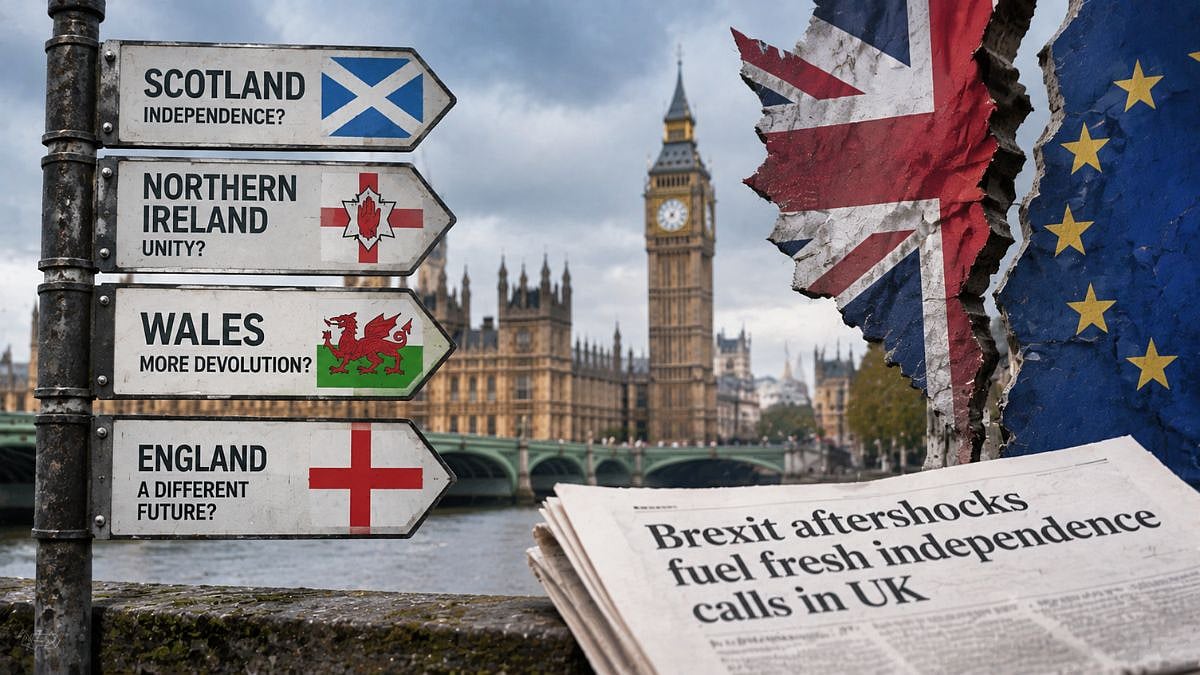
Post-Brexit political pressures have renewed debate over devolution, independence and the future of the UK’s constitutional structure | AI Generated Representational Image
The call for an independence referendum issued on Monday by leaders of the UK’s three Celtic nations—Northern Ireland, Scotland, and Wales—is the clearest indication yet of the writing on the wall for the centuries-old Westminster model of government.
According to polls, about 47 per cent of Scots would vote for independence in a plebiscite. The proportion is upwards of 30 per cent in the other two regions, as all of them have reaped the benefits of devolution from London for roughly a quarter of a century.
When the 2014 referendum for independence was rejected in Scotland, the result was viewed even at the time merely as a temporary setback for the Scottish Nationalist Party (SNP).
On the other hand, the prospects for Northern Ireland’s unification with the Republic to its south have been codified under the terms of the historic 1998 Good Friday Accord between Britain and the Republic of Ireland.
Brexit Shifts Political Momentum
Marking a watershed in the political momentum across the three jurisdictions was Britain’s suicidal June 2016 referendum vote to leave the European Union (EU) by a narrow majority.
Crucially, the electorate in both Scotland and Northern Ireland voted to stay within the bloc, which position may well have strengthened support for independence from the UK.
Although the Welsh predominantly voted to leave the EU, recent years have seen a rise in support for joining the bloc and, in turn, for independence.
Northern Ireland’s Post-Brexit Status
The real irony in the wake of the 2016 referendum was that several leaders across Europe were seriously concerned that Brexit might set a dangerous precedent within the bloc. The reality in many ways has turned out to be otherwise.
The ultra-hard terms of withdrawal that Britain’s Conservative government negotiated with Brussels have contributed much to the momentum for independence in the regions. One notorious instance is the current status of Northern Ireland, which operates under a dual jurisdiction.
The border drawn up in the Irish Sea post-Brexit has divided the region in two—one that continues to constitute the territory of the United Kingdom and the other that would remain under the jurisdiction of the EU.
The arrangement is meant to prevent British goods illegally entering the EU single market and vice versa, as well as to prevent the return of a hard border between Northern Ireland and the Irish Republic that could jeopardise peace across the region.
Expressing strong reservations, Theresa May, former UK premier, observed that no government of a sovereign, self-respecting country could acquiesce in a proposal to split up its own territory.
Push For Greater Devolution
The incumbent UK Prime Minister, Andy Burnham, is clearly committed to a more devolved administration from his background as Greater Manchester mayor. But the First Ministers from the three regions are, if anything, sceptical that his pitch and his promises for devolution go far enough.
RECENT STORIES
-
-
-
-
-