The El Nino Effect: Karnataka, Maharashtra Battling Drought-Like Conditions
El Niño-linked rainfall deficits are intensifying drought-like conditions in Karnataka and Maharashtra, with prolonged dry spells affecting crops and water availability. Maharashtra has recorded a significant rainfall shortfall, while Marathwada faces severe water stress. Karnataka has also reported widespread rainfall deficiency across its districts.

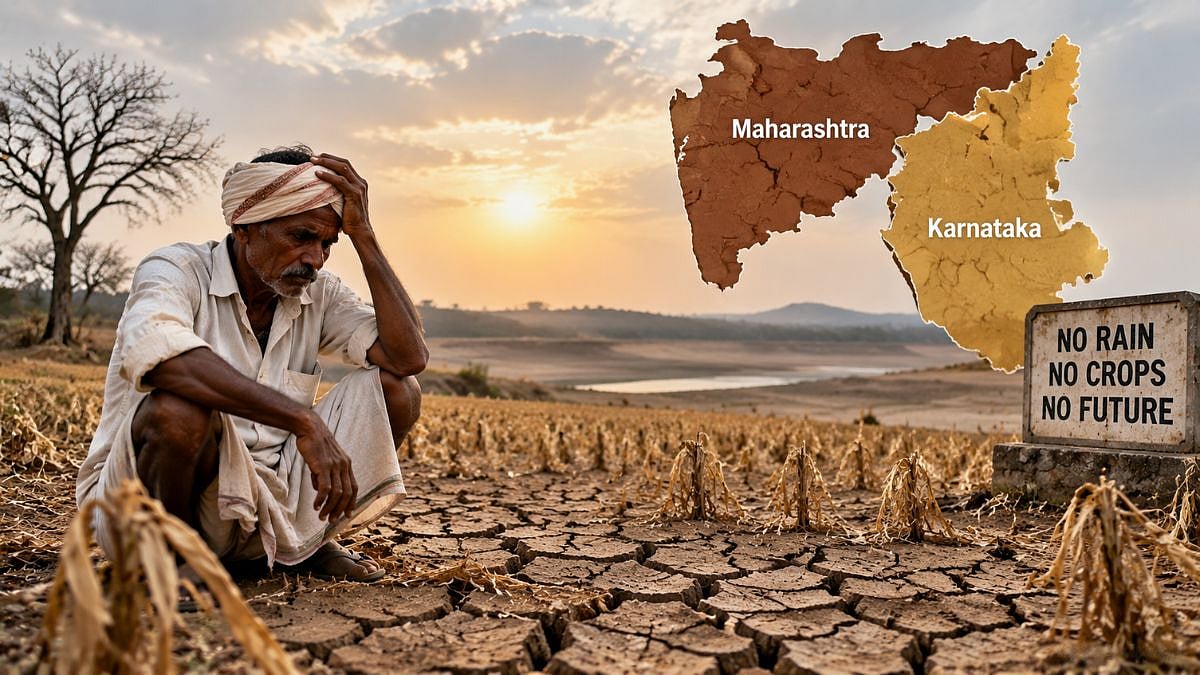
Prolonged dry spells and below-normal rainfall have intensified agricultural and water stress across parts of Karnataka and Maharashtra | AI Generated Representational Image
As the southwest monsoon comes to a close, it leaves behind a series of travails across the country, the worst of them being drought or drought-like conditions. It has shown again that averages do not matter when millions of lives are at stake and thousands of acres stand on the brink of an agricultural crisis. India’s average rainfall deficit stands at around 15-17 per cent, but the shortfalls recorded so far are staggering—Meghalaya (59 per cent), Manipur and Arunachal Pradesh (41-42 per cent), Andhra Pradesh (42 per cent), Karnataka (31 per cent), and Kerala (28 per cent). Karnataka’s legislature has a special session this week, but the DK Shivakumar-led state government has, by now, declared 177 of its 239 talukas drought-hit. It estimates that the crop losses have already hit Rs 18,000 crore.
Maharashtra Faces Severe Shortfalls
The inadequacy of the average is evident across Maharashtra. While the state-wide rainfall deficit stands at about 17-18 per cent, the Marathwada and Vidarbha regions are in the grip of an extreme situation. State Agriculture Minister Dattatray Bharne himself described the situation in Marathwada as “grave”. The rainfall deficit in its eight districts is nearly 50 per cent; Vidarbha is not much better. At the last count, 31 of Maharashtra’s 36 districts were drought-affected. Acute agricultural stress and drinking water scarcity finally prompted Chief Minister Devendra Fadnavis to constitute a cabinet sub-committee this week to decide on drought relief and monitor the situation across the state.
Relief Measures Under Pressure
The crisis did not erupt suddenly; the deficit was adding up over the past few weeks. It is pertinent to ask if the state governments, especially the Fadnavis government, were caught napping at the wheel. The situation turned so serious that veteran politician Sharad Pawar had to write a letter to the Chief Minister, demanding the state government declare drought in these 31 districts. The official declaration is important for a series of relief measures to be invoked—releasing compensation for crop losses, insurance payouts to farmers, rescheduling crop loans, setting up cattle camps, officially requisitioning water tankers (or water trains in acute cases), electricity bill waivers, student fee concessions, and augmenting employment guarantee schemes. People’s survival depends on these measures taken in a timely manner.
Focus On Drought Resilience
There is little to be gained by the politicisation of the drought either by the BJP and Janata Dal (S) in Karnataka or by the Congress, Nationalist Congress Party (SP) and the Shiv Sena (UBT) in Maharashtra. Yet, it is likely to dominate discussions and headlines. The governments can be taken to task later, given that the rainfall deficiency due to El Nino was anticipated, the urgency now is to address the acute water shortage, crop failure, and already mounting farmer suicides and eventually make the worst-hit regions drought-resilient as the climate change impacts intensify.
RECENT STORIES
-
-
-
-
-