The Cuban Crisis: Turning The Lights Off In Havana
Cuba is facing a severe energy crisis following US pressure on fuel supplies, leading to power outages, supply disruptions, and humanitarian challenges. The situation has exposed geopolitical tensions and limited global response as the country struggles with worsening living conditions.

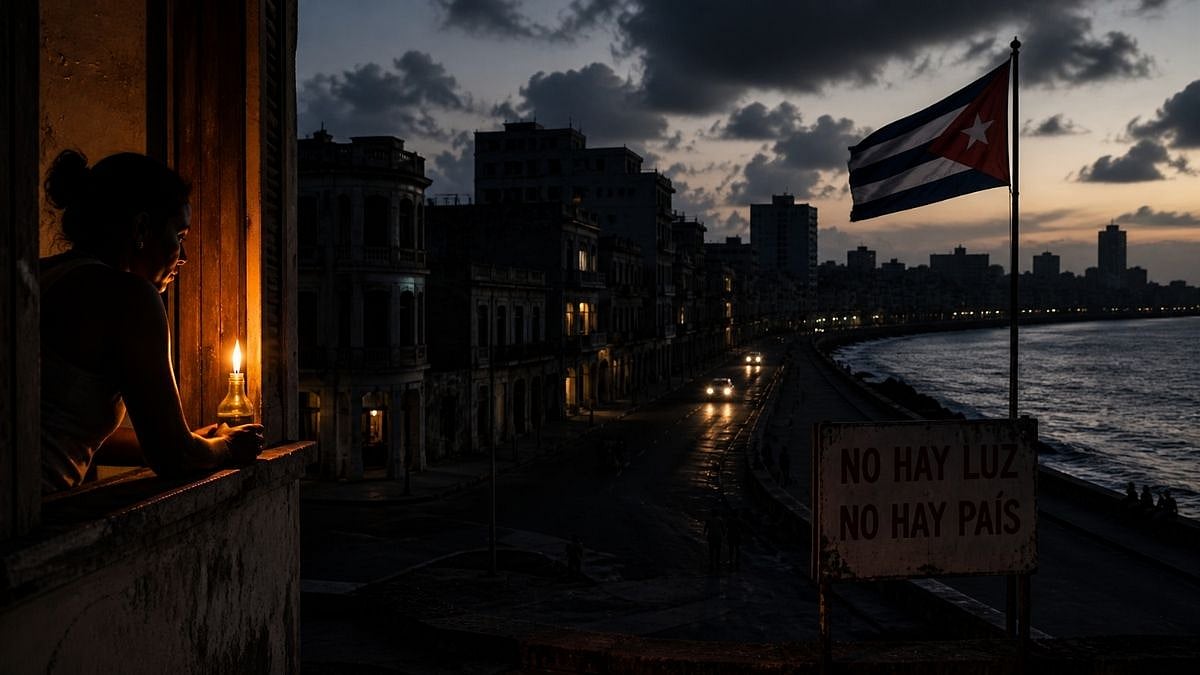
Power outages in Havana reflect Cuba’s deepening energy crisis amid global geopolitical tensions | AI Generated Representational Image
The scene in Havana this past May Day was not one of revolutionary triumph but of a quiet, mechanical exhaustion. In the twenty-first century, the most effective way to destroy a nation is not to bomb its cities but to turn off switches that power it. Since the American executive order of late January, Cuba has been subjected to a maximum pressure campaign, a euphemism for a deliberate energy strangulation.
It has reduced a country of eleven million people to a state of pre-industrial misery. This is the "Donroe Doctrine" in its most naked form, an assertion that the Western Hemisphere is a private estate and that any tenant who fails to please the landlord must be starved out.
Only the other day, Donald Trump, the American president, punctuated this policy with a characteristic quip, suggesting that he needed only send a single warship to sit offshore and the island would "immediately surrender".
The rhetoric reveals the cruelty of the project: the belief that human dignity can be extinguished by a sufficiently large shadow. By threatening punitive tariffs on any third nation that sells oil to the island, the United States has weaponised the global trade system to create a proxy blockade.
It is also, by any honest reading of international law, patently illegal. To target the fuel that pumps a nation's water and powers its hospitals is to target the hapless population.
Humanitarian and economic fallout
The results are as debilitating as they are visible. The national grid has collapsed. In the provinces, food remains stuck in warehouses because there is no diesel for the trucks. Surgeons operate by the light of mobile phones until the batteries die.
Meanwhile, the international response has been a study in hollow gesture. Nations like Russia, China, and Brazil have made the right noises, but their actions amount to little more than tokenism. Stifled by the threat of American financial retaliation, these powers have largely stood by while the island’s vitals are squeezed.
Regional impact and global implications
Furthermore, we are witnessing a disturbing transformation in state behaviour across the region. Under the threat of economic retaliation, Cuba’s neighbours have been bullied into a cold, forced distance. Mexico has halted its tankers; Nicaragua has shuttered its borders.
Small Caribbean nations have been told to expel the medical brigades that once provided their only healthcare. This amounts to the export of fear. When a superpower uses its muscle to force smaller nations to break their traditions of solidarity, the entire idea of a rules-based order turns to a sham.
A policy under criticism
We deplore this situation. There is something profoundly cowardly about a policy that inflicts the most agonising consequences upon the poor. By cruelly strangling the island’s energy, Washington is not promoting liberty; it is merely ensuring that the eventual collapse will be as chaotic as possible.
RECENT STORIES
-
-
-
-
-