Supreme Court Comes To The Rescue Of Our Cities
The Supreme Court’s directions to seal commercial premises operating in areas reserved for residential use have renewed focus on urban planning and civic enforcement. The order also cautions authorities against selective action. The broader debate centres on unchecked commercialisation, shrinking residential neighbourhoods, rising property values and the strain this places on city infrastructure.

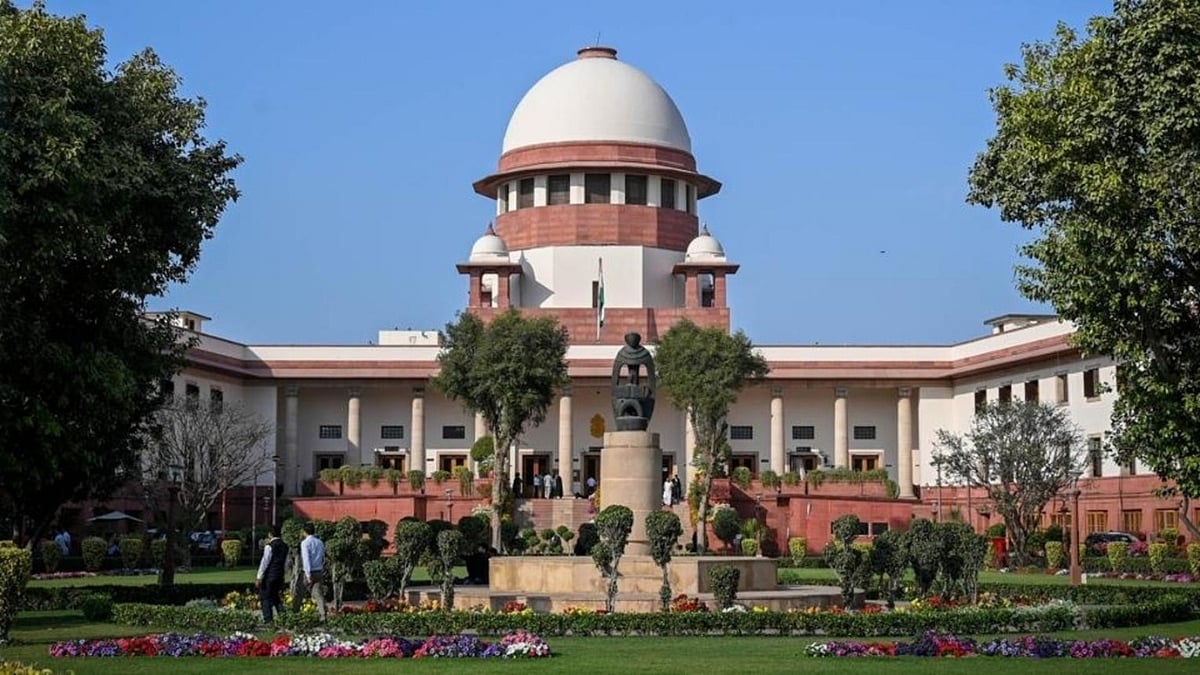
The Supreme Court’s latest directions on commercial use of residential premises have renewed debate over urban planning and civic enforcement | File Photo
The recent Supreme Court order banning the use of residential areas for commercial properties is a much-needed and welcome judgement. The order issued by the Bench of Justices Ahsanuddin Amanullah and R. Mahadevan is the culmination of continuing litigation on the basic question of commercial and residential use of property, which has dogged citizens and the administration over the years. Residential areas in many cities and towns have been turned into commercial areas due to the negligence and corruption of municipal authorities and have become uninhabitable. Many orders issued by various courts in the past in this matter have been merrily disregarded by authorities. The court this time has ordered that commercial properties in residential areas must be sealed without delay.
Challenges In Implementation
There are various problems in implementing this order. The main problem is that many areas are not clearly demarcated and caught up in long-winded litigation. The local administration has refused to act due to this confusion, and so earlier orders from various courts have had no effect on the ground. "If it is brought to the notice of the Court that the authorities have resorted to a pick-and-choose approach, this Court will take a strict view of the matter,” the order has said.
Cities Losing Residential Spaces
This is not a civic problem that will vanish with the order. The flaw lies in the way our cities are developed without any planning in most cases and blatant corruption in the local administration. Apart from this, the rapid rise in the value of residential areas has forced residents to sell their properties to commercial agents. Citizenry is thus forced to move out of business districts to the outer ring or the periphery of cities and towns. Erstwhile green central neighbourhoods are thus vanishing, as can be seen in areas like Greater Kailash and South Extension in Delhi, and Worli, Parel, and other central areas in Mumbai. Cities and even towns are no longer meant for their residents, who are increasingly being pushed out to the suburbs either by force or after being paid off. No more areas are being marked out as exclusively residential. This is the big tragedy of our city planning.
Suburbs And Commercial Expansion
The larger problem of suburbs becoming residential and central districts becoming commercial can be seen in Mumbai, where millions commute from the suburbs to the city centre every day for work. The entire city can come to a standstill if even one railway line becomes dysfunctional. The problem is not acute in Delhi and the National Capital Region (NCR), as commercial areas have also moved outward towards Noida, Faridabad, and Ghaziabad. In the neon-lit township of Gurugram, commercial and residential areas have learnt to coexist side by side. Yet, there is very little to be proud of in our new townships, as land sharks take over every inch of land. Presiding over all of this is the corrupt local official. Our cities have a dark future.
RECENT STORIES
-
-
-
-
-