Stunning Self-Denial, Spectacular Self-Goal: A Pragmatic Take On Parliament's Failed Women's Reservation Bill
An opinion piece backed the NDA’s stance to freeze states’ seat shares despite delimitation concerns, calling it a major act of self-denial. It argued opposition parties, especially in southern states, misread the proposal and harmed their own interests, while shifting focus from women’s reservation politics to national unity and representation.

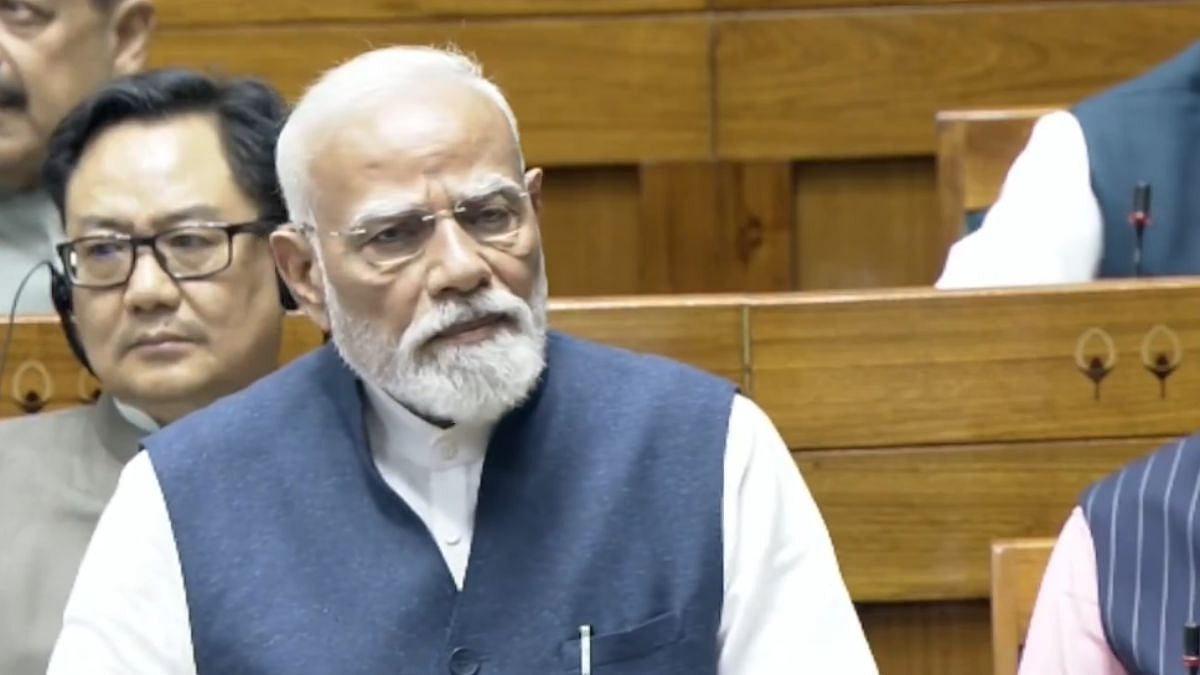
Stunning Self-Denial, Spectacular Self-Goal: A Pragmatic Take On Parliament's Failed Women's Reservation Bill | X / ANI
As the dust settles down after the stormy special session of Parliament on April 16-17, and as the rhetoric gives way to cold logic and sober reflection, it is clear that something astonishing has happened.
Women getting one-third of the seats in the Lok Sabha and Legislative Assemblies for fifteen years is already enshrined in the Constitution through the 106th Amendment. The two key provisions that were sought to be incorporated in the failed 131st Amendment Bill are about delinking the allocation of seats and delimitation of constituencies from the 2026 census and increasing the strength of Lok Sabha by fifty per cent.
Delimitation of constituencies without waiting for the 2026 Census has the merit of expediting the process and ensuring that it is completed before the 2029 Lok Sabha election. Over the past 25 years, because of rapid urbanisation, there is growing disparity in the size of constituencies. For instance, the population of Malkajgiri in the Greater Hyderabad area of Telangana exceeds 5 million; about 90 countries in the world are smaller than this one Lok Sabha constituency! Therefore, delimitation is necessary.
The defeated Bills have only given Parliament the power to decide the year of the census as a basis for delimitation; the official statements in Parliament indicate that for the purpose of delimitation, the last available census data of 2011 will form the basis in order to complete the process in time for 2029.
Increasing the strength of the Lok Sabha seems to have engaged the attention of many, but it has no direct bearing on either women's reservation or allocation of seats to states. Given the vast increase in our population, increasing the number of representatives is a reasonable proposal. But the real benefit of increasing Lok Sabha strength in the context of women's representation is as follows: it will not force many incumbent members to vacate their seats. The fear of reservation for women without increasing the number of seats is that in many cases powerful male politicians will put up their family members as proxy candidates. Women’s empowerment will then be notional, and real leadership will not emerge. In local governments we have already witnessed the phenomenon of 'panchpathis', where the elected woman is the notional leader, but the husband or father exercises real power! Otherwise, increasing the strength of Lok Sabha has no bearing on the issue.
The really substantive issue that the government attempted to tackle is the thorny and sensitive challenge of allocation of seats in Lok Sabha to states. The Constitution Article 81(2) stipulates that seats shall be allotted to each state "in such a manner that the ratio between the number (of seats) and the population of the state is, so far as practicable, the same for all states". Article 82 also states: Upon completion of each census, the allocation of seats in the House of the People to the States....shall be readjusted...
In 1976, through the 42nd Amendment, the number of seats allotted to each state was frozen for 25 years with an intention to promote family planning. In 2001, as the freeze in seats was expiring, I was deeply involved in persuading the then Vajpayee government to continue the freeze in the number of seats allotted to states for another 25 years. We held a national round table with the then law minister, Arun Jaitley; the three members of the Election Commission headed by JM Lyngdoh; and all the state election commissioners and experts in the field. We urged that national unity was paramount in the face of an unwieldy coalition government and the economic challenge posed by external sanctions after the Pokhran nuclear explosion. The parties responded with the 84th Amendment, and the allotment of seats to states was frozen until 2026.
If the allotment of seats is based on the 2026 Census, as per the Constitution, seven states will likely lose 35 seats at the current strength of Lok Sabha: AP (-5), Telangana (-3), Tamil Nadu (-10), Karnataka (-2), Kerala (-7), Odisha (-4), and West Bengal (-4). Four states are likely to gain 34 seats: UP (+12), Bihar (+10), MP (+5), and Rajasthan (+7). It is widely accepted that the BJP is the main beneficiary of such redistribution of seats to states based on the 2026 population.
In a stunning act of self-denial, the NDA government came forward to freeze the current share of states based on the 1971 Census data. There could be many reasons for the BJP committing to such a freeze—putting the nation above the party, paving the way for expanding their footprint in the South, or avoiding a divisive issue when the nation must focus on growth and prosperity in the face of global challenges. Whatever be the motivation of the BJP, the seven states that lost share of population are offered an unexpected gift. You don't look a gift horse in the mouth!
Surprisingly, the parties which have great stakes in the South and East have scored a spectacular self-goal. This is a classic case of cutting the nose to spite the face.
If political animosity makes you oblivious of your own interest or the larger interests of fostering unity and focusing on growth and harmony, it is a sign of dysfunctional politics.
In the long run migration will resolve the imbalances. Already millions of migrant workers are building and sustaining the economies of several states in the South, West, and North. That is why, despite a low fertility rate, Maharashtra's share of the population is increasing. In the US, dramatic internal migration changed the demography and representation over the years. People move freely to states where there is growth and jobs are created. In a century, Florida increased its representation in the US Congress from 4 to 28, California from 11 to 52, Texas from 18 to 38, and Washington from 5 to 10. Owing to outward migration, New York lost seats, from 43 to 26, Pennsylvania from 36 to 17, Illinois from 27 to 17, Ohio from 22 to 15, and Missouri from 16 to 8.
We should make it easy for people to migrate to other states and recognise and respect their constitutional rights everywhere and make their lives easier and safer. That will resolve our demographic challenges. Most states reached low fertility levels, and Bihar, UP, MP, Rajasthan, and Jharkhand too are going to reach them in a few years.
We need a reasoned and pragmatic approach to grow together and become strong. Shedding inflammatory and divisive rhetoric and focusing on quality education and skills and opportunities for all are the minimal requirements for a bright future. National unity and our quest for opportunity and prosperity demand a harmonious and swift resolution of the allotment of seats to states.
The author is the founder of Lok Satta movement and Foundation for Democratic Reforms. Email: drjploksatta@gmail.com / Twitter@jp_loksatta Stunning Self-denial – Spectacular Self Goal
RECENT STORIES
-
-
-
-
-