'Satluj': A Film That Could Rewrite Punjab's Political Narrative Before the 2027 Polls
More than a cinematic controversy, 'Satluj' has reopened Punjab's deepest political and emotional wounds. As parties struggle to position themselves on terrorism, justice, Sikh identity and farmers' politics, the film may reshape electoral equations well before the next Assembly elections.

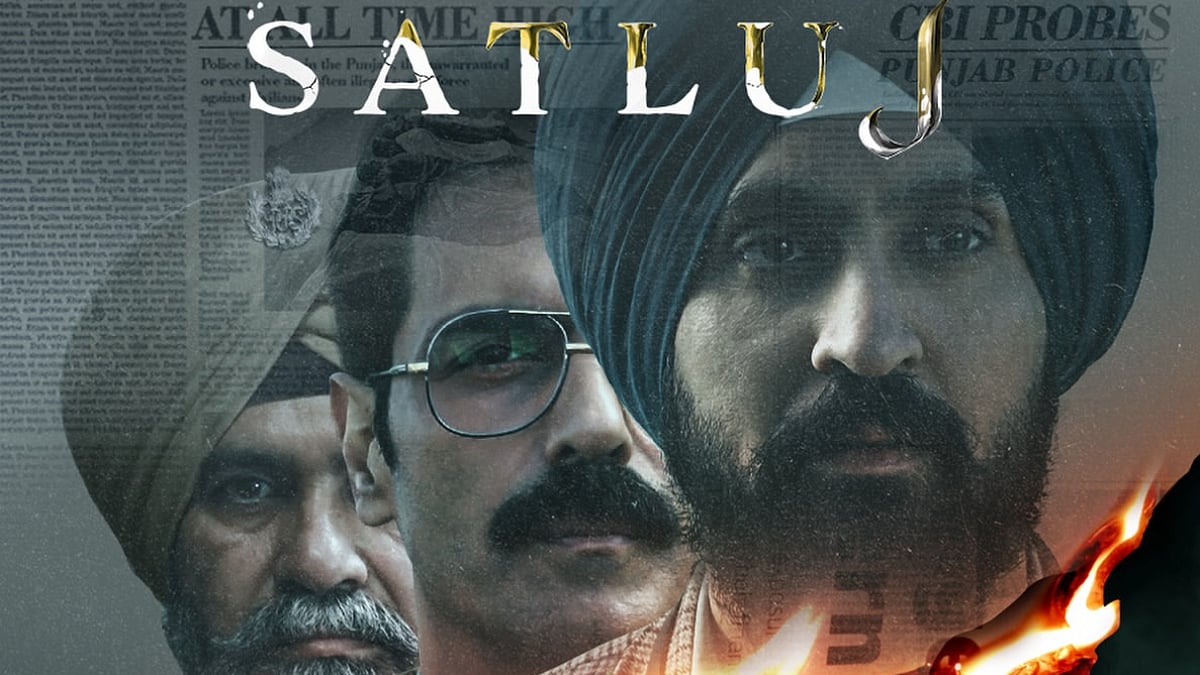
'Satluj': A Film That Could Rewrite Punjab's Political Narrative Before the 2027 Polls | Instagram
The release of the film 'Satluj' has triggered one of Punjab's most politically sensitive debates in recent years. Rarely has a film entered the state's political arena with such explosive potential. It has revived painful memories of the militancy era, reopened questions about state action and human rights, and forced every major political party to reassess its electoral calculations.
Unlike routine controversies surrounding films, Satluj touches the most sensitive chapter in Punjab's modern history. For many families, the violence of the 1980s and early 1990s remains a living memory rather than a closed chapter. Consequently, the political responses to the film are being shaped less by artistic merit and more by electoral compulsions.
With the Punjab Assembly elections due next year, every party recognises that its stand on the film could influence rural voters, Sikh sentiment and public perceptions about justice, terrorism and governance.
Akali Dal Sees an Opportunity for Revival
Among all political parties, the Shiromani Akali Dal (SAD) has been the quickest to seize the political opportunity.
After suffering successive electoral setbacks and losing much of its traditional rural support, the Akali leadership has openly defended the film and announced plans to organise screenings across hundreds of villages. The objective is clear: reconnect with rural Sikh voters who drifted away after the farmers' agitation and years of organisational decline.
The Akalis appear convinced that the emotional appeal of the film can help revive memories of alleged excesses committed during the militancy period while reinforcing their long-standing narrative of protecting Sikh interests.
Village-level screenings are not merely cultural events; they are political mobilisation exercises. Every screening becomes an opportunity to rebuild grassroots networks, revive local leadership and reconnect with voters who had abandoned the party.
The strategy is particularly significant because rural Punjab remains the Akali Dal's natural electoral base. If the party succeeds in converting emotional sentiment into political support, it could begin recovering lost ground before the Assembly elections.
The BJP Faces Its Most Difficult Balancing Act
For the Bharatiya Janata Party, the controversy presents a far more complicated challenge.
The BJP has consistently projected itself as a party that stands firmly against terrorism and separatism. Many within its traditional support base would expect it to oppose any narrative perceived as glorifying or justifying militancy.
However, Punjab's electoral realities are very different.
The BJP has been attempting to expand beyond its traditional urban Hindu support base into rural Sikh constituencies. That effort suffered a major setback after the three farm laws triggered massive protests. The eventual withdrawal of the laws reduced tensions but did not completely erase farmers' resentment.
If the BJP openly opposes the film, it risks reinforcing the perception among sections of rural voters that it remains insensitive to Sikh grievances. On the other hand, remaining silent or appearing sympathetic to the film could alienate its nationalist support base elsewhere.
The controversy has also complicated the possibility of reviving the BJP-Akali alliance.
The two parties ended their decades-old partnership primarily because of differences over the farm laws. If the Akalis continue aggressively championing the film while the BJP adopts a contrary position, rebuilding political trust between the two former allies may become even more difficult.
Thus, the BJP finds itself trapped between ideological consistency and electoral pragmatism.
Congress Walks a Political Tightrope
The Congress perhaps faces the most uncomfortable dilemma.
Its initial response has been cautious.
Punjab Congress president Amarinder Singh Raja Warring declined to comment before watching the film, while former Chief Minister Charanjit Singh Channi maintained that the film should not be banned if it presents historical facts.
Behind this guarded approach lies a far deeper political problem.
The events portrayed in the film largely belong to a period when Congress governments ruled Punjab. Any renewed public debate inevitably revives questions about the state's anti-militancy operations, alleged human rights violations and the assassination of former Chief Minister Beant Singh.
Within Congress itself, opinions reportedly remain divided.
Some leaders believe public memory fades with time and that development issues will ultimately dominate elections.
Others are less optimistic.
Beant Singh continues to be remembered by many Punjabis as the leader who restored normalcy after years of terrorism. Defending criticism of his government without appearing insensitive to victims of excesses is politically difficult. Equally challenging is responding to demands for historical justice without reopening old wounds.
The Congress therefore finds itself defending neither the film nor the governments whose actions remain central to the debate.
History Cannot Be Selective
One of the principal criticisms of Satluj is that it appears to focus primarily on one side of Punjab's tragic history.
Every democracy has the right to revisit difficult periods through cinema. Films can provoke debate, question official narratives and bring forgotten stories into public discourse.
However, historical balance remains equally important.
Punjab's militancy was not defined solely by allegations of excesses by security forces. It also witnessed the brutal killing of thousands of innocent civilians, journalists, teachers, public servants, religious leaders and political workers. Entire families were devastated by indiscriminate violence.
Equally significant was the devastating impact of extremist ideology associated with Jarnail Singh Bhindranwale. A generation of Punjab's youth became trapped in violence, radicalisation and fear. Economic activity suffered, investment collapsed and social harmony was severely damaged.
Any portrayal that overlooks these realities risks presenting an incomplete understanding of one of independent India's darkest chapters.
Cinema has every right to question the actions of governments. It also carries a responsibility to acknowledge the suffering of all victims rather than selectively highlighting one narrative.
Will the Film Influence the Election?
Whether Satluj alone changes electoral outcomes remains uncertain.
Punjab elections are usually fought on multiple issues—farm distress, unemployment, drug abuse, corruption, fiscal management and governance.
Yet emotionally charged issues often reshape political discourse in unexpected ways.
The film has already shifted public attention from governance to identity, history and justice.
For the Akalis, it offers a chance to reclaim lost political relevance.
For the BJP, it presents a strategic dilemma that could affect both rural outreach and future alliance options.
For the Congress, it reopens uncomfortable questions linked to one of its own governments.
The ruling Aam Aadmi Party, meanwhile, has largely avoided taking a definitive stand, preferring not to become trapped in a highly polarising debate that offers few electoral gains.
A Contest Over Memory
Ultimately, Satluj is no longer merely a film. It has become a contest over history, memory and political legitimacy.
The debate it has generated illustrates how unresolved historical wounds continue to influence present-day politics in Punjab. Every party is attempting to interpret the past in a manner that serves its electoral future.
Whether this strategy succeeds will depend on how voters perceive the competing narratives.
If the controversy deepens, the next Punjab Assembly election may be fought not only over jobs, agriculture and governance but also over competing interpretations of one of the state's most painful historical chapters.
That would make Satluj far more than a cinematic success or failure—it could become one of the defining political issues of Punjab's next electoral battle.
(The writer is a senior political analyst and strategic affairs columnist based in Shimla)
RECENT STORIES
-
-
-
-
-