Protocol Politics: The Unseemly Fight Over President Droupadi Murmu's Visit And Bengal's Electoral Heat
A political row has erupted between Narendra Modi and Mamata Banerjee over alleged lapses during the north Bengal visit of Droupadi Murmu. Modi accused the state government of disrespecting the President by failing to ensure proper arrangements and by Banerjee’s absence at official receptions. Banerjee denied the charge, saying the visit was for a private p

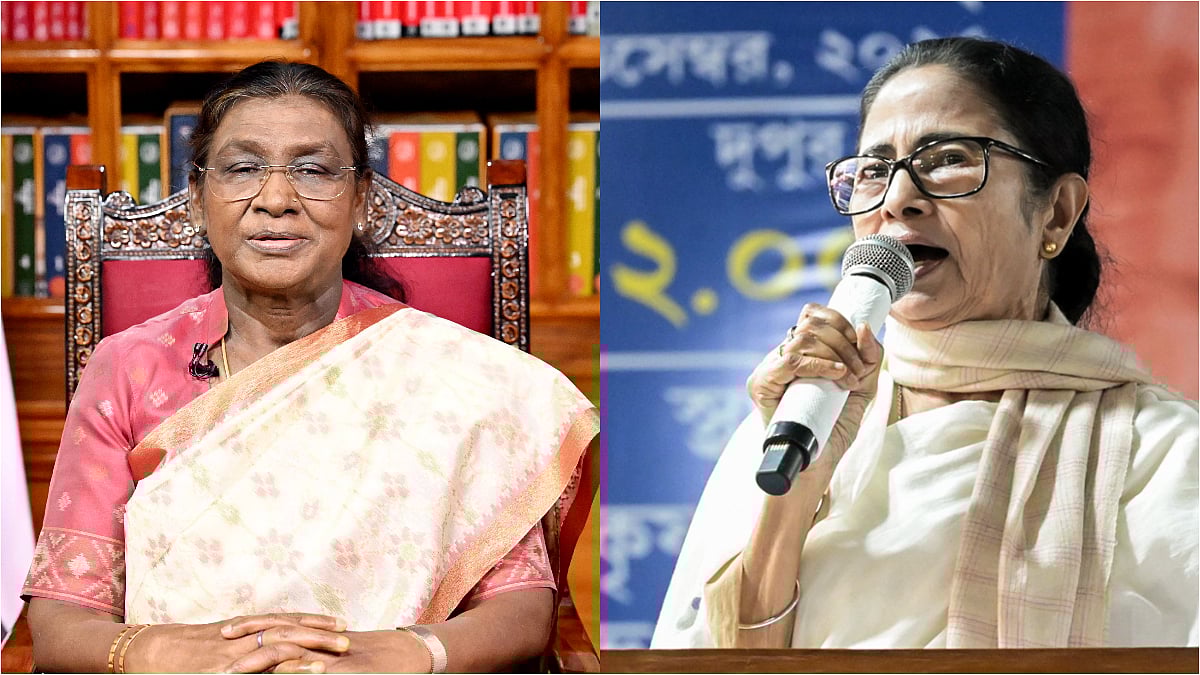
The political exchange between Prime Minister Narendra Modi and West Bengal Chief Minister Mamata Banerjee over the recent visit of President Droupadi Murmu to north Bengal illustrates how quickly matters of protocol can descend into partisan combat. | File Pic
The political exchange between Prime Minister Narendra Modi and West Bengal Chief Minister Mamata Banerjee over the recent visit of President Droupadi Murmu to north Bengal illustrates how quickly matters of protocol can descend into partisan combat. The Prime Minister accused the West Bengal government of disrespecting the President during her visit. He referred to alleged lapses in arrangements—including reports that there was no water in a washroom and that waste lay scattered along the route. He also interpreted the Chief Minister’s absence at the reception and farewell as a deliberate snub. Taking the argument further, he suggested that the insult was not merely personal but directed at the tribal community to which the President belongs.
However, Banerjee is not a political leader who lets accusations pass unanswered. She responded with a counter-charge that turned the spotlight back on the Prime Minister himself. Referring to a photograph taken during the ceremony in which the President conferred the Bharat Ratna on former deputy prime minister LK Advani, she pointed out that the Prime Minister was seen seated while the President stood beside him. If that image is taken literally, Banerjee argued, it would represent a more serious breach of protocol and even a departure from India’s long-standing tradition of showing respect to women. Banerjee also made a procedural point that deserves attention. The President had travelled to the state to attend a private programme, an event not organised by the state government. Even so, she was received by the mayor of Siliguri and other dignitaries. The other criticism—that garbage was visible along the road—must be viewed in a broader perspective. Waste lying on public roads is an unfortunate but familiar sight across Indian cities, including the national capital. This is despite the much-publicised Swachh Bharat Mission launched soon after Modi assumed office in 2014. To single out one incident as proof of deliberate insult appears somewhat excessive.
ALSO READ
In reality, few observers doubt that the controversy is inseparable from the political context. Assembly elections in West Bengal are expected to be announced at any time, and the Bharatiya Janata Party is determined to make a strong push in the state. Allegations about voter roll revisions and administrative manoeuvres have already sharpened the political climate. Some even fear that circumstances may be created to justify the imposition of the president’s rule. Such developments do little credit to India’s federal democracy, where the centre and the states are meant to function as partners in governance. The president, as the constitutional head of the republic, commands the respect of all citizens regardless of political affiliation. Dragging that office into partisan skirmishes diminishes not only the dignity of the presidency but also the quality of the democratic discourse.
RECENT STORIES
-
-
-
-
-