Pranab Mukherjee: The PM India Could Never Have
Pranab Mukherjee spent decades at the centre of India's political establishment but never became prime minister. Sonia Gandhi's memoir has revived debate over his reported ambition for the post in 2010 and earlier missed opportunities. The article examines his political experience, strengths and limitations, and what his leadership might have meant for India.

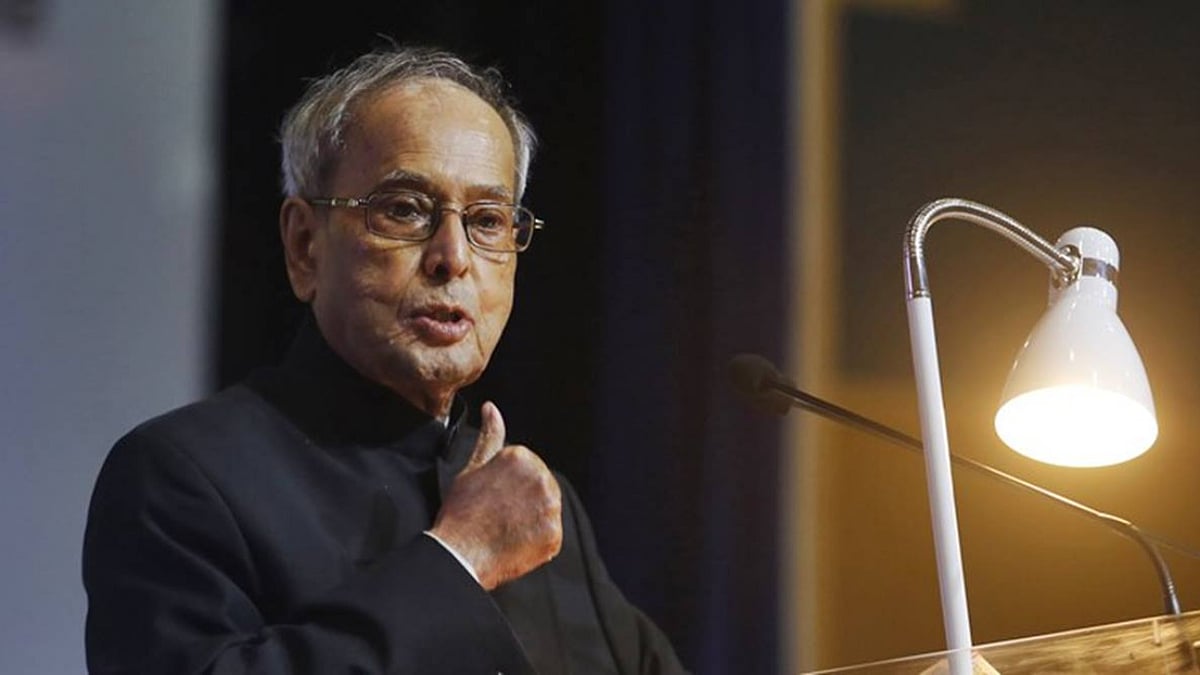
Former President Pranab Mukherjee spent decades at the centre of India's political establishment but never became Prime Minister | File Photo
There are moments in a country’s political history when a person whom many felt was the best equipped to take over the reins of that nation’s destiny never gets the opportunity. Pranab Mukherjee’s political career was perhaps one of independent India’s most compelling examples of this paradox.
An accomplished economist, a seasoned diplomat, and a master of political craft at home, ‘Pranab Da’, as he was fondly called by those who knew him, spent decades at the centre of India’s power structure but never managed to make it to the ‘Numero Uno’ position. Congress chief Sonia Gandhi’s recently released memoir, ‘Belonging: A Journey of Love’, has brought this unfinished chapter of Indian politics back into public debate.
She has recalled a conversation with Mukherjee in 2010, in which he appeared to suggest that it might be time for a change at the top, which she felt was a broad hint that he should be elevated to the office of the PM. It may be recalled that the UPA-II years were marked by rising anti-Congress sentiments and criticism from India’s top businessmen about what they considered “policy paralysis”.
While Gandhi expressed surprise at Mukherjee’s bid for the top job, most politicians, including his own daughter Sharmistha, who has posted on X on the issue, seem to feel it was a natural ambition for a man who had been virtually number two towards the end of Indira Gandhi’s prime ministership.
Mukherjee’s Rise In The Congress
Mukherjee’s political journey started as a founding member of the regional party, Bangla Congress, which sent him to the Rajya Sabha. The Bangla Congress later merged with the Congress after Mrs Gandhi noticed Pranab babu and encouraged him to join her. He soon joined her cabinet as a junior minister and became Indira Gandhi’s chief trouble-shooter.
When Bangladesh’s Sheikh Mujibur Rahman was assassinated, he was asked to look after Rahman’s daughter Sheikh Hasina, forging a lifelong bond to the mutual advantage of both the neighbouring countries.
His elephantine memory and grasp of politics and diplomacy, besides his ability to make friends across political boundaries, made him an acceptable negotiator, a job which Indira Gandhi increasingly thrust upon the shrewd politician, making him commerce and then finance minister and her virtual number two in the cabinet.
The day Mrs Gandhi was assassinated by her bodyguards in Delhi in 1984, Mukherjee was flying back from Kolkata. He told reporters after her death was announced that the Congress Legislative Party would meet soon to elect a new PM.
After this interview went viral, Rajiv Gandhi was sworn in by President Zail Singh in a hurry, without any stamp of approval from the Congress Parliamentary Party. This was possibly his first and best chance to become PM.
Rajiv Gandhi had charisma, popular sentiments were in his favour after Mrs Gandhi’s death and he proved to be a “lucky Prime Minister”. Pranab went into the wilderness for a while and could make a comeback only during his friend PV Narasimha Rao’s prime ministerial years as deputy chairman of the powerful planning commission.
In 2004, when the Congress came back after the tumultuous years of coalitions led by the Janata Dal and then by the BJP, there was suspense over the top job after Sonia Gandhi declined the ‘throne of thorns’. According to Mukherjee’s own memoirs, he had expected to be the replacement choice, but the onerous task fell upon Dr Manmohan Singh’s shoulders.
The 2010 Leadership Question
Then came 2010, when many in the Congress thought there was need for a change of face at the top to help “rejuvenate the Congress brand”. However, as the new memoirs reveal, this did not cross her mind. What possibly might have weighed upon Sonia Gandhi’s mind was that Pranab, the ultimate political wheeler-dealer, might have taken the party away from the path of being led by a single family, while Singh would certainly have remained loyal to her personally.
After all, Mukherjee was a past master on how parties and parliaments worked, how political coalitions were assembled, how bureaucracies functioned, and how competing political interests could be reconciled and suborned. He was among the rare politicians who could move effortlessly between a discussion on fiscal policy, a defence procurement decision, an international negotiation, and the management of a fractious parliamentary session.
He was, instead, soon afterwards, elevated to be the president of India, the highest post the nation can reward anyone with. However, this repositioning of Mukherjee as the non-partisan head of state proved disastrous for the Congress party.
In an era when Indian politics increasingly rewards mass mobilisation, television visibility, and personal charisma, Mukherjee represented a different political tradition: that of the institutional politician, whose authority rested on knowledge, memory, negotiation, and an intimate understanding of the machinery of the state.
He was, in many respects, the Congress’s political encyclopaedia, who remembered past decisions, understood the motivations of political opponents, and could often anticipate the consequences of a legislative or administrative choice. His colleagues knew that when a difficult problem landed on the government’s desk, Pranab Da was likely to have an answer or, at the very least, knew whom to call.
Devoid of the backroom political management that Mukherjee understood better than anyone else, the Congress leadership made one blunder after another in handling the fragile egos of coalition partners, in managing fractious state politics, and even in taking firm economic decisions that could win over the masses.
This disconnect possibly helped the BJP, when it worked to stitch together a formidable coalition and eventually swung the votes its way, bringing the UPA to power with a grand sweep in 2014.
The Qualities And Limitations Of A Leader
Mukherjee had several qualities that India could have benefited from in a prime minister of a nation trying to find its way in the 21st century. He understood the relationship between economic policy and political feasibility, just as he knew how to manage coalition partners, negotiate legislative compromises, and maintain communication across ideological divides.
The Congress’s ‘Man for All Seasons’ also knew how to handle the global balance of power and position India in a manner which would allow New Delhi to exercise far greater power than it actually had.
But the limitations to his leadership role were equally many. Mukherjee lacked a mass political following of his own and could win a Lok Sabha seat at the fag-end of his career. His style was more that of a consummate negotiator than a charismatic national campaigner. He could manage political contradictions, but the question remains: could he inspire the electorate in the manner in which the BJP’s premier candidate could and did?
However, the historian, when he looks back at the early 21st century, will try and judge not whether Mukherjee would necessarily have been a better prime minister than every alternative but rather whether India was denied the opportunity to discover what a government led by one of its most experienced political minds might have looked like.
The writer is Editor, United News of India.
To get details on exclusive and budget-friendly property deals in Mumbai & surrounding regions, do visit: https://budgetproperties.in/
RECENT STORIES
-
-
-
-
-