Politics Is The Art Of The Possible; Comparisons Are Best Avoided
Narendra Modi's completion of 4,399 consecutive days as Prime Minister has prompted comparisons with Jawaharlal Nehru. The article argues that leadership should not be judged solely by tenure, highlighting the vastly different challenges faced by leaders across eras and suggesting that history, rather than statistics, will ultimately assess their legacies.

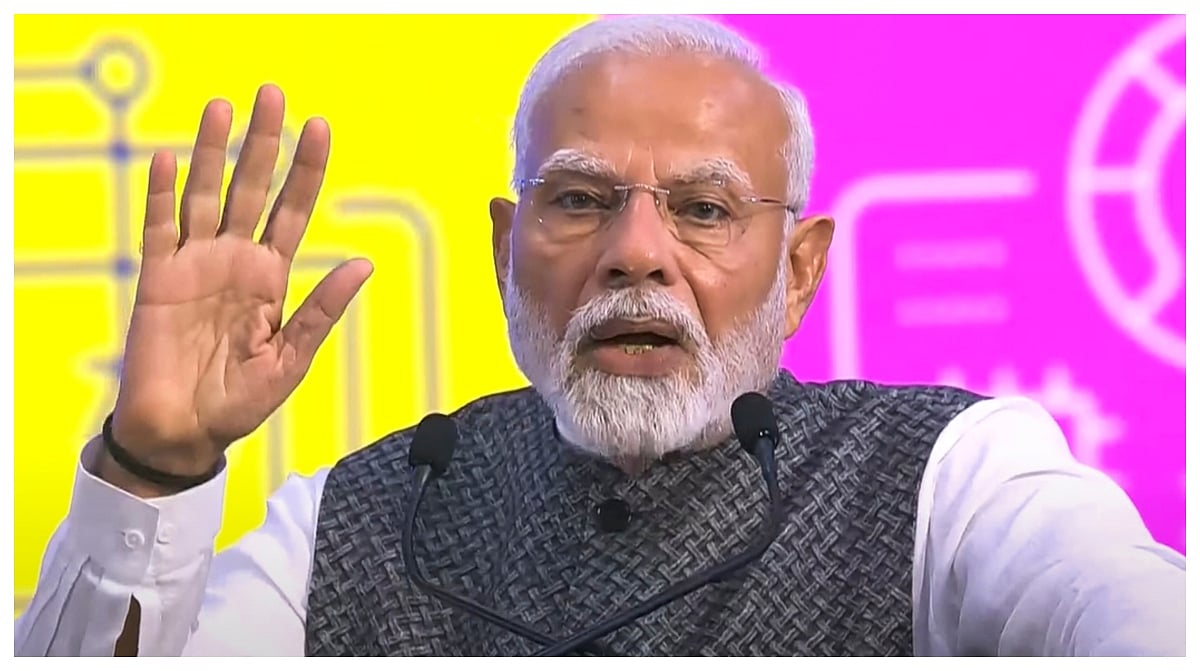
PM Narendra Modi's record tenure has renewed discussion on how India's prime ministers are assessed across different historical eras | File Photo
Simple arithmetic says Jawaharlal Nehru served 4,398 consecutive days as prime minister after being sworn in following India’s first general election in 1952. Narendra Modi surpassed that figure by completing 4,399 consecutive days in office. The numbers are accurate. However, the conclusion drawn from them is less straightforward.
What is often overlooked is that Nehru had already been prime minister for nearly five years before the first general election. He assumed office on August 15, 1947, when India became independent from British rule. He continued in that position after India became a Republic on January 26, 1950, and remained prime minister until his death on May 27, 1964.
If his service from Independence to his death is counted, Nehru’s tenure stretches to 6,130 days. By that measure, Modi still has a considerable distance to cover.
Nehru’s Interim Government Role
Allowance must also be made for Nehru’s role in the Interim Government that preceded Independence. On September 2, 1946, the British administration constituted an Interim Government to facilitate the transfer of power to Indian hands.
The Viceroy remained the formal head of the Executive Council, but Jawaharlal Nehru was appointed vice-president of the Council, effectively functioning as the head of government. The Interim Government included prominent leaders from different communities and political backgrounds. Nehru himself handled key departments, such as external affairs and Commonwealth relations.
The government served as a bridge between colonial administration and sovereign nationhood and laid the administrative foundations for independent India. Though his official designation was not “Prime Minister”, he exercised many of the responsibilities associated with that office.
On The Limits Of Statistical Comparisons
Of course, statistics can be stretched endlessly to suit competing narratives. Modi’s admirers could argue that if his years as the chief minister of Gujarat are added to his tenure in New Delhi, he would emerge as the country’s longest-serving head of government, with roughly 8,900 days in executive office. The exercise would be no less arbitrary. Such comparisons ultimately tell us little.
Nehru and Modi belonged to vastly different eras and faced entirely different challenges. Modi was not even born when Nehru first assumed office in 1946. Nehru inherited a traumatised nation, emerging from nearly two centuries of colonial rule and the horrors of Partition. Millions had been displaced. Communal violence had scarred the country. Institutions of democratic governance had yet to take shape.
Nation Building Under Nehru
His task was not merely to govern but also to build. Under his leadership, India established parliamentary traditions, including periodic elections based on adult suffrage, independent institutions, and the architecture of a democratic republic. Scientific and educational institutions, such as the Indian Institutes of Technology, took shape. Major dams became symbols of national development. Public sector industries were established. Roads, research centres and administrative systems were created almost from scratch.
Modi’s Governance And Political Impact
Modi inherited a far more established nation. India had already experienced decades of institution-building and had recorded a post-Independence GDP growth rate exceeding 10 per cent in 2010–11. The challenge before him was different: to modernise, accelerate and expand.
Modi’s contribution has been in expanding infrastructure, promoting digital governance, increasing the scale of welfare delivery through technology and demonstrating an unmatched ability to connect with voters. Post-Nehru, few leaders have converted personal popularity into repeated electoral success as effectively as Modi. There are even those who believe that India attained real independence only in 2014. In a way, they now acknowledge that there was, after all, one Nehru who served as the country’s first prime minister.
Leadership Beyond Tenure
There is another statistic worth remembering. Nehru spent nearly nine years in British prisons during the freedom struggle. Those years were not years of political inactivity. They were years of reflection and intellectual labour. During imprisonment, he wrote An Autobiography, Glimpses of World History and The Discovery of India, works that continue to shape understanding of India’s past and its civilisational identity. Those years of sacrifice and scholarship also formed part of his public service.
Nonetheless, comparisons between individuals are often misleading because they flatten historical context into simplistic rankings. Leadership cannot be measured merely by the length of tenure. Lal Bahadur Shastri served as prime minister for only 581 days, yet he ranks among India’s most admired leaders. His call of “Jai Jawan, Jai Kisan” captured the spirit of a nation confronting war and food shortages.
Atal Bihari Vajpayee completed only one full term in office, but he remains among India’s most respected prime ministers. He will be remembered, among other things, for the genuine efforts he made to strengthen relations between India and Pakistan despite formidable obstacles.
Similarly, President APJ Abdul Kalam served only one term as president. A technologist, rather than a scientist in the conventional sense, he established a personal rapport with citizens, especially the young, in ways few presidents managed. That popularity does not automatically make him greater than Rajendra Prasad, the Republic’s first president, or KR Narayanan, who brought intellectual depth and constitutional sensitivity to Rashtrapati Bhavan. In public life, duration is incidental. What matters is not how long one occupies office but how well one uses it.
Politics is, after all, the art of the possible. There is no doubt that Narendra Modi has mastered that art. Yet history is rarely written in real time or reduced to a count of days in office. It weighs achievements against circumstances, decisions against consequences and leadership against the demands of the age.
The final verdict on how Narendra Modi’s achievements compare with those of Jawaharlal Nehru will not be delivered by statistics; it will be rendered by history. We will have to wait.
The writer is a senior journalist.
RECENT STORIES
-
-
-
-
-