Of Power, Greed And The Death Of A System
The Satya Niketan PG hostel collapse in Delhi, which has claimed six student lives, has renewed concerns over unsafe and unauthorised constructions. The Supreme Court is examining a safety audit of student PGs and plans to consider pan-India guidelines, amid concerns over weak enforcement, housing shortages and construction violations.

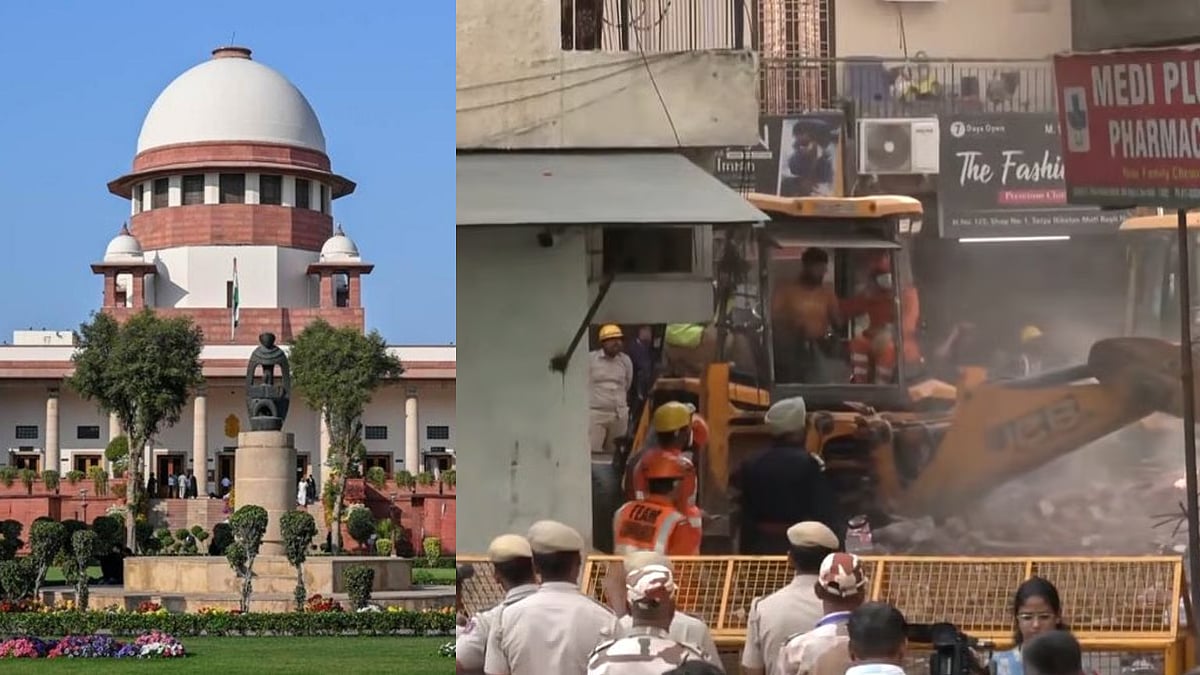
The Satya Niketan collapse has renewed concerns over unsafe and unauthorised student accommodations | File Photo
There cannot be anything more tragic than seeing young lives get snuffed out in their prime due to the gross negligence and greed of the very institutions built to protect them. The collapse of the 5-storey PG hostel at Delhi’s Satya Niketan, where, so far, 6 students have lost their lives and many remain buried under the debris, is the latest example of this human fallibility.
So, when the Supreme Court took cognisance of the case and said it will transfer “a related case pending before the Delhi High Court” to itself, it sent a strong message not only to the owners of the ill-fated hostel and other PG owners but also to the municipal corporation and the Delhi University that the Court was taking the matter seriously and on an urgent basis.
The Supreme Court is set to examine a petition seeking a safety audit of PG accommodations for students and has indicated that it intends to lay down pan-India guidelines related to unauthorised and unsafe structures.
Repeated Warnings On Illegal Construction
The Supreme Court has, time and again, highlighted the problem of unauthorised construction in Delhi and warned the authorities against the growing “dangerous trend”.
It did so in 2001 and, in 2006, put in place a mechanism to monitor action against illegal and unauthorised structures. In 2024, the Supreme Court passed a judgement stating unauthorised constructions “could not be legitimised merely due to administrative delays, passage of time, or monetary investments”.
The apex court held that even “post-construction violations must trigger swift corrective action, including demolition of the illegal part and penalties for erring officials”. But to no effect.
In July this year, the Supreme Court constituted a committee, comprising amicus curiae Ajit Kumar Sinha, two senior IIT Delhi professors and two draftsmen from the same institute, which was tasked to conduct a ground survey of Lajpat Nagar, Malviya Nagar, and Saket accompanied by MCD officials. Incidentally, Satya Niketan did not fall into the inspection purview.
Unsafe Student Housing Crisis
Therein lies the problem. Unauthorised or illegal constructions are not limited to a particular area; they are a growing problem faced by almost all the major cities of India—a result of rapid urbanisation, weak law enforcement, and growing developer greed.
The problem acquires gargantuan proportions when it comes to student accommodations. The rise in demand for PG accommodation stems from a severe shortage of student housing faced by major universities in India, forcing the majority of the out-of-state students into unorganised, and unsafe, private PG accommodations.
Need For Pan-India Rules
The Supreme Court should have taken a larger view of the problem earlier on and tasked the committee with formulating a set of rules to be implemented pan-India. Something it intends to do now. When it comes to students, we can’t be negligent. India’s future can’t be sacrificed at the altar of laxity and greed.
RECENT STORIES
-
-
-
-
-