Man’s Best Friend Turns Into His Biggest Foe
Mumbai recorded 154,017 dog bite cases in 2025, averaging nearly 17 incidents hourly, according to RTI data. The figures highlight the need for stronger BMC action on stray dog sterilisation, vaccination and public safety. With courts monitoring compliance, authorities must revive Animal Birth Control centres.

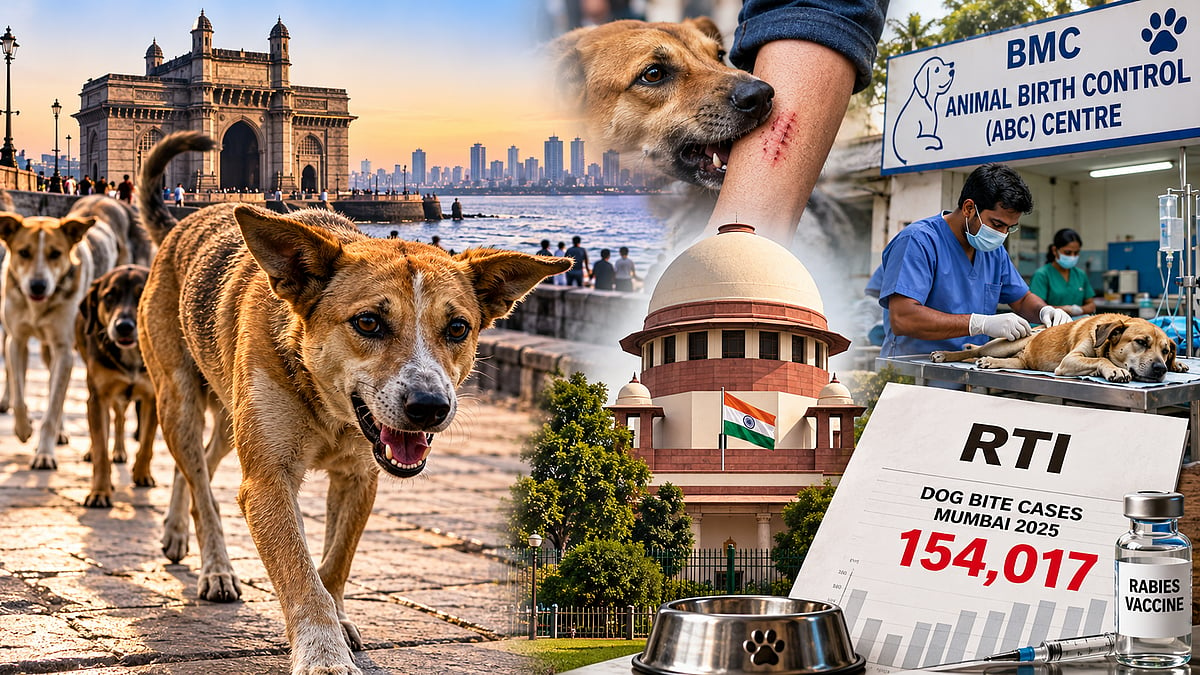
Man’s Best Friend Turns Into His Biggest Foe | AI
The alarming incidence of dog bites in Mumbai during 2025, revealed by an RTI application, should compel the Brihanmumbai Municipal Corporation (BMC) to assess the true scale of the problem today. In absolute terms, the figure of 154,017 dog bite cases—or an average of 17 bites an hour—last year seems extraordinary. To put it in perspective, the Supreme Court also intervened in November 2025 to end the menace, and it is unclear whether the BMC has made substantial progress since. The social backdrop to dog bite cases in India is unique, given that major cities have several working-class communities where free-ranging dogs enjoy much love and support. But a free run of the streets also exposes these animals to the rabies virus, and plentiful food helps boost their population. Inevitably, the paths of passers-by and unleashed dogs cross, resulting in hostile encounters and, sometimes, nasty bites. The Supreme Court has taken the stand that community dogs cannot exist in a no-man’s land, and local authorities should ensure that facilities for sterilisation and vaccination should scale up steadily, with at least one Animal Birth Control (ABC) centre in each district. High courts have started monitoring the situation under the SC directions and calling upon authorities to present compliance reports. Specifically, sterilised and vaccinated dogs are not to be released back into their original public sites, such as educational institutions, hospitals, bus stands, and railway stations. This restriction is reasonable, given the added risk to children, the elderly, and the disabled, who may encounter an aggressive or rabid dog.
What the community and authorities must ponder is whether the issue of free-ranging dogs must be posed adversarially. Given the tremendous support for dogs among many members of the community, especially the middle class, it should not be difficult to garner financial resources and support to sterilise and vaccinate them and provide night shelters in the neighbourhood. This can eliminate disease and avoid aggressive behaviour towards strangers, particularly at night. Keeping them on leash even on the streetside and restraining hostile pack behaviour towards vulnerable groups, such as children, would build confidence. In Mumbai, there are some voluntary organisations doing laudable work, taking in injured and distressed animals for treatment, although they receive little official support. It is essential that a civil society partnership be forged with these NGOs, and the ABC centres lying dormant be revitalised by the BMC to perform sterilisation regularly. Some high courts are taking a strict view of laxity among municipal officials, upholding the right to compensation for dog bite victims and rejecting appeals from local bodies. That should serve as a warning. Dogs are indeed man’s best friends, but their ecology demands pro-active management. The best solutions lie in keeping their numbers manageable, providing them veterinary facilities, and preventing violent confrontations with people.
RECENT STORIES
-
-
-
-
-