Kishau: A Dam That Could Reshape The Yamuna Basin
The Kishau Multipurpose Project has cleared a major hurdle after six states agreed to move ahead with the long-pending dam on the Tons River. The ₹1,562 million-cubic-metre project will support irrigation, drinking water, hydropower and Yamuna basin management, with the Centre funding about 90%.

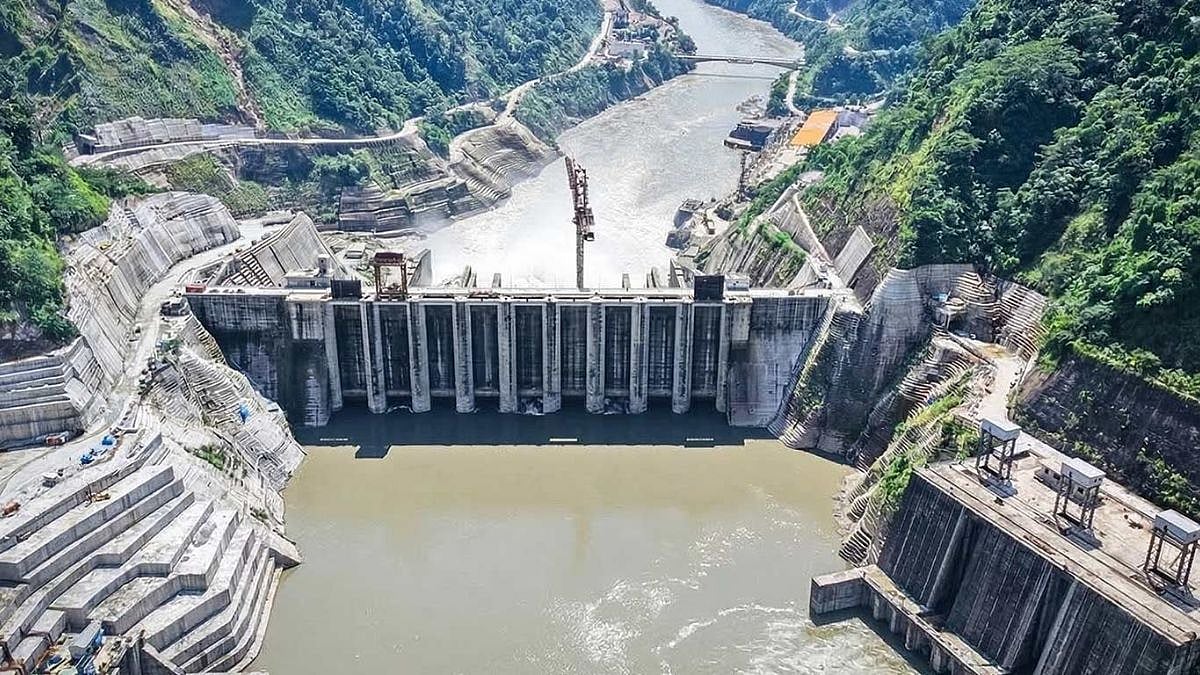
Kishau: A Dam That Could Reshape The Yamuna Basin |
The Kishau Multipurpose Project has finally crossed its most formidable hurdle: six states—Himachal Pradesh, Uttarakhand, Haryana, Uttar Pradesh, Rajasthan and Delhi—have agreed to move ahead with a project decade in the making. The proposed dam on the Tons, a major tributary of the Yamuna, is not merely another hydropower project. It is a regional water-security arrangement involving irrigation, drinking and industrial water, power generation and the ecological revival of the Yamuna.
The agreement also carries an important financial implication for Himachal Pradesh: the state has secured relief from the project’s financial burden while retaining benefits associated with its power component. It could become a template for future inter-state water projects, provided land, rehabilitation, environment and implementation are handled with equal seriousness. For the Centre, however, the agreement is only the political beginning; delivery will determine its significance.
The scale is considerable. The Centre has declared Kishau a National Project and will bear about 90 per cent of the financial burden, with the participating states sharing the balance. The proposed concrete gravity dam will be 232.6 metres high and create storage of about 1,562 million cubic metres. The project is expected to irrigate around 97,000 hectares and generate 1,476 million units of clean hydropower. The project is also expected to augment drinking and industrial water supplies and regulate flows in the Yamuna basin.
The Centre’s role will now be crucial
Signing an agreement is only the beginning. The Kishau proposal has remained stuck for years because water allocation, cost sharing and the financial responsibilities of the two upstream states repeatedly became contentious. The Centre’s decision to finance most of the water component removes a major obstacle, but it cannot by itself guarantee timely construction. Detailed project appraisal, environmental clearance, forest and land approvals, financing arrangements, tendering and construction will still have to move through multiple institutional stages.
The Centre will therefore have to remain an active coordinator, not merely a financier. It must monitor milestones, settle emerging disputes quickly and ensure that the promised financial formula remains intact throughout construction, rather than allowing another prolonged stalemate. Cost escalation is another potential source of future friction. If implementation is delayed, the project could become considerably more expensive than current estimates.
Rehabilitation is the real test
The project will submerge land in both Himachal Pradesh and Uttarakhand. Earlier official project data identified 17 villages and about 5,500 people as likely to be affected, including around 2,092 people in Himachal Pradesh and 3,406 in Uttarakhand. For families losing homes, agricultural land, orchards, community assets or traditional livelihoods, rehabilitation is the real test of the project’s fairness.
Compensation must therefore go beyond payment for acquired land. Under the applicable land acquisition and rehabilitation framework, affected families can have entitlements relating to rehabilitation assistance, housing and land for displaced families, subsistence and transportation allowances, livelihood-related support, and other provisions. The actual packages for Kishau must be transparent, timely and locally sensitive. Cash compensation alone cannot recreate a village, replace social networks or restore a livelihood dependent on land and forests. Resettlement sites should have roads, schools, healthcare, drinking water and employment opportunities before families are moved.
What do the six beneficiaries gain?
That difference makes the agreement unusually complex. The answer is not identical for all six, because their needs differ sharply—from drinking water in Delhi to irrigation in Rajasthan and Haryana and power-related benefits for the hill states.
Here are two national-implication lines for each of the four water-beneficiary states, keeping the focus on the Kishau Dam’s wider significance: Haryana: The project could strengthen the state’s irrigation security and reduce vulnerability to seasonal water shortages. It may also support agricultural stability and long-term economic planning. Uttar Pradesh: Regulated water supplies will improve irrigation reliability and support rural livelihoods in water-stressed areas. The project may also contribute to more efficient management of the Yamuna basin. Rajasthan: The additional water allocation will go a long way in the improvement of persistent water scarcity and expand irrigation potential. Its wider significance lies in strengthening agricultural resilience in one of India’s most water-stressed states. Delhi: A more assured drinking-water supply could contribute in easing the capital’s growing water pressures. Improved regulation of the Yamuna may also support long-term urban water management and environmental planning.
National significance: The agreement could mark a shift from inter-state water disputes towards cooperative river-basin management. Its implementation may offer lessons for resolving other water-sharing conflicts across India.
Haryana, Uttar Pradesh, Rajasthan and Delhi stand to gain from greater regulated water availability. Under the allocation announced by Home Minister, Amit Shah, Haryana will receive 836 cusecs, Uttar Pradesh 543.2 cusecs, Rajasthan 163.52 cusecs and Delhi 105.28 cusecs. Rajasthan’s share could be particularly relevant for water-stressed areas, while Delhi stands to gain maximum from improved drinking-water availability and a more regulated Yamuna flow. Irrigation benefits will extend across nearly 97,000 hectares, potentially strengthening agricultural security.
Himachal Pradesh presents a different equation. It is the host state for a substantial part of the reservoir but has agreed to forgo its allocated water share in favour of Delhi and Rajasthan in return for arrangements covering its power component. The latest agreement is significant because Himachal is not being asked to shoulder the earlier financial liability. In effect, the state can secure power-related benefits without bearing the project’s construction burden. That could make Kishau financially more acceptable to Shimla.
But the environmental question cannot be brushed aside
A huge reservoir changes a river system. Submergence, loss of forests and habitats, sedimentation, altered downstream flows and construction-related ecological stress require rigorous assessment. The claim that Kishau will help revive the Yamuna also depends on maintaining adequate environmental flows and ensuring that stored water is not treated solely as an economic commodity. Climate change adds another layer of uncertainty: erratic monsoons, intense rainfall, prolonged dry spells and changing snow and glacier-fed flows could affect both reservoir management and downstream ecosystems.
Kishau therefore deserves to be seen neither simply as a dam nor merely as a political agreement. It is a test of cooperative federalism, environmental responsibility and the ability of governments to convert a long-pending consensus into a workable reality. The six states have signed the pact; the harder task now is to ensure that the people who give up land receive justice, the states receive their promised benefits, and the Yamuna gains—not merely another reservoir, but a more dependable and ecologically sustainable flow.
(Writer is a senior political analyst and strategic affairs columnist based in Shimla)
RECENT STORIES
-
-
-
-
-