Judicial Independence Is The Need Of The Hour
Justice Ujjal Bhuyan’s criticism of judge transfers at the government’s behest revives serious concerns over judicial independence. His remarks underscore the urgent need to safeguard the collegium system from executive pressure to preserve constitutional democracy.

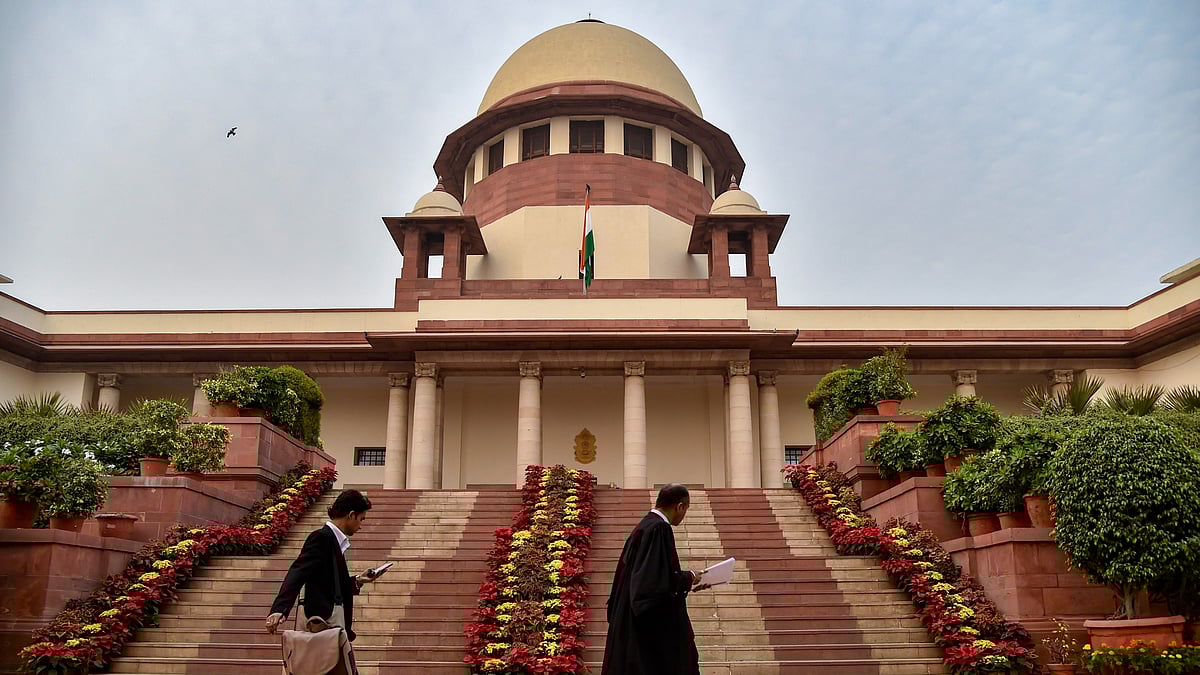
Supreme Court | (Photo Courtesy: PTI)
By expressing his disappointment and anguish over the Supreme Court Collegium’s decision to transfer a judge from one High Court to another at the behest of the government, Justice Ujjal Bhuyan has raised fundamental questions on the independence of the judiciary.
He was referring to the recent transfer of Justice Atul Sreedharan from the Madhya Pradesh High Court to the Allahabad High Court and the Collegium’s admission that the transfer was carried out at the request of the Central government. Justice Sreedharan was earlier proposed to be transferred to the Chhattisgarh High Court.
Justice Bhuyan questioned this admission of executive influence in what is meant to be an independent judicial process and asked why a judge should be moved from one court to another merely because he passed orders inconvenient to the government. He warned that such actions strike at the root of judicial independence and undermine the credibility of the Collegium system of judicial appointments. He stressed that members of the Collegium must ensure they are not swayed by external pressure in their decision-making.
Background of the Collegium system
Ironically, the Collegium system itself came into being as a backlash to the Emergency, when fears of judicial independence being compromised were at their peak. When the BJP government later passed the National Judicial Appointments Commission (NJAC) Act, which envisaged a six-member body to oversee judicial appointments, it was struck down by the Supreme Court in 2015 in favour of retaining the Collegium system.
This tussle between the executive and the judiciary over judicial appointments has continued and resurfaces periodically. Former Vice-President Jagdeep Dhankhar raised the issue in the Rajya Sabha in his capacity as Chairman of the House and supported the revival of the NJAC Act.
Why independence matters
Justice Bhuyan’s concerns are therefore significant, as judicial independence and integrity are of paramount importance. Any executive interference in the functioning of the top court amounts to a betrayal of the trust reposed by the people of the country. He pointed out that judges take an oath on the Constitution to discharge their duties without fear or favour and are thus duty-bound to remain free from all external influence.
A reminder from history
Justice Bhuyan’s observations raise deeper questions about the functioning of the judiciary. During the Emergency, the judiciary was widely seen at its nadir, bending to the dictates of an authoritarian regime. Even in subsequent years, questions have been raised about the timing and tenor of certain judicial pronouncements.
However, Justice Bhuyan’s forthright remarks strike a particularly deep chord. While acknowledging that judges, like all individuals, may hold personal views and ideologies, he emphasised that these must never be allowed to predetermine judicial outcomes. The central message of his remarks is clear: transfers and postings must be guided solely by the requirements of justice and the efficient administration of courts, not by external or executive influence.
Published on: Wednesday, January 28, 2026, 01:17 AM ISTRECENT STORIES
-
-
-
-
-