India Set To Face Torrid Summers Without Green Cover
India has lost 5.6 percentage points of green cover over 25 years, with non-green areas recording temperatures 1 to 2.5 degrees Celsius higher during various periods since 2001. The findings highlight the need to protect forests and wetlands, curb destructive land-use practices and restore green spaces to reduce heat risks.

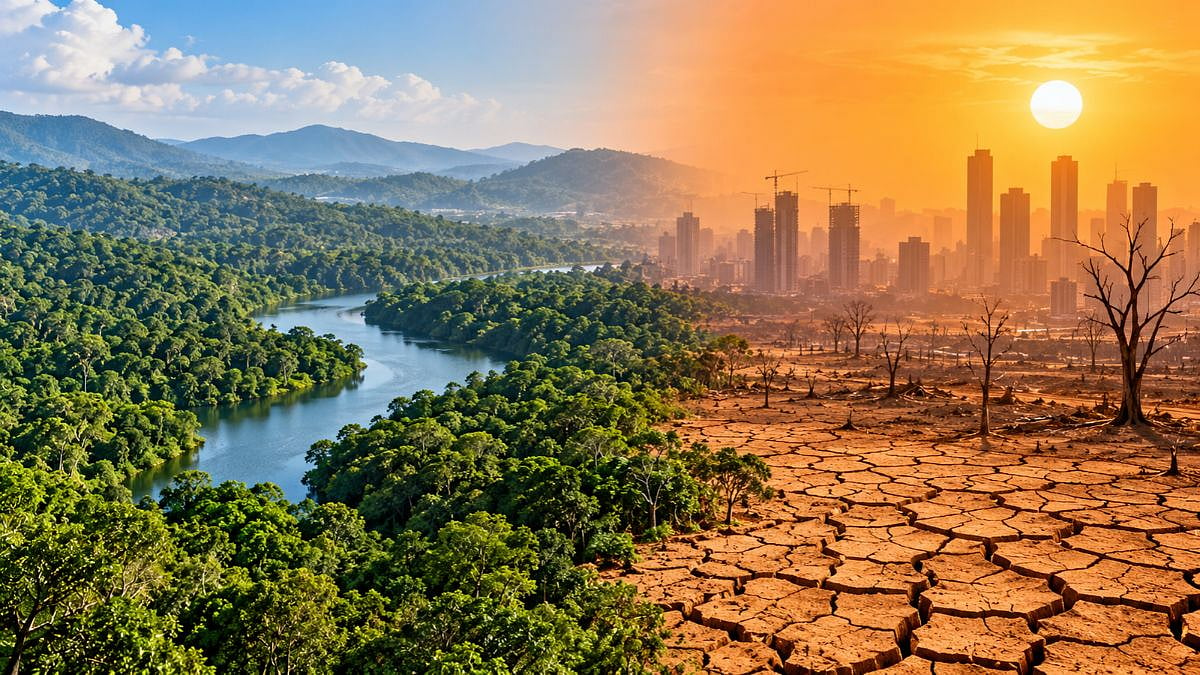
Declining vegetation and expanding urban areas are intensifying concerns over rising temperatures and climate resilience across India | AI Generated Image
The reported loss of 5.6 percentage points in green cover across India in a quarter century should come as no surprise, given the pressures mounted on land for building activity and resource extraction. As the study by Climate Trends, using Moderate Resolution Imaging Spectroradiometer (MODIS) land cover data and temperature trends from the European Centre for Medium-Range Weather Forecasts, indicates, despite losses, green areas persist in the Western Ghats and the Northeast, but urban areas sprawling into neighbouring districts are a distinct feature.
It is important to underscore the long-term impact of lost green cover, since the study has correlated this with a rise in summer temperatures in non-green areas. There appears to be an unimpeachable link between the two natural states of the terrain. Temperatures in non-green areas, as opposed to green areas, were higher by 1 to 2.5 degrees Celsius for various periods beginning in 2001. Over a quarter century, the median temperature for areas with tree cover was between 28 and 30 degrees Celsius, while barren areas recorded 29 to 32 degrees Celsius.
Moreover, there is variation even within green areas, based on the nature of the vegetation and the climatic zone where it is found. All these have clear implications for the climate policies that different states and cities must follow, as average global temperatures continue to rise in tandem with greater volumes of greenhouse gases pumped into the atmosphere.
Green Cover Loss And Rising Temperatures
The loss of green cover, according to the latest study, appears to be depressingly high in Karnataka, Maharashtra, Gujarat, Rajasthan and Madhya Pradesh, with a general concentration towards the western parts of these states. These are also the regions where temperatures have shown an increase, although the most worrying rise is in the Himalayan region. The mercury has also risen in most states of the Northeast, parts of Bengal and southern Andhra Pradesh.
Importantly, the mean temperature even within forested areas shows variations, indicating that they are not immune to climate change. In the absence of ameliorative policies that target the erosion of green cover, besides curbing the loss of wetlands, many parts of the country seem destined to suffer debilitating temperatures in the coming decades.
Regreening As A Climate Policy Priority
Policies that favour liberalised mining in forest areas and large-scale tree felling to facilitate the construction of thermal power plants, data centres and industrial units can only exacerbate the problem. Unlike many other countries, India has insufficient land for large-scale extraction and is also heavily populated.
The many different types of landscapes with unique vegetation—tropical evergreen and moist deciduous forests, grasslands, mangroves, marshes, scrubland and desert—are products of long-term evolutionary trends that should not be tinkered with for short-term gains.
The study findings also emphasise the gains that accrue from regreening exploited lands, including urban centres, in the era of climate change.
To get details on exclusive and budget-friendly property deals in Mumbai & surrounding regions, do visit: https://budgetproperties.in/
RECENT STORIES
-
-
-
-
-