India-France Ties Elevated To 'Special Global Partnership': Defence, Nuclear Energy, And Indo-Pacific Convergence Take Centre Stage
India and France have upgraded their relationship to a “Special Global Partnership,” signalling a long-term strategic alignment. Announced during President Emmanuel Macron’s visit to New Delhi, the move is backed by 20 agreements spanning defence, nuclear energy and critical minerals. Defence remains central, with India approving a Rs 3.25 lakh crore deal for 114 Rafale jets.

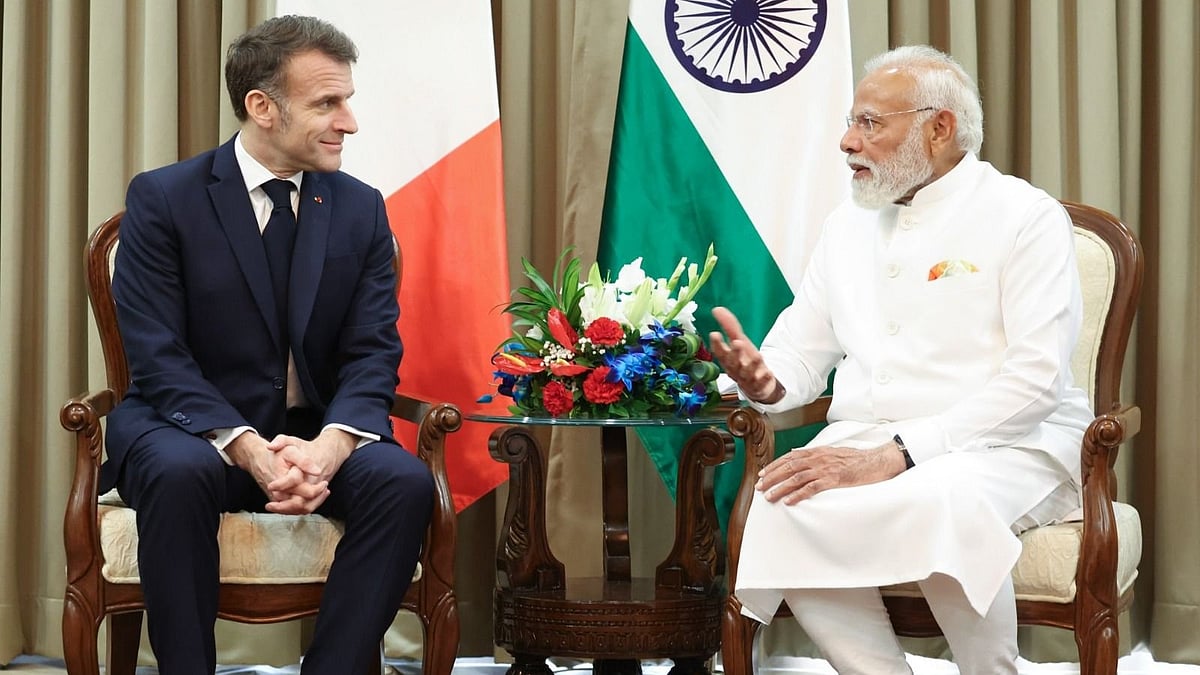
The elevation of ties between India and France to a “Special Global Partnership” should not be a surprise |
The elevation of ties between India and France to a “Special Global Partnership” should not be a surprise. The announcement of the elevation, which was made during President Macron’s recent visit to India on the sidelines of the AI Summit held in New Delhi, means the relationship should be seen as a long-term partnership. This was clear by the unveiling of 20 signed agreements between India and France that spanned a number of sectors but also took note of history. In 1998, post India’s nuclear tests, France not only did not impose sanctions on India but also signed a Strategic Partnership with New Delhi. The relationship has since grown in all areas, especially in the defence sector. Today, New Delhi has approved the buying of 114 Rafale jets in a deal worth Rs 3.25 lakh crore, making it, should it finally go through, the “mother of all defence deals”.
While defence is the highlight, other areas include the nuclear energy and critical minerals sector. While nuclear energy is still nascent in India, with coal providing over 79% of the country's energy supply, India is pivoting towards it for a number of reasons, including clean energy and reduction of dependence on oil and coal in a geopolitically unstable environment. France can play a lead role here given its experience in the field. Coming to the security front, India and France have a similarity of interests. France has an interest in the Indian Ocean region with its control of Réunion Island, Mayotte, and other islands and has inter-services bases in both the UAE and Djibouti. Both countries share a deep interest in ensuring clear sea lanes of communication around key strategic chokepoints, such as the Strait of Hormuz, the Malacca Straits, and piracy around the Horn of Africa. This has paved the way for a trilateral with the UAE in the Western Indian Ocean. The region houses rich natural resources and key maritime chokepoints, such as the Gulf of Aden, the Mozambique Channel, the Bab-al-Mandeb strait, and the Strait of Hormuz. India needs a presence there, and the natural partner is France, which has 93% of its Exclusive Economic Zone in the Indo-Pacific region, and the UAE has a “string of ports” strategy in the Horn and East Africa. France has a military presence in the UAE, and its presence is key for India, as it gives it access to Réunion, which gives access to the crucial Madagascar channel. In turn, India possesses a large naval presence in the Eastern Indian Ocean, where France does not have a presence.
India and France have a convergence of interests. France’s strategic autonomy, its reluctance to follow fellow Western powers, and its support for India in putting Pakistan on the FATF grey list in June 2018 make it a reliable power for New Delhi in a world riddled with geopolitical uncertainty.
RECENT STORIES
-
-
-
-
-