Himachal VC Verdict: Universities Caught In The Governor-Government Crossfire
The Himachal Pradesh High Court has cancelled the Vice-Chancellor selection process for two agricultural universities, ruling the 2026 Rules inconsistent with UGC Regulations. The verdict limits the State government’s role and revives debate over Governor-government control of universities.

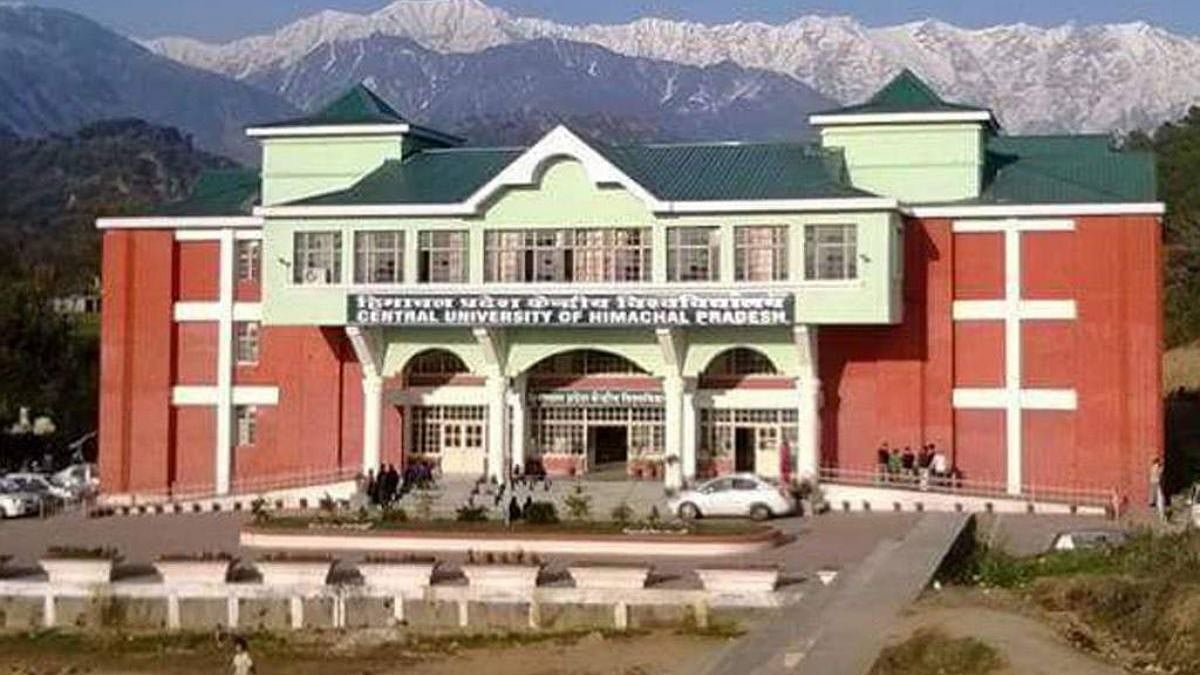
Himachal VC Verdict: Universities Caught In The Governor-Government Crossfire |
The Himachal Pradesh High Court’s verdict on the appointment of Vice-Chancellors to the State’s agricultural universities has done more than settle a legal dispute. But It has settled an unresolved constitutional and political contest over who should exercise influence over universities—the elected government, the Governor as Chancellor, or the regulatory framework designed to protect academic standards.
The judgment has cancelled the advertisements for the Vice-Chancellor posts of Dr Y.S. Parmar University of Horticulture and Forestry at Nauni and CSK Himachal Pradesh Krishi Vishvavidyalaya at Palampur. It has also struck down the controversial amendments and held the 2026 Rules inconsistent with Clause 7.3 of the UGC Regulations, 2018.
The immediate consequence is clear: the selection process has to begin afresh. But the larger political battle may not end with the judgment.
A Change That Altered the Balance
The dispute arose from an attempt by the Himachal Pradesh Government to alter the traditional mechanism for appointing Vice-Chancellors.
Under the 1986 law, the Chancellor appointed the Vice-Chancellor on the recommendation of a three-member Selection Committee consisting of a Chancellor’s nominee, the Director General of ICAR and the UGC Chairman or his nominee. The State Government had no direct role in selecting the candidate.
The amendment fundamentally changed that arrangement. It provided for appointment by the Chancellor on the “aid and advice” of the State Government, with the detailed procedure to be prescribed through rules.
The 2026 Rules then created a Search-cum-Selection Committee headed by the Chief Secretary. UGC representation was excluded, while the committee’s recommendations moved towards the State Government before reaching the Chancellor.
The High Court found this arrangement inconsistent with the applicable UGC framework. In doing so, it placed a significant judicial limitation on the State’s attempt to redesign the appointment mechanism.
The Government’s Case
The State Government had a political and administrative argument of its own. These universities are substantially dependent on public resources, and the elected government is answerable to the legislature and taxpayers for their functioning. From this perspective, excluding the government from the appointment of their chief academic and administrative heads appears difficult to justify.
The government also maintained that the UGC Regulations did not apply in the manner claimed.
Yet the controversy cannot be separated from the wider friction between Raj Bhavan and the elected government over university appointments. The amendment was seen as an attempt to reduce the Chancellor’s influence and give the elected executive a decisive role.
That raised an equally important concern: should universities funded by the public become subject to political calculations in the appointment of their top academic authorities?
The High Court’s intervention suggests that financial dependence on the State does not automatically give the government freedom to create an appointment system inconsistent with the applicable national academic framework.
The Governor Is Not the Ultimate Winner
The verdict may appear to have strengthened the Governor’s position as Chancellor, but it would be misleading to interpret it as a blanket endorsement of gubernatorial authority.
A Chancellor is not above the law. The office must operate within the governing statute, applicable regulations and judicially established principles.
The judgment therefore does not resolve the deeper Governor-versus-government controversy. It merely establishes that neither side can alter the institutional framework according to its own convenience.
This distinction is important because university appointments have increasingly become a battleground between Governors and elected governments in several States. Governments often accuse Governors of delaying or obstructing appointments, while Governors defend their intervention as part of their statutory responsibility as Chancellors.
Himachal could now become another reference point in this continuing national debate.
The Price of Prolonged Vacancies
The most worrying aspect of the entire controversy, however, is not the legal battle but the time lost by the universities.
The Vice-Chancellor’s position at Nauni has remained vacant since August 2023, while the Palampur university has been without a regular Vice-Chancellor since May 2025.
These are not ordinary administrative vacancies. The Vice-Chancellor provides leadership to institutions responsible for teaching, agricultural research, innovation, extension services and the development of technologies directly relevant to the State’s farming community.
When the top position remains vacant for years because governments and constitutional authorities are locked in a dispute over the appointment process, the institution inevitably suffers.
This raises an uncomfortable question: did the attempt to change the system produce any worthwhile institutional gain when it ultimately contributed to further delay?
A Wider Constitutional Question
The Himachal controversy reflects a larger problem in India’s university governance. The Chancellor’s office, frequently occupied by the Governor, has become a source of recurring friction with elected governments.
Different States have attempted different solutions. Some have sought to reduce the Governor’s role, while others have defended the traditional arrangement. The result has been an expanding constitutional grey area in which appointments become entangled with political rivalry.
The danger is that every change of government can produce another attempt to rewrite the rules.
Such instability is particularly damaging to universities because academic institutions require continuity. Their leadership cannot be treated like a political appointment that changes with every shift in the balance of power.
What Happens Now?
The Government has several options, including challenging the judgment or exploring another legislative route. But any attempt to revive the same mechanism in a different form could simply produce another round of litigation.
The wiser course would be to treat the judgment as an opportunity to establish a transparent and durable appointment system that satisfies both statutory requirements and academic standards.
The Chancellor, for his part, must ensure that the fresh process is transparent, credible and based on merit rather than political preference.
Most importantly, the two universities cannot afford another prolonged institutional stalemate.
The real casualty of the Governor-government confrontation should not be the university itself. Himachal’s agricultural institutions need stable leadership more urgently than either side needs another victory in a constitutional power struggle.
The High Court has drawn a line around the appointment process. The political establishment must now decide whether to respect that line and restore institutional normalcy, or continue fighting over control.
If the latter course is chosen, Himachal may merely become another chapter in India’s growing Governor-versus-government battle over universities—with students, researchers and academic institutions paying the price.
(Writer is a strategic affairs columnist and senior political analyst based in Shimla. He is also Contributing Editor with The South Asian times from New York)
RECENT STORIES
-
-
-
-
-