Florence Nightingale: The Lady With The Lamp And Her Enduring Legacy
Florence Nightingale, remembered as “The Lady With The Lamp”, transformed modern nursing through sanitation reforms, data-driven healthcare practices and compassionate patient care during the Crimean War. Her pioneering work elevated nursing into a respected profession and reshaped global healthcare systems.

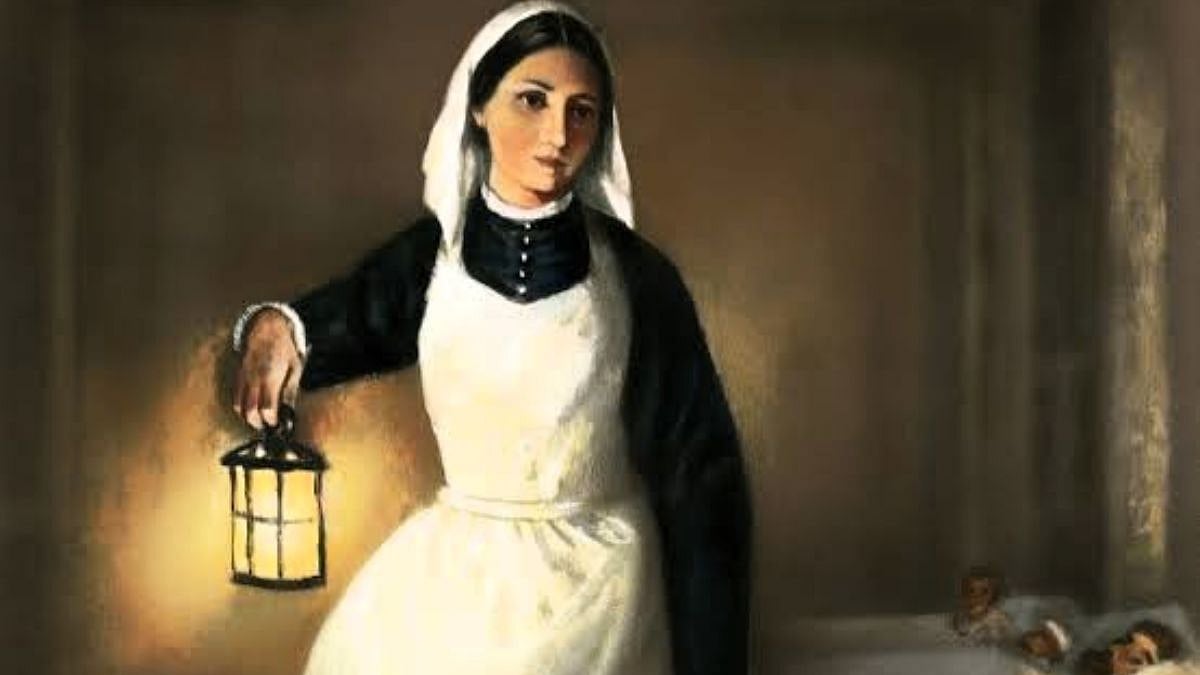
Florence Nightingale transformed nursing into a respected profession through healthcare reforms, sanitation practices and compassionate patient care | X
Earlier this month, on May 12, was the birth anniversary of Florence Nightingale. History has noted her great contribution as a nurse, and her birthday is commemorated as International Nursing Day. She was called The Lady With The Lamp, and to those outside the medical profession, over time, she became a vague memory of a chapter from school textbooks.
A pioneer ahead of her time
She was, however, a pioneer in her field and a feminist before the word was even coined. Florence Nightingale was born on May 12, 1820, in Florence, Italy, to a wealthy British family and named after the city. Luckily, at a time when education was not a priority for women and careers were almost unheard of for those from privileged families, her father, William Nightingale, believed in women’s education and personally tutored Florence and her sister in mathematics, history, philosophy and classical languages. If not for her father, her “brilliant, analytical mind, displaying a particular affinity for data and organisation” (source: Internet) would have suffocated under the rigid norms of Victorian society.
At age 17, she rebelled against social expectations of marriage, motherhood and homemaking and believed she had a divine calling from God to enter into a life of service. Circumstances led her to take up nursing. In her time, nursing was considered menial work, not suitable for ladies of a certain social standing.
Understandably, her parents forbade her from training in nursing; eventually, in 1851, she went against her family to undergo three months of rigorous training at the Institution of Protestant Deaconesses in Kaiserswerth, Germany. By 1853, she had secured her first professional post as the superintendent of the Institute for the Care of Sick Gentlewomen in London, a job she did with remarkable efficiency.
The Crimean War transformed her mission
The outbreak of the Crimean War in 1854 was a turning point in her life. Wounded British soldiers suffered awful neglect, with the medical infrastructure in disarray. Soldiers were dying not from their battlefield wounds, but from preventable diseases like cholera, typhus and dysentery contracted within the military hospitals.
According to biographical details available on the internet, Sidney Herbert, the Secretary at War and a close personal friend of Nightingale’s, invited her to assemble a team of nurses to travel to the military hospital at Scutari (modern-day Istanbul). In October 1854, Nightingale arrived with 38 volunteer women nurses. What they found was a humanitarian catastrophe. The hospital was built over a massive, defective cesspool that contaminated the water supply. The rooms were overcrowded, unventilated and filthy. Vermin scurried across the floors, rations were meagre and rotten, and basic medical supplies — bandages, soap and clean linen — were virtually non-existent. The military establishment viewed the arrival of a woman with authority with deep hostility and suspicion.
“Nightingale’s response was a masterclass in logistics and determination. Rather than confronting the doctors directly on medical matters, she focused on what she called the ‘health of the environment’. She used her own funds and contributions from The Times Fund to purchase basic necessities. She organised a laundry to ensure clean bedding, overhauled the hospital kitchens to provide nutritious food for convalescing men, and enforced strict sanitary protocols.”
In her words, “The word ‘nursing’ has been limited to signify little more than the administration of medicines and the application of poultices. It ought to signify the proper use of fresh air, light, warmth, cleanliness, quiet, and the proper selection and administration of diet.”
Reforming healthcare through statistics
According to her profile on Britannica.com, “Nightingale bought equipment with funds provided by The London Times and enlisted soldiers’ wives to assist with the laundry. The wards were cleaned, and basic care was provided by the nurses. Most important, Nightingale established standards of care, requiring such basic necessities as bathing, clean clothing and dressings, and adequate food. Attention was given to psychological needs through assistance in writing letters to relatives and through providing educational and recreational activities. Nightingale herself wandered the wards at night, providing support to the patients; this earned her the title of ‘Lady with the Lamp’.”
She returned to England a heroine but set out immediately to put to use the experience she had gained to fight for systemic changes. Working with leading statistician William Farr, Nightingale compiled and analysed data. To make her findings accessible to politicians and Queen Victoria, she invented the polar area diagram, also called the Nightingale rose diagram, which demonstrated that deaths from preventable diseases outnumbered deaths from war wounds.
Her work revolutionised the military medical system and led to widespread sanitary reforms. Her findings about hygiene, clean water, good diet and proper ventilation were applied to civilian hospitals too. In 1859, she became the first woman elected to the Royal Statistical Society.
Her book Notes on Nursing: What It Is, and What It Is Not became a foundational text, offering practical advice written in plain language and accessible to both medical professionals and ordinary women managing households. She set high standards of training for nurses and gave the profession the dignity and respect it deserved.
A legacy that transformed modern nursing
A profile of Florence Nightingale states that “her legacy is often sanitised into a portrait of passive, feminine mercy. In truth, she was a radical disrupter. She took a disorganised, despised occupation and transformed it into a disciplined, respected science. By combining a profound sense of human compassion with the cold, unyielding precision of statistics, she saved countless lives and permanently altered the landscape of global healthcare."
She refused to marry and spent years in poor health caused by her work and constant exhaustion but continued writing prolifically and guiding hospitals and medical professionals.
When she died in 1910, The New York Times obituary stated, “Perhaps the greatest good that has resulted from her noble life has been the setting in motion of a force which has led thousands of women to devote themselves to systematic care of the sick and wounded."
The poet Henry Wadsworth Longfellow immortalised her in a poem titled Santa Filomena: “A Lady with a lamp shall stand, In the great history of the land; A noble type of good, Heroic Womanhood.”
Deepa Gahlot is a Mumbai-based columnist, critic and author.
RECENT STORIES
-
-
-
-
-