Elephants Vs Infrastructure: Assam Train Accident Exposes Gaps In Wildlife Safety Measures
A train near Guwahati, Assam, collided with a herd of wild Asiatic elephants, killing at least seven and injuring a calf. The site isn’t a designated wildlife corridor, highlighting gaps in infrastructure planning amid rising human-elephant conflicts. With frequent elephant deaths and attacks on people, the tragedy underscores the urgent need to balance development with wildlife protection.

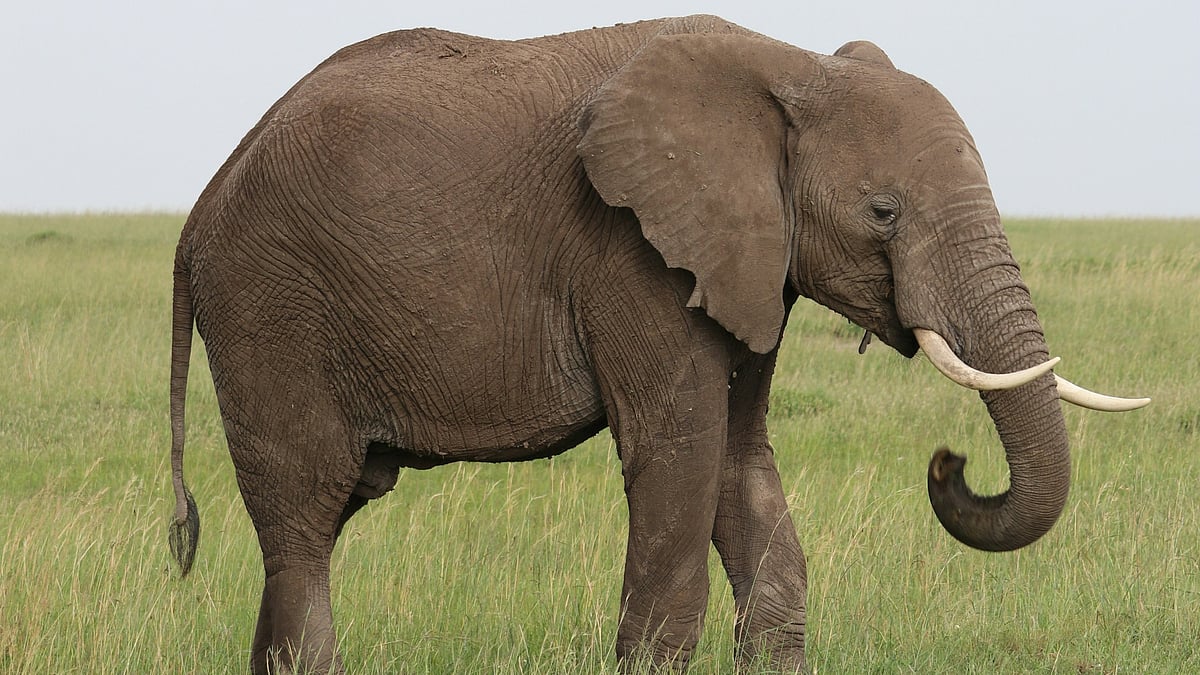
Elephants Vs Infrastructure: Assam Train Accident Exposes Gaps In Wildlife Safety Measures | Representative Image
The death of at least seven wild Asiatic elephants and injury to a calf in a rail accident near Guwahati, Assam, has brought the focus back to the human-elephant conflict. The Rajdhani Express from Sairang in Mizoram to New Delhi was rolling at full speed when the loco driver apparently spotted the herd of 100 elephants and hit the emergency brakes, but the train still hit and killed some. The accident site, it must be pointed out, is not a designated elephant corridor or among India’s nearly 150 wildlife corridors that pass through animal habitats where loco drivers have been instructed to reduce speed to prevent collisions. Yet, the tragedy is no less significant.
Most elephant deaths occur due to electrocutions, and a total of 528 pachyderms have been killed between 2019 and 2024, according to government data. Assam is home to an estimated 6,000 pachyderms, and human-elephant conflict is frequent. In the past five years alone, nearly a dozen have been killed in the state in train collisions, while the all-India average ranges between 15 and 20 elephants every year. Train accidents may not be the primary cause of elephant deaths, but the fact remains that it has not been sufficiently addressed. The flip side of the human-elephant conflict is unsettling too—an average of 561 persons have been killed by elephants every year since 2020-21, with the highest tally of 621 recorded in 2023-24, and Odisha, West Bengal, and Jharkhand being the top three hazardous states for elephant attacks.
The electrocutions and accidents of elephants, as well as elephant attacks on people, all point to the contested issue of territorial supremacy. Although not a designated elephant corridor, the site of the latest accident, being a forested area about 125 kilometres from Guwahati, renews the debate between infrastructure development and forests or natural areas. In Assam, for years, infrastructure projects have been planned and executed in natural areas without a comprehensive assessment of their impact. Railway authorities, for instance, laid the Guwahati-Jogighopa railway track through the Deepar Beel lake, shrinking the size of the waterbody and fragmenting animal corridors. The track was considered more important despite local protesters pointing out otherwise; the wetland has since seen a railway shed, an airport staff housing complex, brick kilns, and small-scale industries.
India has the National Wildlife Action Plan in which one of the action points states that the “Ministry of Surface Transport and Ministry of Railways must plan roads in such a manner that all national parks and sanctuaries are bypassed and integrity of the protected area is maintained. Wildlife corridors also need to be avoided, or mitigative measures (such as restricting night traffic) need to be employed.” The authorities must not disregard the protected natural areas—or other natural areas—in their haste and determination to execute infrastructure like road and railway lines.
RECENT STORIES
-
-
-
-
-