El Nino, Monsoon Deficiency Threaten Indian Kharif Pulse Production
India’s 2026-27 Kharif pulse crop faces risks from El Niño and below-normal monsoon forecasts. Lower production could lift imports of tur, urad and lentils, while policymakers may face added pressure from inflation and supply concerns.

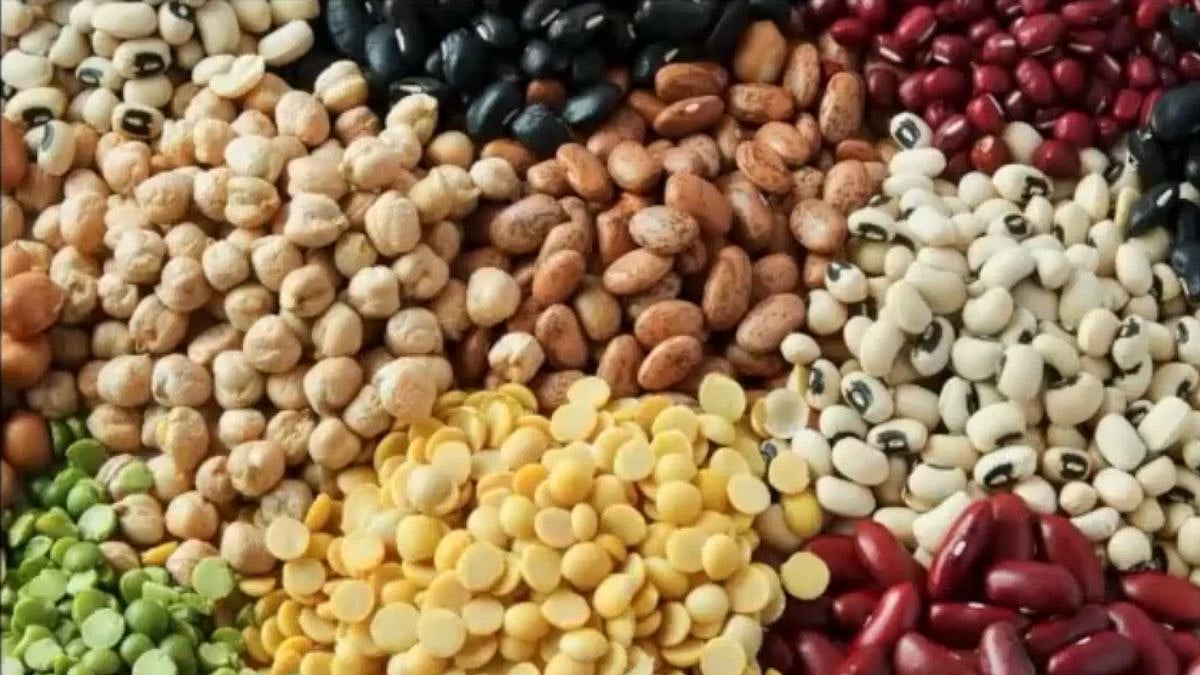
Climate concerns grow as India’s pulse crops face El Niño and weak monsoon risks | Representational Image
India, the epicentre of the global pulses ecosystem, is currently in transition. From the 2025-26 season, covering Kharif 2025 and Rabi 2026 harvests, the country is now looking forward to the 2026-27 season, and the emerging picture is one of looming climate risk.
India’s key role in global pulses market
As a quick recap, India is the world’s largest producer, processor, importer, and consumer of a wide variety of pulses. Many countries cultivate pulses with India as the major target market.
Over the last four years, the country’s planted area for pulses has actually declined by about one million hectares to 27.7 million hectares.
Production, too, is on a steady decline. From 27.3 million tonnes (MT) in 2021-22, the harvest size is down to an estimated 26.0 MT in 2025-26. Two pulses, namely gram / chana / chickpea (Rabi harvest) and pigeon pea / tur / arhar (Kharif harvest), together account for over 50 per cent of the country’s total annual pulse output.
Imports rise as output falls
Production decline has driven India’s pulses imports higher. From 2.5 MT in 2022-23, imports jumped to 4.7 MT the following year and then to a record 7.2 MT in 2024-25. For 2025-26, the total import is estimated slightly lower, yet still relatively high, at about 5.8 MT.
Outlook for 2026-27
This is the crucial part. India faces the threat of El Nino during the Kharif season, June to September 2026. The El Nino phenomenon typically results in a lower quantum of rainfall and dry weather conditions. The India Meteorological Department (IMD) has forecast ‘below normal’ rainfall for the upcoming Kharif season, expected to be 92 per cent of the long-period average of 870 millimetres. By end-May, the IMD would provide a region-wise rainfall outlook for the June-September period.
It is important to note that, rather than the total quantum of rainfall at the end of the season, the spatial (geographical or region-wise) and temporal (month-wise) distribution of rains impacts the crop prospects. The time of onset, progress, and withdrawal of rains will have a bearing on the planted area as well as growers’ input management and agronomic practice.
Key Kharif crops and policy response
For the Kharif season, key pulse crops are pigeon pea (tur/arhar), black matpe (urad), and mung bean (green gram). The government has not yet announced the production targets for Kharif crops for 2026-27, even as the El Nino risk looms and the ongoing military conflict in the Persian Gulf region has pushed fertiliser prices higher.
To augment availability, ensure affordable prices for consumers, and, at the same time, protect domestic growers’ interests, the government has announced a mix of trade and tariff policy intervention. Liberal or ‘free’ import of several pulses has been extended for one more year until March 2027.
While pigeon pea and black matpe imports are completely unrestricted, yellow pea imports, too, are unrestricted but subject to online registration (of contract) for import monitoring and a customs duty of 30 per cent ad valorem. Lentil (masur) and chickpea (chana) both attract 10 per cent duty each. However, imports from LDCs (least developed countries) bear no duty.
Import rebound possible
On current reckoning and subject to harvest prospects in the wake of looming El Nino, India’s pulses import is likely to rebound in 2026-27, with a surge in pigeon pea, black matpe, and lentil volumes.
At the same time, if the effect of El Nino turns out to be severe and Kharif crop production prospects deteriorate, then a combination of decline in rural incomes, rising food inflation, and more expensive imports due to a weaker currency can potentially cause demand destruction.
Managing the complex set of variables would be a key challenge for Indian policymakers. A clearer picture of Kharif planting prospects would emerge by early June when the southwest monsoon sets in.
Pulses self-sufficiency mission
In October 2025, the Indian government launched a National Pulses Mission with the aim to move towards self-sufficiency over a six-year period by 2030-31, with a financial outlay of about USD 1.2 billion. Special focus would be on pigeon pea, black matpe, and lentil.
While the mission’s objectives are laudable and ambitious, several ground-level challenges may continue to stymie growth. Cultivation of pulses on marginal lands, a low level of input usage, a lack of irrigation, and no breakthrough in seed technology continue to affect pulse cultivation, resulting in low and unsteady yields.
Land constraints, water shortage, and climate change exacerbate the situation. If anything, climate variability may worsen in the years ahead.
G. Chandrashekhar is an economist, senior journalist and policy commentator specialising in global commodity markets. Views are personal. Reach him at: gchandrashekhar@gmail.com
RECENT STORIES
-
-
-
-
-