Delhi High Court's NewsClick Verdict Is A Significant Win For Press Freedom
The Delhi High Court's decision to quash the FIR against NewsClick and its founder Prabir Purkayastha is being viewed as an important affirmation of press freedom. The judgement found the allegations legally unsustainable and underscored the role of constitutional protections in safeguarding independent journalism and democratic accountability.

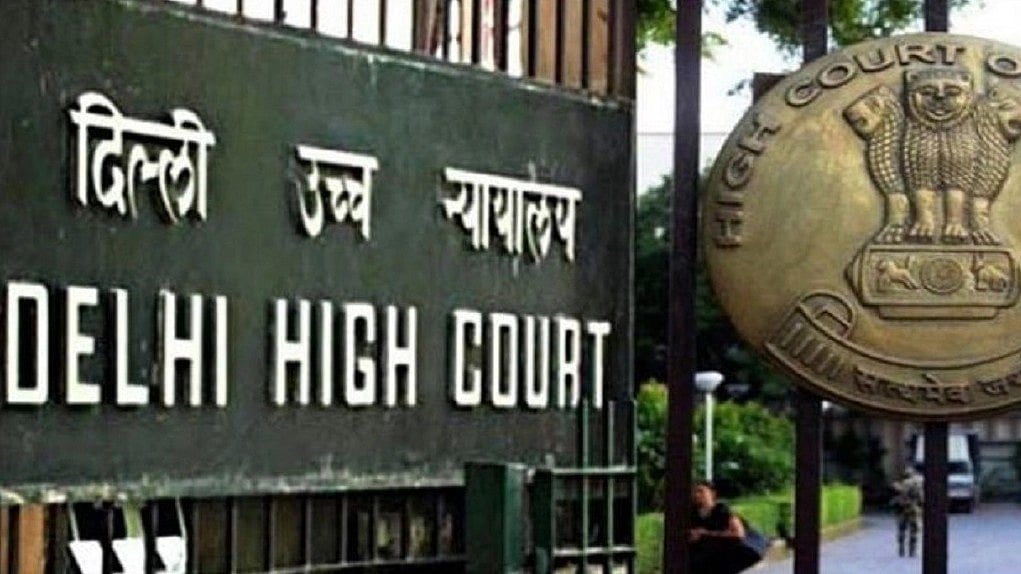
Delhi HC | File Photo
A recent judgment of the Delhi High Court has given India’s independent media a rare opportunity to celebrate. Last week, Justice Neena Bansal Krishna quashed the criminal FIR against digital news portal NewsClick and its founding editor, Prabir Purkayastha, bringing to an end, at least for now, a prolonged legal ordeal that had come to symbolise the vulnerability of journalists in contemporary India.
The court’s observations were remarkable not merely for the relief they granted but for their unmistakable clarity. Justice Krishna held that the allegations of cheating and criminal breach of trust were fundamentally unsustainable in law.
She further noted that the money-laundering charges, in the absence of a valid predicate offence, had no legal foundation. Most strikingly, she declared that “not only are the present proceedings mala fide, but also an arbitrary attack and abuse of powers on the free and impartial journalism of the petitioners.” It is this forthrightness that has appealed to journalists and ordinary citizens alike.
Freedom Of The Press Flows From Constitutional Guarantees
In India, journalists enjoy no special constitutional privileges, unlike their counterparts in the United States, where the First Amendment expressly protects press freedom from governmental interference. Yet, Indian journalists derive their rights from a broader guarantee. Article 19(1)(a) of the Constitution assures every citizen the fundamental right to freedom of speech and expression.
The freedom of the press flows directly from this provision and forms an indispensable pillar of democratic life. That freedom, however, cannot survive merely as a constitutional abstraction. Governments may legitimately proceed against journalists or media organisations that violate the law.
If NewsClick had indulged in defamatory reporting or breached laws relating to official secrecy, there exist adequate legal remedies. Defamation statutes, the Official Secrets Act, the judicial system, and even the Press Council provide avenues for redress. Such cases demand painstaking investigation and credible evidence capable of withstanding judicial scrutiny.
Process Cannot Become Punishment For Journalists
Instead, investigative agencies increasingly appear to favour a more coercive route: raids, arrests and the invocation of grave charges that courts cannot summarily dismiss. As agencies such as the Enforcement Directorate take years to complete investigations, the process itself becomes punishment.
The accused endure physical hardship, financial ruin and mental anguish long before guilt is established. That is precisely why the targeting of NewsClick came to be viewed as an assault on the entire Fourth Estate. Nor is it an isolated episode. Other digital platforms and television channels have faced similar pressures.
This does little credit to a nation that proudly calls itself the world’s largest democracy. A vibrant and independent media is not an inconvenience to democratic governance. It is one of its defining characteristics. Forget international rankings. India should aspire to something far more meaningful: the confidence to say that its media remains free enough to hold power to account.
Published on: Tuesday, June 16, 2026, 10:50 PM ISTRECENT STORIES
-
-
-
-
-