Climate Change Is Making People Sleepless On A Hot Day’s Night
Rising night-time temperatures linked to climate change are reducing sleep across India, increasing the risk of heart disease, diabetes and mental health issues. Governments need to adopt sustainable urban planning and heat mitigation measures, including more green spaces and climate-resilient infrastructure, to protect public health.

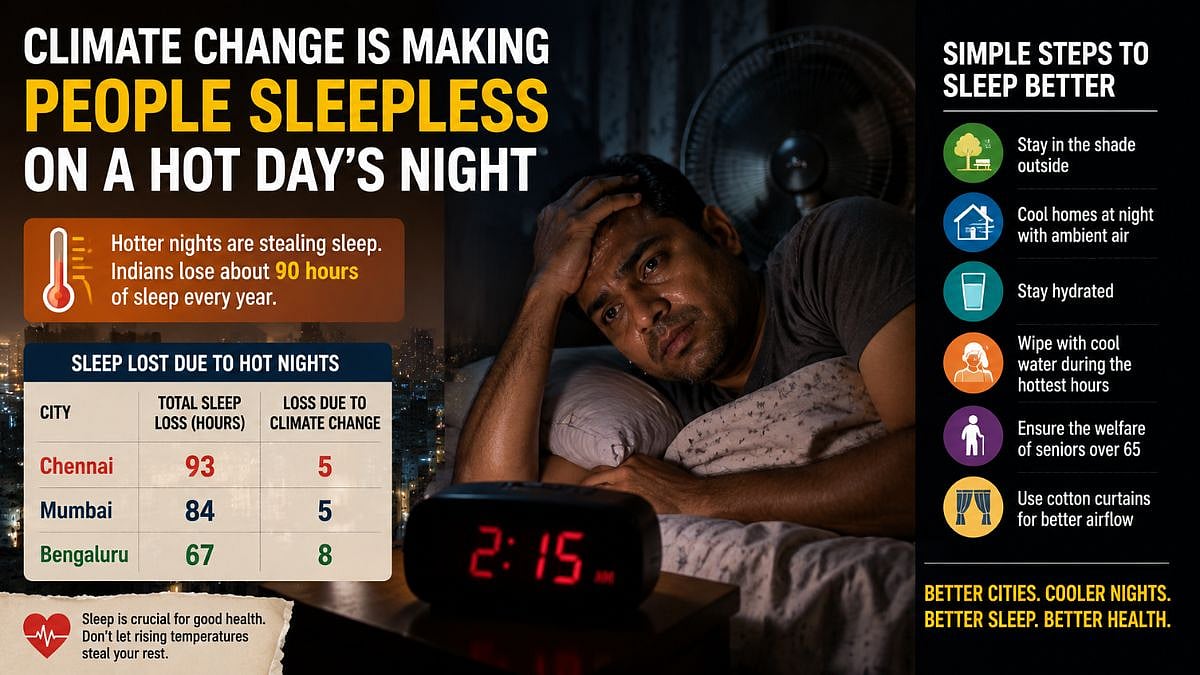
Rising night-time temperatures linked to climate change are reducing sleep and increasing health risks across India | AI Generated Representational Image
It should worry Indians that climate change is having an insidious effect on their health by reducing the number of hours they sleep in a year. Hotter nights that accompany very warm days affect the sleep cycle, and new data say about 90 hours of sleep is lost annually, with residents in southern states suffering the most.
All states in the south are experiencing the effects of warming. Among metropolitan cities, people in Bengaluru lose eight hours of sleep linked directly to climate change out of a total of 67 hours lost to hot nights. Chennai is the worst affected, with a total loss of 93 hours, followed by Mumbai at 84 hours; five hours of sleep loss is attributed to climate change in both the metros.
This trend is cause for concern because sleep is crucial for good health, and a deficit could lead to a variety of health problems, such as stroke, heart ailments, poor control of diabetes, reduced immune response, lower cognition and psychological well-being. Climate change is clearly a massive public health risk, but state and urban governments have been ignoring the evidence.
Cities Need Better Planning
Where policymakers choose to be responsive, there are elegant, cost-effective interventions that can be built into city heat action plans. Best practices suggested by UN-Habitat call for measures to help informal and less affluent settlements along with the wealthy.
At the core of such plans is sustainability—good ventilation and airflow through adequate spacing between buildings, access to more green spaces and water, use of low-cost vernacular architectural designs to passively cool houses, and careful placement of dense concrete structures.
Reducing Urban Heat
Best practices to mitigate urban heat islands are well known, but policy across the country, unfortunately, continues to be dominated by special interests. Adding more concrete structures must be done with caution, giving adequate breathing space for communities.
Yet, governments favour more and more massive flyovers to accommodate personal vehicles and allow buildings with no setbacks, displaying contempt for building codes and norms for open-space reservation.
This is certainly true for Chennai and Bengaluru. Unsurprisingly, massive blocks of concrete begin to radiate heat at night, causing immense distress to people, particularly those who cannot afford climate-control gadgets such as air conditioners.
Cities should encourage white-painted roofs and footpaths, expand green commons such as parks, plant medium-sized, quick-growing trees along roads, and create urban wetlands that can receive safe, treated wastewater to create a cool microclimate.
At the individual level, the World Health Organisation has some good advice: stay in the shade outdoors, cool homes at night by utilising ambient air coming in through windows, stay hydrated, wipe with cool water during the hottest hours, and ensure the welfare of seniors over 65.
Cotton curtains help by allowing free airflow, unlike synthetic fabrics. Awareness of all these dimensions can help everyone sleep better.
RECENT STORIES
-
-
-
-
-