CJI Considers Watching Videos Of Police Atrocities On Protesting Students Waste Of Time
The reported remarks of Chief Justice of India Surya Kant on videos allegedly showing police action against student protesters have reignited debate over judicial accountability. Allegations involving violations of fundamental rights deserve prompt, impartial judicial scrutiny to preserve public confidence in the rule of law.

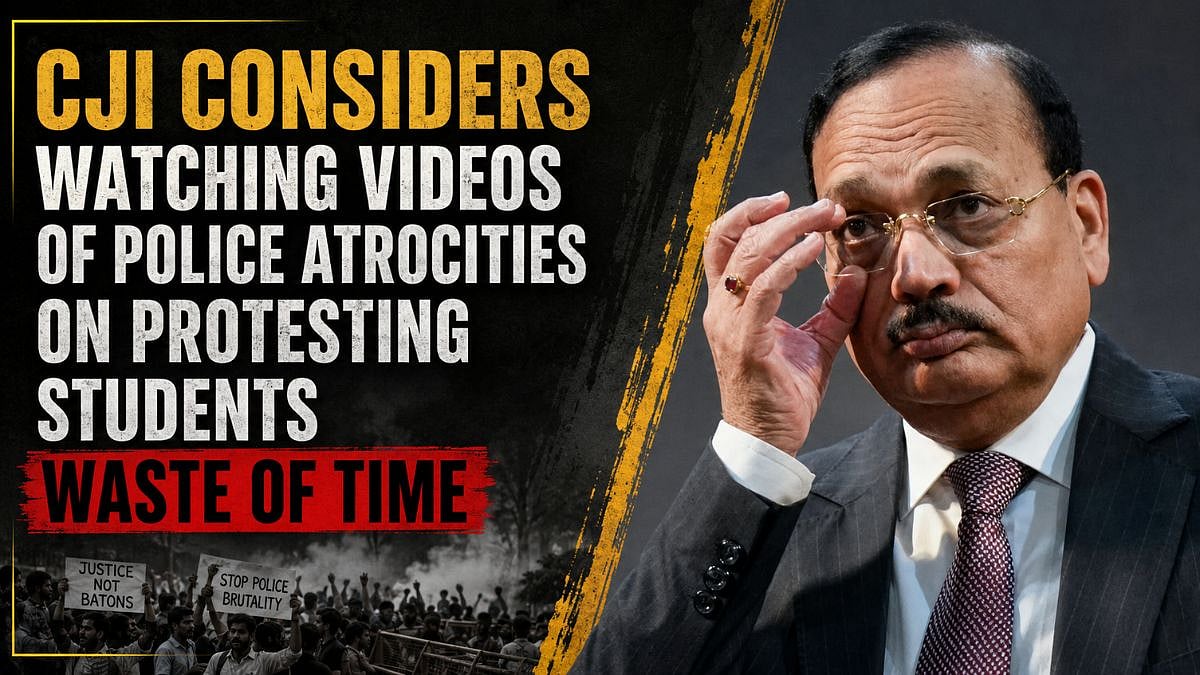
CJI's Reported Remarks On Videos Of Police Action Against Students Raise Questions Over Judicial Response | AI Generated Image
The Supreme Court of India has often described itself as the vigilant guardian of the Constitution and the fundamental rights of citizens. That lofty description carries with it an equally lofty expectation: when allegations of grave violations of civil liberties emerge, the Court must at least appear willing to listen.
It is against this backdrop that Chief Justice of India Surya Kant’s reported observation that the Court had “no time” to watch videos allegedly showing police excesses against student protesters has caused widespread disquiet. Courts cannot truly function on the basis of social media clips alone.
Yet, words spoken from the highest judicial forum carry enormous symbolic weight. When those words are perceived as dismissive of allegations involving violence against young citizens, they inevitably erode public confidence in the institution.
Allegations Demand Scrutiny
Millions across India and abroad have viewed videos circulating from the July 20 crackdown on students participating in the “Chalo Sansad” protest. The footage appears deeply disturbing. It allegedly shows security personnel using excessive force against unarmed protesters, including women.
There are also allegations that police personnel resorted to acts that require independent verification, including the use of force prohibited by law. These are not matters that can simply be brushed aside; they demand an impartial investigation.
Equally disappointing was the reluctance of the Delhi High Court to grant urgent relief. Courts are not expected to decide guilt or innocence overnight, but they are expected to ensure that allegations of abuse by the state receive prompt judicial scrutiny. Justice delayed in matters involving personal liberty is often justice denied.
Ironically, the present agitation owes part of its symbolism to the controversy triggered by the Chief Justice’s earlier “cockroach” remark, which, despite a subsequent clarification, struck a raw nerve among many young people. The emergence of the Cockroach Janta Party is a reminder that words spoken from positions of authority can have unintended consequences.
Judiciary And Public Trust
The Supreme Court has not hesitated in the past to take suo motu cognisance of issues affecting judicial institutions, including matters arising from school textbooks. That proactive spirit has strengthened faith in the judiciary. It is, therefore, natural for citizens to wonder why allegations of police brutality against students have not evoked similar urgency.
The grievances driving these protests—questions over examination integrity, the future of lakhs of aspirants and demands for accountability—cannot be resolved by batons, pellet guns or internet shutdowns. Nor can they be ignored by institutions entrusted with protecting constitutional freedoms.
When citizens believe they have suffered injustice, their last refuge is the judiciary. If even that refuge appears unwilling to hear their cry, the damage extends far beyond a single protest. It diminishes public faith in the rule of law, the very foundation on which constitutional democracy rests.
RECENT STORIES
-
-
-
-
-