Bunker Roy, The Barefoot Revolutionary, Is No More
Social activist and Barefoot College founder Bunker Roy has died at 81, leaving a legacy of rural empowerment and practical education. Established in Tilonia in 1972, his institution trained villagers, including women with no formal schooling, in solar engineering, healthcare, teaching and other skills to promote self-reliance.

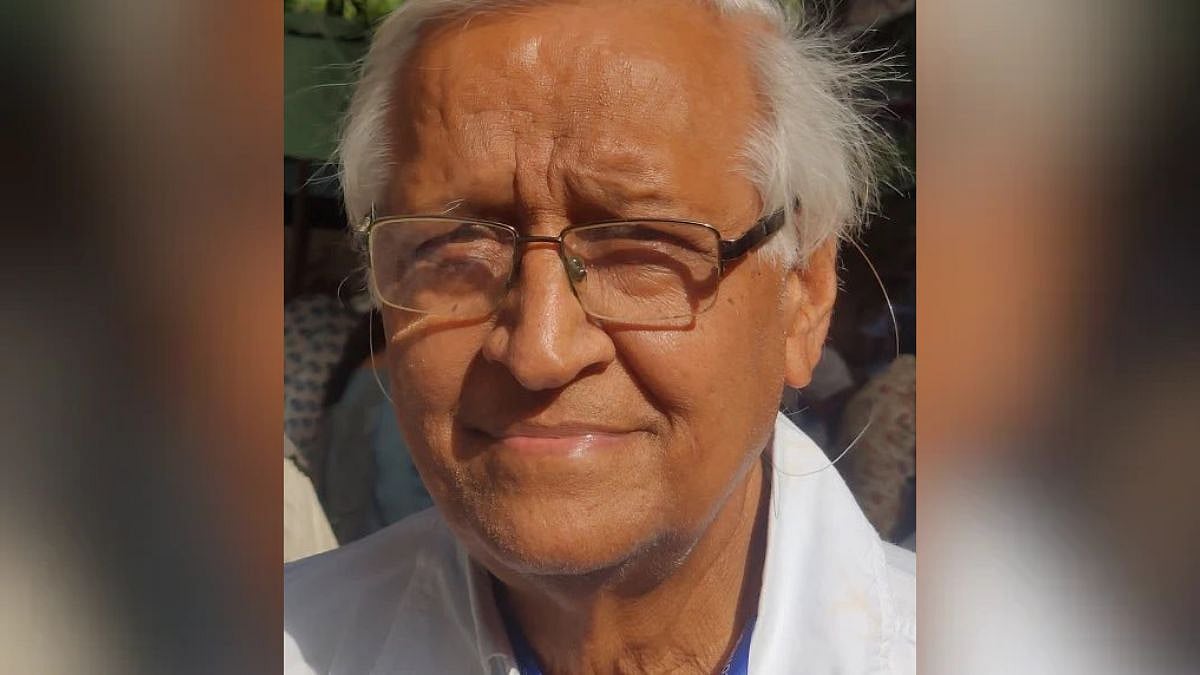
Bunker Roy transformed rural development through Barefoot College, empowering villagers and women with practical skills, technical knowledge and opportunities for self-reliance | X @ShashiTharoor
The death of Sanjit Bunker Roy at the age of 81 marks the end of an extraordinary chapter in India’s history of social transformation. At a time when social work was regarded with disdain and often considered the refuge of those who could not find a proper job, Roy chose it as his life’s calling. He did not merely challenge conventional wisdom; he demonstrated that the poorest people could become agents of their own transformation. His wife, Aruna Roy, recalled in her memoirs how a magistrate once dismissed Bunker Roy as someone who had failed to secure a proper job. Little did he know that the man he was belittling had been India’s national squash champion in 1965 and had represented the country in three world championships.
Born in 1945, Roy had the privilege of an elite education at Doon School and St Stephen’s College, Delhi. Yet, he found little value in the kind of education that these prestigious institutions imparted. He described it as snobbish and felt it had little relevance to the lives of ordinary people. His encounter with poverty during the Bihar drought opened his eyes to the enormous challenges confronting rural India. He realised that his calling lay not in pursuing a comfortable career but in transforming the lives of those whom development had largely bypassed. In 1972, he established the Social Work and Research Centre at Tilonia in Rajasthan, his birthplace. It eventually became known as the Barefoot College, an institution that challenged conventional notions of education, expertise and excellence. It demonstrated that a centre of learning did not need imposing buildings, expensive laboratories or sophisticated infrastructure. What mattered was the ability to impart relevant knowledge in a manner that ordinary people could understand and use. Roy’s philosophy had much in common with Mahatma Gandhi’s Nai Talim, or basic education, which emphasised learning through practical work.
At Barefoot College, villagers were trained to install, operate and repair solar equipment, maintain water pumps and provide basic healthcare. Women who had never attended school became solar engineers. The celebrated Solar Mamas demonstrated that technical knowledge was not the monopoly of the formally educated. The institution’s programmes have reached millions, training people in diverse skills, including solar engineering, teaching, midwifery, weaving and healthcare. Roy’s journey was enriched by the companionship of his wife, Aruna Roy, who gave up her career in the IAS to join him. She subsequently emerged as a formidable social activist in her own right. His greatest contribution was his faith in people whom society had written off. He showed that development must begin with dignity, self-reliance and participation. Two years younger than independent India, he spent his life demonstrating what freedom could mean to its poorest citizens.
To get details on exclusive and budget-friendly property deals in Mumbai & surrounding regions, do visit: https://budgetproperties.in/
RECENT STORIES
-
-
-
-
-