A Killer Rage That Resides Within Us
The Mumbai train stabbing has reignited concerns over rising public rage and violence triggered by trivial disputes. The article argues that deeper issues such as urban stress, displaced anger, weakening community bonds and anonymity are fuelling such incidents, calling for broader societal efforts beyond law enforcement.

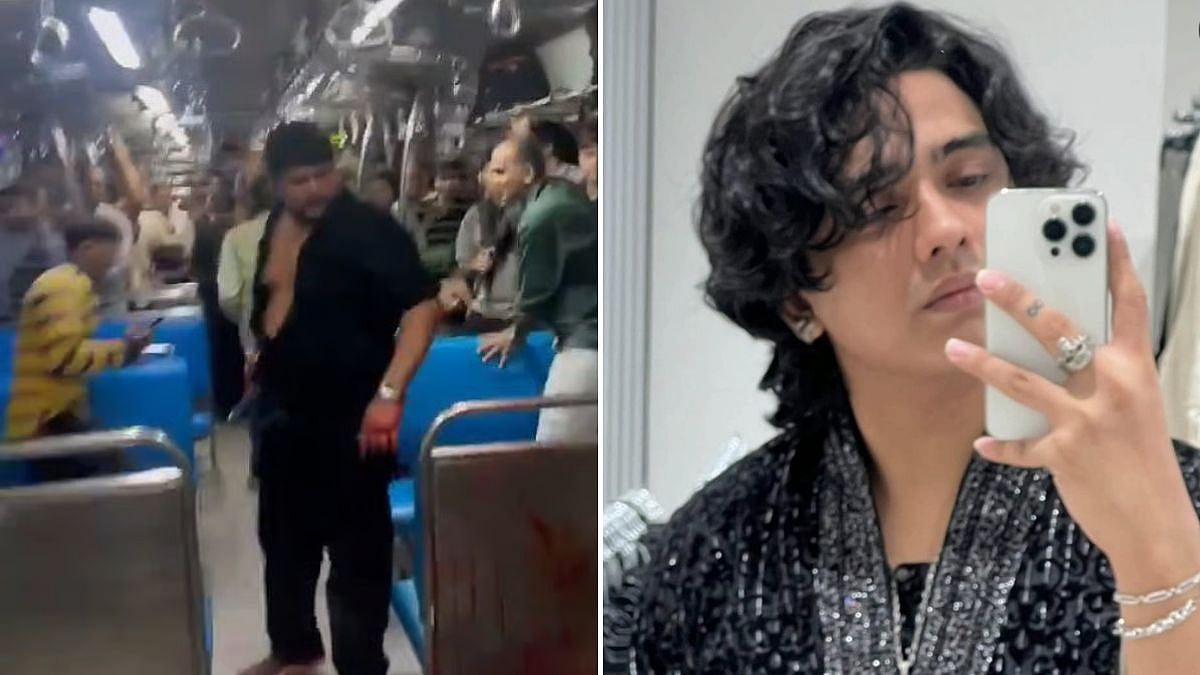
The opinion piece examines how rising public rage is fuelling violent confrontations over everyday disputes | X
The fatal stabbing of 22-year-old Mayank Lohar in the first-class compartment of a Mumbai suburban train on Tuesday night has sent shockwaves across the country. Heading home to Virar after his work as a salesman at a retail store, Lohar apparently asked another man to shut the train door to prevent the rainwater from drenching them, which escalated into an argument and ended up taking his life. The shock and trauma of losing a young son this way perhaps made the Lohar family—his father is an app-based cab driver—demand instant capital punishment for the accused, Roshan Suvarna, who works in a cargo unit. He was arrested, but the wheels of justice hardly move with alacrity.
A Pattern Of Public Rage
This is the second incident of fatal stabbing this year in Mumbai’s suburban trains, which carry nearly 7.5 million commuters a day; in a third incident in December, the victim escaped with injuries. Versions of commuter rage or public rage have unfolded at fuel pumps, in various queues, on roads and other places where people are forced to be together and lose mental and emotional balance over trivial issues. Since January, in addition to the two in Mumbai, public rage incidents have been reported from Gurugram, Mohali, Bengaluru, Hyderabad and Thane, in which the police were called in; there must have been countless more verbal and physical fights, threats and other incidents that went unreported. India ranks high in the world for annual incidents of reported road rage. A telling trend is the unwillingness of fellow commuters or drivers to restrain the aggressor or aid the victim, as seen in the Mumbai train incident, where CCTV cameras recorded at least 30 witnesses.
Beyond Preventive Measures
The train stabbing has laid bare, once again, the complete lack of precautionary checks, the absence of scanning people and bags—which is admittedly a Herculean task given the impossibly high footfall—and the absence of security personnel in Mumbai’s local trains. But these are preventive measures. Increasingly, trivial issues, such as seat adjustments, standing in doorways, jostling while boarding and alighting, not giving way to a vehicle on the road, unintentionally scraping past another vehicle or not driving fast enough for the driver behind, that once led to high-pitched verbal spats have escalated into physical violence, even killing. What has led to this collapse?
Need For Deeper Reflection
Each public rage incident is treated as an isolated case; the city moves on while the family is left with the grief. But the lens has to be widened. Psychiatrists have mapped individual character traits that make some people more prone to rage incidents than others, but social psychologists point to deeper urban stresses, such as structural injustices, displaced anger from work or home, the breakdown of communities and anonymisation. There is much work to be done as a society so that no other life is lost to public or road rage.
Published on: Thursday, June 25, 2026, 10:02 PM ISTRECENT STORIES
-
-
-
-
-