Who Is Karim Khan? Why ICC Suspended Its Chief Prosecutor
Following a rigorous 18-month UN probe into serious sexual misconduct allegations, the International Criminal Court’s chief prosecutor, Karim Khan, has been formally suspended from his role

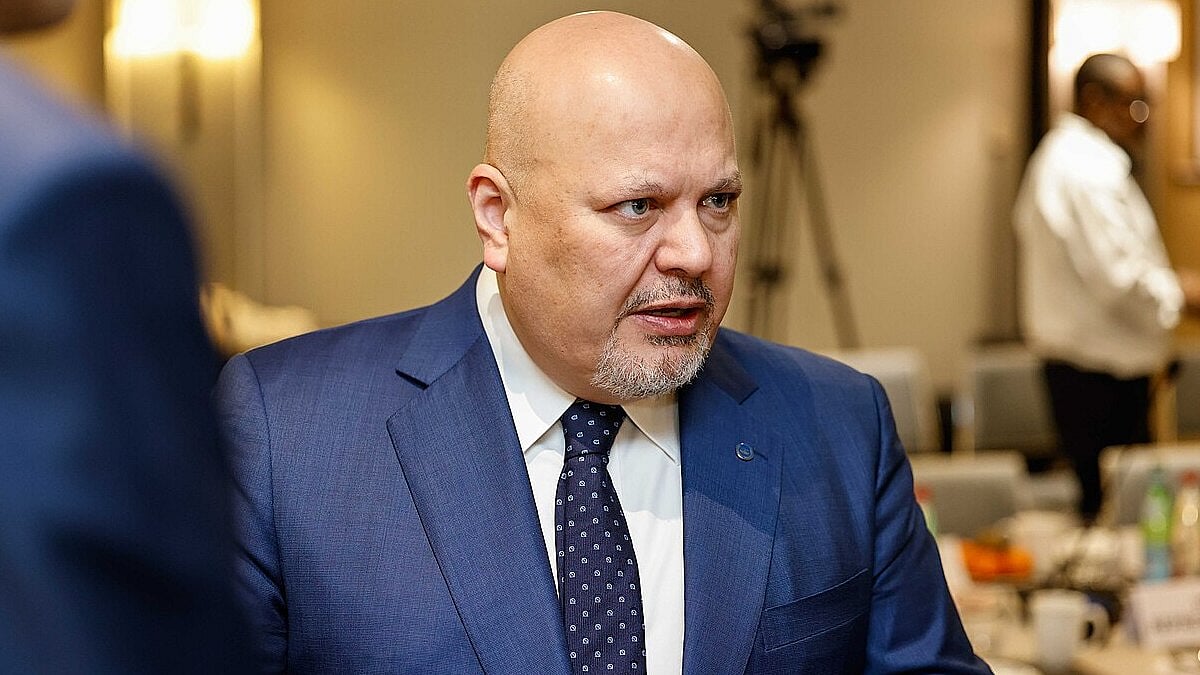
ICC's suspended chief prosecutor Karim Khan | Wikimedia Commons
The International Criminal Court (ICC) has been plunged into an unprecedented institutional crisis following the formal suspension of its chief prosecutor, Karim Khan. The court's governing body announced that Khan has been suspended from his duties effective immediately, marking the first time in the history of the global court that a chief prosecutor has been forcibly sidelined by its oversight body.
According to Reuters, the suspension follows an intense, 18-month-long investigation into multiple allegations of serious sexual misconduct and harassment. Khan, a British barrister who led the ICC's high-profile war crimes investigations since 2021, has vehemently denied all accusations, labelling the proceedings unlawful and unsupported by evidence. This development leaves the world's permanent war crimes tribunal in a state of deep legal and political limbo.
Who is Karim Khan?
Karim Ahmad Khan, born in Edinburgh in 1970 to a British mother and a Pakistani father from Mardan, is a high-profile British lawyer specialising in international criminal law and human rights. Elected by the ICC's member states, he took office as the Chief Prosecutor in June 2021.
During his tenure, Khan became one of the most recognisable figures in international justice. He gained global prominence by pursuing high-stakes war crimes investigations across the world. Most notably, he requested and secured arrest warrants for high-ranking international figures, including Russian President Vladimir Putin over the war in Ukraine, as well as Israeli Prime Minister Benjamin Netanyahu, former defence minister Yoav Gallant and top Hamas leaders for alleged war crimes and crimes against humanity in Gaza.
What are the allegations against him?
The crisis stems from serious allegations of non-consensual sexual behaviour and harassment involving multiple women. The primary complaint was reported to the court's independent watchdog in May 2024 by a Malaysian lawyer who worked as an assistant in Khan's office.
Whistleblower documents leaked to the media indicate that the accuser alleged Khan made repeated, unwanted sexual advances beginning in early 2023. These included non-consensual sexual contact at his office, his private residence and during official foreign missions, as well as instances of coercive behaviour, such as locking his office door and making inappropriate physical advances.
A second complainant came forward in August 2025. This individual alleged that during her employment under Khan in his previous capacity as a private lawyer, dating back to 2009, he repeatedly pressured her for sexual relations, subjected her to unwanted physical proximity and attempted to touch and kiss her against her will.
How did the investigation unfold?
The allegations triggered a comprehensive independent inquiry led by the United Nations Office of Internal Oversight Services (OIOS). The UN investigation concluded that there was a factual basis for the primary complainant's allegations of sexual misconduct, noting that multiple witness accounts lent strong support to her claims based on a civil standard of evidence.
However, the process split the court's legal and administrative systems. The UN report was subsequently reviewed by an ad hoc panel of three independent ICC judges. In their advisory assessment, the judges determined that the evidence gathered was insufficient to establish misconduct beyond a reasonable doubt, the standard required for a formal criminal or severe contractual breach of duty under the court’s strict legal framework. Khan’s legal team actively used this judicial finding to claim he had been completely exonerated.
Why was he suspended now?
Despite the advisory opinion from the panel of judges, the executive bureau of the Assembly of States Parties (ASP), the 21-member political and governing body that oversees the ICC, chose to overrule the judges' lenient interpretation. Operating under Rule 28 of the court's Rules of Procedure and Evidence, a qualified two-thirds majority of the bureau determined that Khan had committed serious misconduct.
Because the bureau believes the integrity of the global court is severely compromised, it issued an immediate suspension to protect the institution while a final, permanent resolution is reached. Khan had already taken a voluntary, temporary leave of absence from investigative duties, but this formal action strips him of his authority and bars him from the Office of the Prosecutor entirely.
Where do the proceedings go from here?
The decision regarding Khan's ultimate fate now rests with the Assembly of States Parties, which represents all 125 member countries that ratified the Rome Statute (the ICC's founding treaty). The executive bureau has officially recommended that Khan be permanently removed from his post.
The bureau is currently organising an extraordinary special session of all member states to resolve the crisis. To officially terminate Khan's mandate, a secret ballot must be held, requiring a simple majority of all member states, which means, at least 63 nations would need to vote in favour of his removal.
Until that vote occurs, the suspension remains in effect, and the documentation behind the bureau's decision will remain strictly confidential to protect the privacy of the victims and the integrity of the diplomatic process.
RECENT STORIES
-
-
-
-
-