US Navy Maintains 15-Ship Presence In Middle East Region, As Trump Orders High-Stakes Naval Blockade
The United States has deployed at least 15 naval vessels, including the USS Abraham Lincoln, in the Middle East amid escalating tensions with Iran. Following failed diplomatic talks in Pakistan, President Donald Trump ordered a potential naval blockade of Iranian ports, citing concerns over Tehran’s nuclear ambitions, while warning of consequences if no agreement is reached.

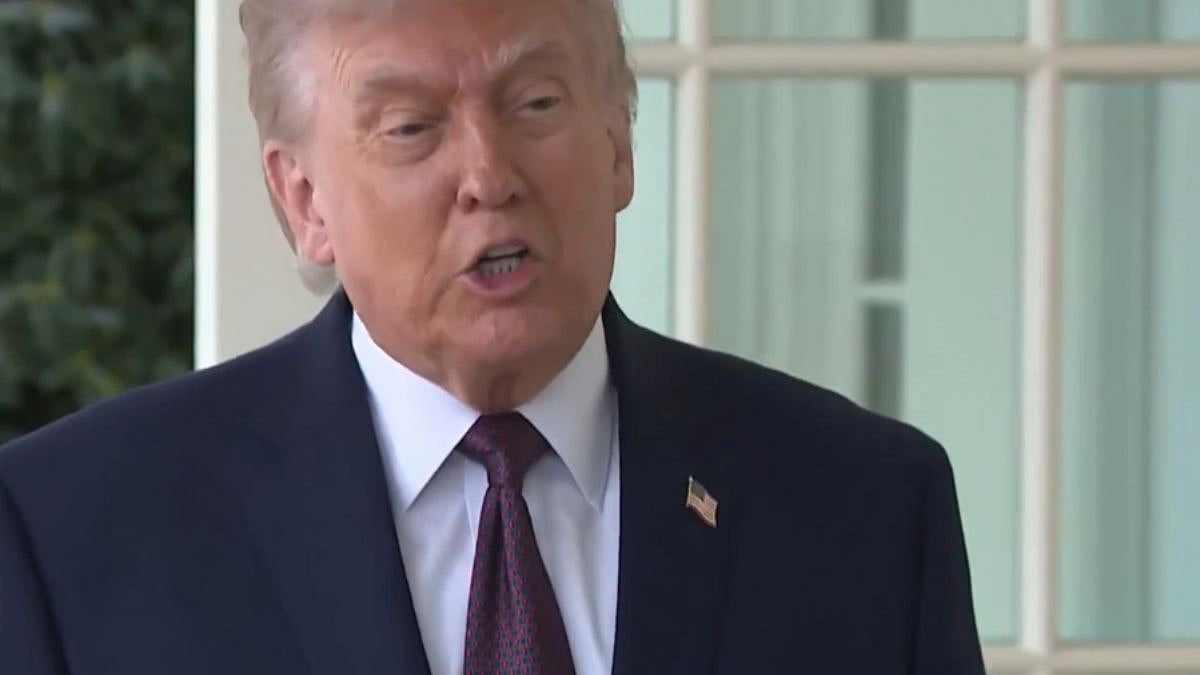
US Navy Maintains 15-Ship Presence In Middle East Region, As Trump Orders High-Stakes Naval Blockade | X
Washington: The United States Navy currently maintains a presence of at least 15 ships in the Middle East region, including the aircraft carrier USS Abraham Lincoln and 11 destroyers, which could potentially take part in a maritime blockade of Iran's ports, according to a US official, following orders from President Donald Trump, CNN reported.
However, it remains unclear which specific vessels are positioned or designated for participation in the blockade, as earlier assessments indicate that the naval assets are widely dispersed across the US Central Command's area of operations.
The deployed fleet includes the aircraft carrier USS Abraham Lincoln along with 11 destroyers, including the USS Bainbridge, USS Thomas Hudner, USS Frank E. Petersen Jr., USS Delbert D. Black, USS John Finn, USS Michael Murphy, USS Mitscher, USS Pinckney, USS Rafael Peralta, USS Spruance and USS Milius. In addition, the Tripoli Amphibious Ready Group, comprising USS Tripoli, USS New Orleans, and USS Rushmore, is also deployed in the region.
The naval formation is accompanied by multiple support and escort vessels; however, it would need to transit either through the Suez Canal or exit the Mediterranean Sea and sail around Africa before reaching a position suitable to support any blockade operations.
Meanwhile, the US president imposed a naval blockade on Iranian ports, following marathon talks in Pakistan over the weekend that failed to yield any agreement.
The heightened military pressure follows the collapse of high-level diplomatic efforts aimed at resolving the regional crisis.
The US President maintained that the primary sticking point in the negotiations remains Tehran's nuclear ambitions, asserting that "Iran will not have a nuclear weapon."
Reflecting on the failed weekend dialogue, Trump noted, "We agreed to a lot of things, but they didn't agree to that, and I think they will agree to it. I'm almost sure of it. In fact, I am sure of it."
Trump issued a stark ultimatum regarding the ongoing diplomatic efforts, stating, "If they don't agree, there's no deal. There will never be a deal."
Beyond the nuclear freeze, the US has prioritised the retrieval of enriched uranium currently held within Iran.
"We're going to get the dust back. We'll get it back. Either we'll get it back from them or we'll take it," the President added.
The urgency of the situation is underscored by a two-week ceasefire Trump announced last week.
However, following the faltering of peace talks in Pakistan, Vice President JD Vance confirmed that Iran would not commit to forgoing a nuclear weapon.
Trump warned that if an agreement is not reached by the end of the ceasefire, "it won't be pleasant for them."
When questioned by reporters if his previous threat that "a whole civilization will die" still stands should the ceasefire expire without a deal, the President declined to elaborate further.
"I don't want to comment on that, but it won't be pleasant for them. Let me put it that way," Trump responded.
Before the current pause in hostilities, the US President had threatened to destroy Iran's power plants, suggesting it "makes no difference to me" whether an agreement is ultimately reached.
Despite the unilateral nature of the current US military action, Trump claimed that "other countries," though he did not specify which, are offering to help the United States' blockade of Iranian ports.
While he did not specify which nations had reached out, he suggested that the US was capable of maintaining the maritime pressure alone.
"We don't need other countries, frankly. But they've offered their services," the President said, adding that further details regarding international involvement will be "let it be known, probably tomorrow."
(Except for the headline, this article has not been edited by FPJ's editorial team and is auto-generated from an agency feed.)
RECENT STORIES
-
-
-
-
-