US-Iran Talks: Why Tehran Thinks It Holds Trump Card in Pakistan
Tehran is leveraging strategic ambiguity and threats to global shipping in the Strait of Hormuz to stall the Islamabad summit, demanding a Lebanon ceasefire that United States and Israel have already rejected as the 14-day diplomatic window rapidly closes

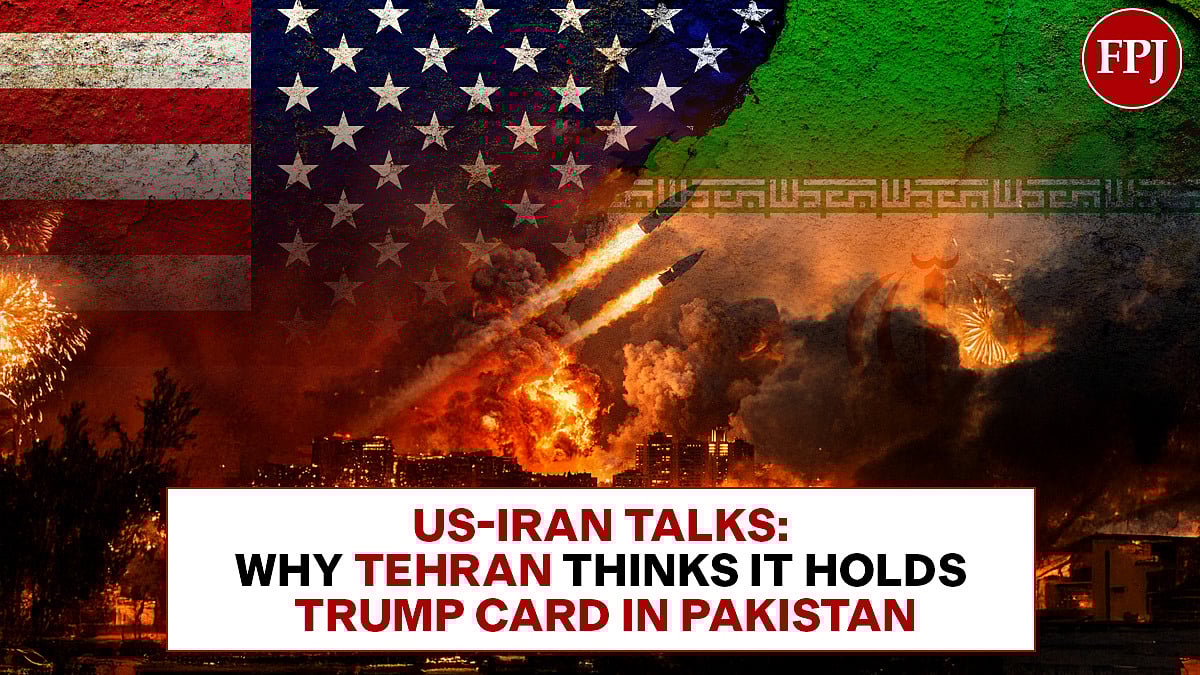
The world is watching Islamabad this weekend as the most significant diplomatic encounter between the United States and Iran since 1979 hangs in the balance. Scheduled to begin Saturday morning, April 11, 2026, these talks were designed to solidify a fragile two-week ceasefire and chart a path toward regional stability. However, even before a single diplomat has sat down at the Serena Hotel, the negotiations are being pushed to the brink of collapse.
To understand why this "peace" summit feels like a battlefield, it is necessary to understand how Iran is using strategic ambiguity and regional pressure to gain the upper hand. By leveraging its control over global trade routes and setting rigid preconditions, Tehran is signalling that it will not enter the room as a junior partner, but as a power with the capacity to disrupt the global economy.
Who is involved and where are they meeting?
The primary actors are United States and Iran, with Pakistan serving as the host and mediator. The setting is Islamabad’s "Red Zone," a high-security district currently guarded by over 10,000 personnel. While a 30-member US advance team is already on the ground and military transports have landed at Nur Khan Air Base, the presence of the Iranian delegation remains a mystery.
Conflicting reports have created a diplomatic fog. While Western sources like the Wall Street Journal and Haaretz suggest Foreign Minister Abbas Araghchi and Parliament Speaker Mohammad Bagher Ghalibaf travelled to Pakistan late Thursday, Iranian state media outlets Fars News and Tasnim insist that "no delegation has left Tehran." This discrepancy isn't a clerical error. It is a calculated information operation. By denying their presence, Iran retains the "walk-out" option, allowing them to disappear from the talks at any moment without the formal stain of a failed summit.
What is the hard ball precondition?
The central sticking point is Lebanon. Iran has set an explicit, public precondition that there will be no negotiations unless the ceasefire is expanded to include Lebanon and a total cessation of Israeli strikes there. Foreign Minister Araghchi made this stance irreversible in a social media post viewed over 3.6 million times, stating the US must choose between a total ceasefire or "continued war via Israel."
Having been struck during previous negotiation windows, the Iranian public is sceptical. However, this demand faces a wall of resistance. Israeli Prime Minister Netanyahu has clarified the ceasefire "does not include Lebanon," and IDF Chief of Staff Eyal Zamir recently declared Lebanon as Israel’s "main battlefield." This creates a paradox where the talks cannot start until a condition is met that the other side has already vowed to ignore.
When does the clock run out?
Timing is the greatest enemy of this summit. The current ceasefire is on a two-week clock, set to expire around April 22, 2026. Because the first 72 hours have been consumed by posturing and denials of arrival, nearly a quarter of the negotiating window has already vanished. If the parties do not engage by the end of the weekend, the "architecture of failure" may be the only thing left standing when the ceasefire expires.
Why does Iran feel it has the leverage to delay?
One might wonder why Iran feels comfortable playing hard ball after weeks of intense bombardment. The Iranian regime remains intact, its proxy networks are functional and roughly half of its missile are still available.
Crucially, Iran has seized a new economic weapon, the Strait of Hormuz. With traffic in the Strait already significantly lower than usual, the threat of an Iranian-managed "toll" or a total blockade represents a big challenge for US.
Bottom line
As of Friday, the infrastructure for peace is ready. But the path to a deal is blocked by a series of "irreversible" positions. Iran is betting that its control over the world’s most important oil artery and its resilience under fire will force the US to blink.
Meanwhile, the US and Israel are betting that their military pressure will eventually force Tehran to the table. With the ceasefire clock ticking down, the primary question is no longer what will be discussed, but whether the two sides will ever actually be in the same room.
RECENT STORIES
-
-
-
-
-