‘Trade Over Ukraine’: US Slams EU-India FTA, Calls Europeans ‘Very Disappointing’; Trump Administration Doubles Down On India Criticism | VIDEO
The US has sharply criticised the EU–India free trade agreement, with Treasury Secretary Scott Bessent accusing Europe of prioritising trade over unified pressure on Russia. The remarks reflect rising tensions as the Trump administration doubles down on criticism of India’s energy and trade ties.

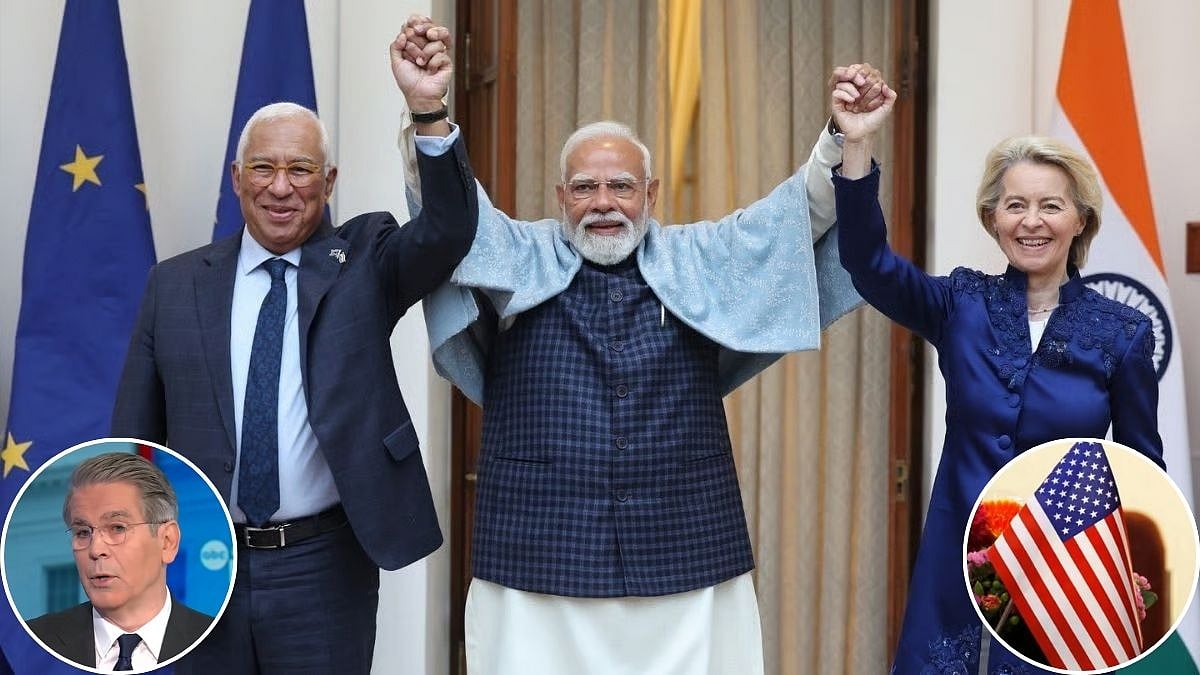
US Treasury Secretary Scott Bessent criticises the EU–India free trade agreement, accusing Europe of prioritising trade over pressure on Russia | File Photo
The United States has sharply criticised the European Union’s free trade agreement (FTA) with India, with US Treasury Secretary Scott Bessent accusing European nations of prioritising trade over collective pressure on Russia, and doing so in back-to-back interviews that targeted both Europe and India within 48 hours.
Bessent’s blunt critique of EU and India
In an interview with CNBC’s Squawk on the Street on Wednesday, Bessent described the European response to the India–EU trade deal as “very disappointing”, saying Brussels chose commercial interests over unified support against Russia amid the Ukraine war.
“Again, they should do what’s best for themselves, but I will tell you I find the Europeans very disappointing because the Europeans are on the front line of the Ukraine-Russia war,” he said.
He went on to criticise the sequence of events linking India’s oil purchases and Europe’s refined fuel imports: “…India started buying sanctioned Russian oil, and guess who was buying the refined products? The Europeans. So, the Europeans have been funding the war against themselves and like something that you couldn’t have made up.”
Bessent also reiterated that the US had slapped significant tariffs on India — including a 25 per cent levy tied to Russian oil purchases — while European nations declined to join similar measures, apparently to preserve the prospects for the trade deal. “The Europeans were unwilling to join us, and it turns out that they wanted to do this trade deal,” he said. “Trade — European trade, more important than ending the war in Ukraine.”
Asked about Europe’s energy needs, he remarked: “At a price, they want cheap energy, but we could have cheaper energy too if we were willing to buy sanctioned Russian oil.”
Second interview in two days
Just days earlier, in a separate interview with ABC News, Bessent had taken aim at the same issues, criticising both the EU and implicitly India’s role in the energy trade. In that interview, he said the United States had “made much bigger sacrifices” than Europe in efforts to address the Ukraine conflict and reminded listeners of the US tariffs on Indian imports for Russian oil purchases.
“We have put 25 per cent tariffs on India for buying Russian oil. Guess what happened last week? The Europeans signed a trade deal with India,” he said. “And just to be clear again, the Russian oil goes into India, the refined products come out, and the Europeans buy the refined products. They are financing the war against themselves.”
That marked two critical remarks in two days in two different interviews, underscoring Washington’s deep frustration with how the India–EU pact has played out geopolitically.
Trump’s remarks on India and tariffs
The sharp commentary comes amid broader tensions between Washington and New Delhi on trade. The Trump administration has already imposed steep tariffs on Indian goods.
President Donald Trump himself has previously weighed in on India trade issues, at times linking tariff discussions to India’s energy decisions and broader economic ties. Trump had repeatedly used tariff threats as leverage in international trade talks, including with India and other major partners, framing them as tools to secure more favourable terms or push change in trade behaviour.
Also Watch:
ALSO READ
With the India–EU agreement hailed by Brussels and New Delhi as the “mother of all deals”, the contrasting tone from Washington highlights a growing divergence in how major global players view trade, energy and geopolitical alignment in the current world order.
RECENT STORIES
-
-
-
-
-