Tehran in Turmoil: Deaths Of Khamenei, IRGC Commanders Trigger Unprecedented Power Vacuum In Iran
Following a series of high-precision joint military strikes by the United States and Israel, Iranian state media confirmed the deaths of Supreme Leader Ayatollah Ali Khamenei and top military commanders, creating an unprecedented power vacuum across the Islamic Republic's leadership

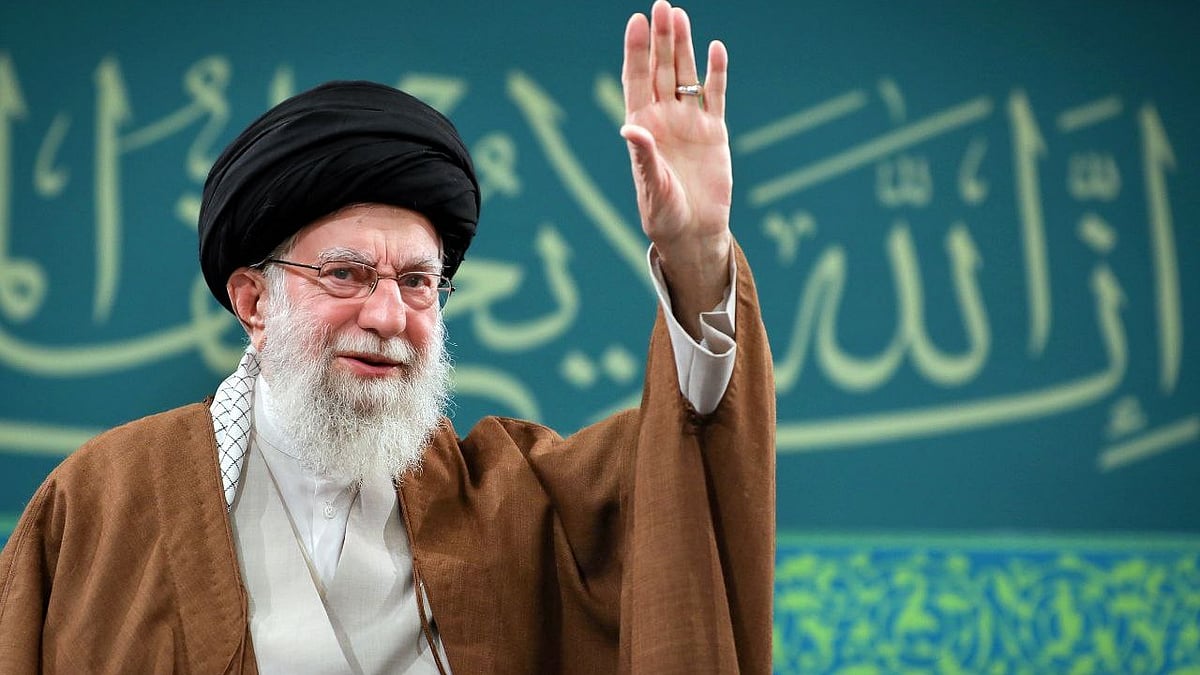
Iran Supreme leader Ayatollah Seyyed Ali Khamenei |
The geopolitical scenario in the Middle East has been fundamentally altered following a series of high-precision joint military strikes by the United States and Israel. Iranian state media has confirmed the deaths of the country’s most powerful political and military figures, including Supreme Leader Ayatollah Ali Khamenei, during the ongoing joint operation—dubbed Epic Fury—which targeted the high-security apparatus in Tehran. These attacks have effectively decapitated the core leadership of the Islamic Republic, creating an unprecedented power vacuum at the highest levels of the state.
Ayatollah Ali Khamenei, Supreme Leader
Ayatollah Ali Khamenei served as the ultimate authority in Iran for over three decades, holding the position of Supreme Leader since 1989. As the successor to the Islamic Republic's founder, Ruhollah Khomeini, he was the final arbiter on all matters of state, including foreign policy, the nuclear programme and military strategy.
His death marks the end of an era defined by the "Axis of Resistance" doctrine and a firm stance against Western influence. Beyond his political role, he was a senior cleric who consolidated power by blending religious legitimacy with absolute control over the nation’s security and intelligence agencies.
Ali Shamkhani, Security Adviser to the Supreme Leader
Ali Shamkhani was one of the most seasoned political and military strategists in the Iranian regime, serving as a top security adviser to Khamenei and the longtime secretary of the Supreme National Security Council. A former admiral and Minister of Defence, he was a rare figure who handled the complexities of both the regular military and the Revolutionary Guards.
Most recently, he was a central figure in high-stakes regional diplomacy, including the brokering of shifted alliances in the Middle East and overseeing sensitive nuclear negotiations. His loss removes a key bridge between Iran's ideological leadership and its practical security execution.
General Abdolrahim Mousavi, Armed Forces Chief of Staff
General Abdolrahim Mousavi was the highest-ranking officer in the Islamic Republic of Iran Army, responsible for the coordination between the traditional military branches and the Revolutionary Guards. Unlike the IRGC, which focuses on ideological and asymmetric warfare, Mousavi represented the conventional defence of Iranian sovereignty.
His leadership was characterised by efforts to modernise Iran’s air defence systems and maintain the readiness of the ground forces. As the Chief of Staff, he was the primary architect of the country's integrated defence strategy against external threats.
Aziz Nasirzadeh, Minister of Defence
Aziz Nasirzadeh served as the Minister of Defence and Armed Forces Logistics, a role critical to Iran’s self-sufficiency in military hardware. A former commander of the Iranian Air Force and a skilled pilot, he was instrumental in the domestic production of long-range missiles, drones and sophisticated radar systems.
Under his tenure, the Ministry of Defence expanded its exports of military technology to regional proxies and international allies. His death disrupts the administrative and logistical backbone of Iran’s military-industrial complex during a period of active conflict.
Mohammad Pakpour, IRGC Ground Forces Commander
General Mohammad Pakpour was the Commander-in-Chief of the Islamic Revolutionary Guard Corps (IRGC) Ground Forces, making him a key figure in both internal security and regional influence. He was responsible for maintaining order within Iran’s borders and leading operations against insurgent groups in frontier regions. As a high-ranking IRGC officer, Pakpour was deeply involved in the "Forward Defence" strategy, which involves supporting allied militias across the Middle East. His influence extended into the economic and political spheres, where the IRGC maintains a dominant presence.
RECENT STORIES
-
-
-
-
-