Pakistan Refused To Accept Bodies Of Its Own Soldiers Killed In Kargil War, India Slams Pakistan At UN | Video
India criticised Pakistan at the UN over religious freedom and funeral rights, recalling Islamabad’s refusal to accept its soldiers’ bodies during the 1999 Kargil War. India also questioned a UN report on Kashmir and highlighted alleged rights violations against minorities in Pakistan.

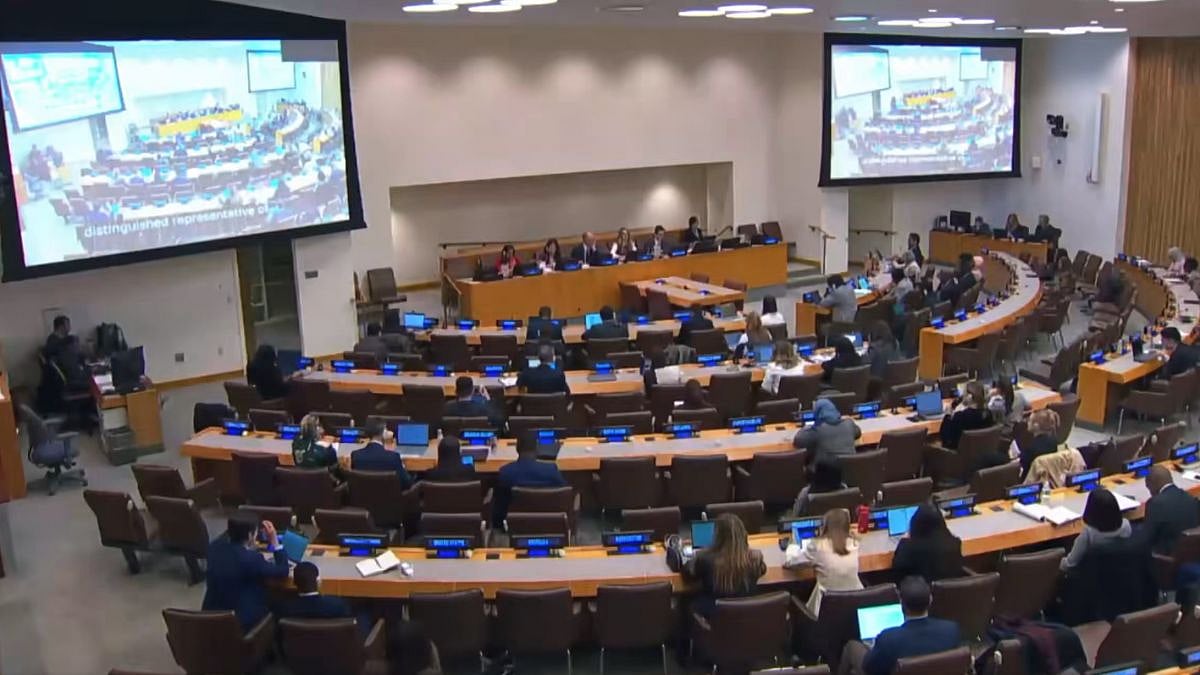
Pakistan Refused To Accept Bodies Of Its Own Soldiers Killed In Kargil War, India Slams Pakistan At UN | Video | X / @IndiaUNNewYork
India has strongly criticised Pakistan at the United Nations (UN) for raising questions over religious freedom and burial rights, reminding Islamabad that it had refused to accept the bodies of its own soldiers killed during the 1999 Kargil War.
India’s response came during an interactive dialogue on funeral rights in exceptional circumstances, following an interim report presented by UN Special Rapporteur on freedom of religion or belief Nazila Ghanea.
The report raised concerns over the alleged denial of funeral rights in Jammu and Kashmir, including the non-return of bodies to families and secret burials following security operations.
India Reminds Pakistan Of Kargil War Burials
Responding to the report on Thursday, First Secretary at the Permanent Mission of India to the UN Bhavika Mangalanandan criticised Pakistan for commenting on religious freedom and burial practices despite its conduct during the Kargil War.
“It is deeply ironic that a State that did not even accept the bodies of its own soldiers who were killed in combat in 1999 in Kargil unabashedly speaks with fervour on faith, religious freedom, and burials,” she said.
ALSO READ
During the 1999 conflict, the Indian Army recovered the bodies of Pakistani soldiers and buried several of them with military honours and in accordance with Islamic rites after Pakistan refused to acknowledge the involvement of its military personnel in the fighting.
Mangalanandan also criticised Pakistan for repeatedly raising issues concerning Jammu and Kashmir while allegedly ignoring developments in territories under its control.
“Pakistan’s deep obsession with what is happening in the Indian Union Territory of Jammu and Kashmir should be actually directed at the developments that are underway in the parts of Jammu and Kashmir under its illegal occupation, such as Rawalakot,” she said.
She further alleged that religious minorities in Pakistan were facing repeated violations of their rights.
“A State that cannot ensure the safety of its own minorities has no standing to lecture India,” she said.
UN Report Raises Concerns Over Funeral Rights In Kashmir
The interim report submitted by Ghanea highlighted allegations concerning the treatment of bodies of individuals killed during security operations in Jammu and Kashmir.
“Reports of systemic denial of funeral rights in the context of individuals killed in security operations in Jammu and Kashmir, India, including denial of return of bodies to families and remote and secret burials, disproportionately affecting Muslims and notably inconsistent with their practices, raise serious concerns,” the report stated.
Mangalanandan questioned the report’s approach to the funeral rights of terrorists, arguing that restrictions must be considered within the framework of national sovereignty and legal principles.
“Legal limits should be determined in accordance with the principles of sovereign rights. A terrorist not only kills innocent people but damages the psyche of a nation,” she said.
ALSO READ
She also criticised what she described as the report’s emphasis on the rights of terrorists without giving comparable attention to victims of terrorism, whose fundamental right to life had been violated.
India Highlights Rights Violations Against Minorities In Pakistan
India also drew attention to the treatment of religious minorities in Pakistan, where Hindus, Christians, Sikhs and other minority communities account for approximately 4% of the population.
The Human Rights Commission of Pakistan (HRCP), in its seventh annual report titled Sanctuary Denied: Freedom of Religion or Belief in 2025/26, released last week, documented continuing violations of minority rights.
The report highlighted the misuse of blasphemy laws, forced marriages and religious conversions, discrimination and other violations of fundamental rights affecting minority communities.
Mangalanandan accused Pakistan of failing to protect its minority population while attempting to question India’s record on religious freedom.
India Questions UN Report’s Focus On Global South
Mangalanandan also challenged the Special Rapporteur’s report for what she described as its selective treatment of human rights violations across different regions.
“The report goes back half a decade to find references to my country. It fails when it comes to grave violations committed recently in our region and in the developed world,” she said.
She argued that the report appeared to focus on discrimination and problematic practices during the Covid-19 pandemic in countries of the Global South while overlooking similar incidents in developed nations.
“What benefit does the report derive by not mentioning similar tragic situations in the developed world? Deriving political mileage out of people’s pain and loss should not be a topic that SRs (Special Rapporteurs) should base their relevance on,” she said.
RECENT STORIES
-
-
-
-
-