FPJ Exclusive Interview: 'Netanyahu May Try To Lure Opposition Defectors As Likud Falls Short Of Majority,' Says Security Expert Oshrit Birvadker On Israel Election 2026
Netanyahu’s bloc remains short of the 61 seats needed for a parliamentary majority, according to Oshrit Birvadker. She says a Jewish-Arab coalition faces significant political obstacles and predicts that Israel’s judicial reform agenda and efforts to expand the Abraham Accords could continue even if a different leader takes office.

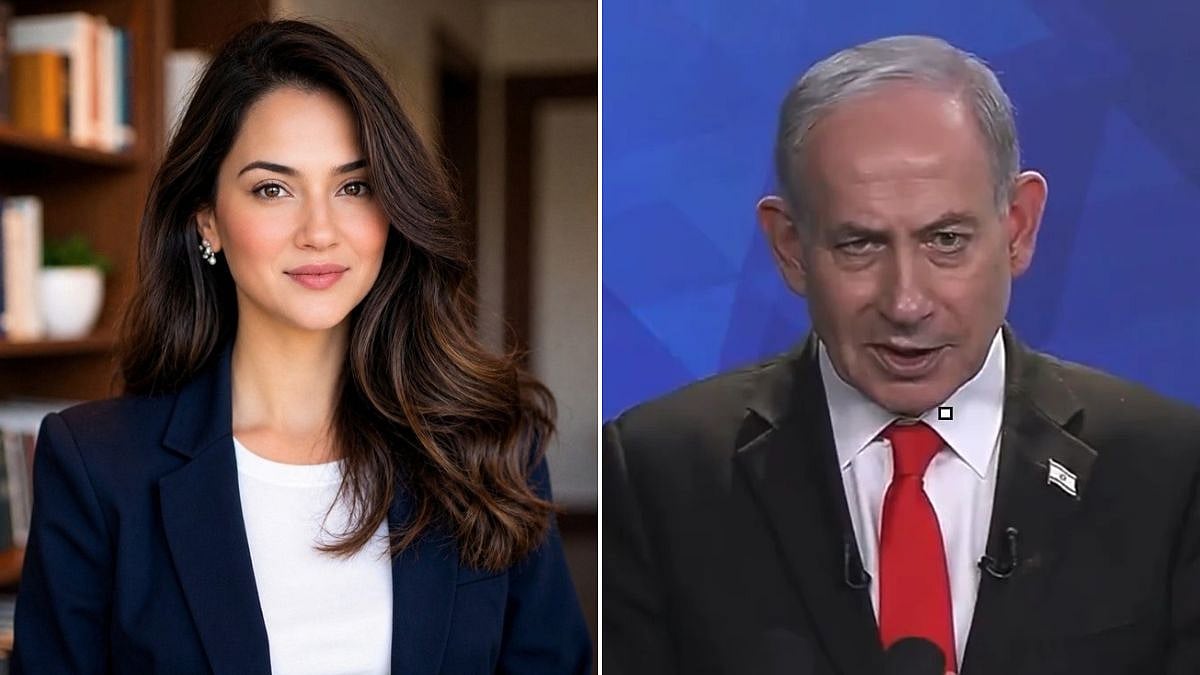
National security expert Oshrit Birvadker discusses Netanyahu’s political options and the future of Israel’s government in an exclusive interview with FPJ | File Photo
October 29, 2026: Israel Prime Minister Benjamin Netanyahu’s party emerged as the single largest party in Parliament after the election but could not secure a majority.
Oshrit Birvadker, a senior national security expert and Director of the South and East Asia Center at the Jerusalem Institute for Strategy and Security, tells Kiran D. Tare in an exclusive conversation that Netanyahu will either secure a majority or go for another election. She says the possibility of a Jewish-Arab government is remote. Excerpts...
Are The Election Results A Jolt To Netanyahu?
Look, so far, 92 per cent of the votes have been counted, according to which Netanyahu’s bloc stands at 53 per cent and the ‘Change Bloc’ at 48 per cent. Likud remained the largest party with 26 seats, while the Yeshar party secured 21. On the surface, despite intensive efforts to bring down Netanyahu’s government, the fact remains that he won; factually, Likud is still the largest party. However, given the strengthening of the Change Bloc and the fact that Likud lost 6 seats, his bloc remains far from the golden number of 61 seats. Contrary to the Change Bloc’s expectations, they remained the minority without the Arab parties, against whom the Netanyahu bloc continues to run a persistent campaign of delegitimisation.
What Would Be The Options Before Netanyahu To Form The Next Government?
In Netanyahu’s toolkit, upon receiving the mandate, the first option is attempting to lure defectors from the opposing side, with the immediate suspects being Liberman with 7 seats and Bennett with at least 7 seats. If these efforts fail, or if Netanyahu chooses to forgo them from the outset, he can move towards forming a unity government. On the face of it, Netanyahu has no reason to rush. Once he receives the mandate from the President, he has 42 days, and he can first and foremost address the Iranian issue; he has a government, a mandate, and legitimacy, and he does not operate on the Change Bloc’s timetable. Following the Iranian matter, if he succeeds in bringing down the regime, he will enter a subsequent election from a position of absolute strength.
People Are Demanding A Jewish-Arab Government In Tel Aviv. Is That Possible?
First of all, I think your argument is inaccurate. There are very few people in Israel who want this, and many of them do so for the wrong reasons, chiefly out of a desire to pay whatever price necessary just to bring down Netanyahu, or because they refuse to sit in a government with ultra-Orthodox parties that decline military enlistment. However, it is crucial to remember that sitting in a coalition with Arab parties is no simple matter, even for leaders within the Change Bloc. While this was done in the past, Israel’s political reality post-October 7, 2023, is fundamentally different. Sitting with them in government is something that Israelis, even former peace advocates, would not necessarily accept. I believe those voices are actually calling for a unity government, especially given the high number of seats won by the Arab parties.
What Will Be The Impact On Israel’s Policies If Netanyahu Could Not Become The Prime Minister Again?
The Likud party has been tightly organised around Netanyahu’s personal leadership. His absence would trigger a major succession contest within Likud and across the broader right-wing coalition. Without Netanyahu as the unifying pole, both as a leader for his supporters and a rallying cause for his opponents, the traditional “Pro-Bibi vs. Anti-Bibi” paradigm that has dictated Israeli elections since 2019 would collapse. This could allow for new coalition configurations that cross traditional left-right/secular-religious divides. To the disappointment of perhaps many readers, I am forced to let you down and say that even if another candidate from the Right comes to power, they will still seek to advance the judicial reform, though perhaps with a willingness for various compromises. However, whether a leader emerges from the Left or the Right, they will continue the trajectory of advancing the Abraham Accords and pursuing normalisation with Saudi Arabia.
Also Watch:
ALSO READ
What Will Be The Impact On Relations Between Israel And India If There Is A Change In The Government?
I don’t think Netanyahu being out of power will affect India-Israel relations. India-Israel relations are already a strategic alliance for both nations, grounded in multiple anchors across various sectors, including defence, economics, agriculture, and more.
To get details on exclusive and budget-friendly property deals in Mumbai & surrounding regions, do visit: https://budgetproperties.in/
RECENT STORIES
-
-
-
-
-