Hormuz Ultimatum: Is Beijing Steering Iran Back To The Table Despite Touska Seizure?
Following the seizure of the Iranian vessel Touska by US forces, Beijing is leveraging its four-point peace proposal to prevent a total diplomatic collapse and ensure critical energy corridors remain open before the regional ceasefire expires tomorrow evening

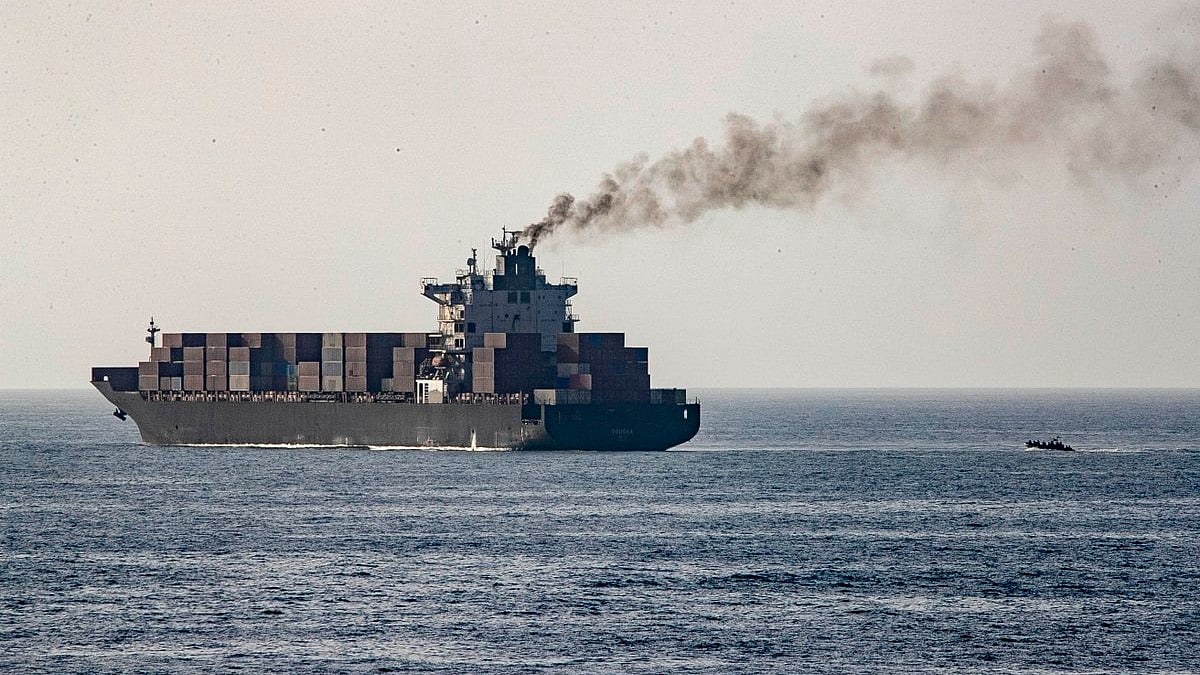
Iranian container ship Touska | X handle of @CENTCOM
Whatever happens on the seas will ultimately determine the course of peace on land. Amid reports that US Vice President JD Vance is indeed travelling to Islamabad for a high-stakes second round of talks with Iran—despite rhetoric-fuelled uncertainties and a near-cancellation—the world can only wait, watch and wonder. The clock is ticking toward the expiration of the April 8 ceasefire and the window for the sanity of dialogue to prevail over the insanity of total war is closing fast.
The Middle East has entered a perilous new phase. Following the joint US-Israeli strikes on February 28, the regional order has fractured, culminating in a restrictive naval blockade. The situation reached a boiling point this week when the US Navy used disabling fire to seize the Touska, an Iranian-flagged vessel en route from China. As Washington maintains its blockade and Tehran vows retaliation for what it labels 'armed piracy,' the eyes of the world turn to Islamabad, where China’s role as a mediator may be the final bulkhead against a global economic collapse.
Who are the primary actors and what are their motivations?
The current crisis centres on the United States and Iran, but China has become the indispensable third party. The US military, led by Central Command (CENTCOM), is enforcing a strict blockade to choke off Iranian ports, with General Dan Caine asserting that the military will "actively pursue" any vessel providing material support to Iran. This aggressive posture has placed China in a difficult position.
As the world’s largest oil importer, China views the Strait of Hormuz as a vital international waterway that must remain open to serve the "common interests of the international community," according to Foreign Ministry spokesperson Guo Jiakun. For Beijing, the motivation is twofold -- protecting its massive energy investments and asserting itself as a responsible global leader that can resolve conflicts where Western diplomacy has failed.
Why China’s four-point proposal" is a new focal point for peace?
On April 15, 2026, President Xi Jinping introduced a strategic framework during a high-stakes meeting with Abu Dhabi’s Crown Prince, Sheikh Khaled bin Mohamed bin Zayed Al Nahyan. This four-point proposal is China’s blueprint for de-escalation. It calls for staying committed to peaceful coexistence, respecting national sovereignty, upholding international rule of law and balancing development with security.
By emphasising the UN Charter and the "authority of international rule of law," Xi is offering an alternative to the US-led military enforcement. This proposal is designed to give Gulf states a diplomatic exit ramp, encouraging them to build a "sustainable security architecture" that does not rely solely on American military presence.
Where the conflict is currently manifesting on the high seas
The tension is most visible in the narrow waters of the Strait of Hormuz and the Arabian Sea. The US Navy destroyer Spruance recently disabled the engine room of the Iranian ship Touska with its Mk 45 deck gun after a six-hour standoff. This event marks a significant escalation because the ship was reportedly carrying cargo from China, directly involving Beijing’s commercial interests.
China has officially condemned this "forced interception," urging all parties to create the "necessary conditions" for normal transit to resume. The proximity of these military actions to the world's most critical oil transit point has created a "sensitive and complicated" environment where a single miscalculation could lead to a broader regional war.
How China has responded so far
The pivot toward active Chinese intervention began immediately after the February strikes but accelerated following the March 31 joint initiative between China and Pakistan. Since then, Foreign Minister Wang Yi has conducted a flurry of phone diplomacy with leaders in Iran, Israel and Russia.
Simultaneously, Zhai Jun, China’s special envoy, has been dispatched to the region to mediate directly between the Gulf states. China is working on a timeline to secure a ceasefire before the global energy market suffers permanent damage. By linking Chinese modernisation opportunities to regional security, Beijing is telling Gulf partners that their economic future depends on the de-escalation efforts currently being spearheaded by China.
How will China ensure that future talks do not derail?
China’s strategy to save the talks involves leveraging its "comprehensive strategic partnership" with both the UAE and Iran to form a unified regional front. During his meeting with the Crown Prince, Xi emphasised that Gulf countries are "neighbours that cannot move away," suggesting that a regional solution is more viable than an externally imposed blockade.
China is using its seat at the UN and its influence within the BRICS bloc to counter US unilateralism. By positioning the Touska seizure as a violation of international maritime law, Beijing is gathering international consensus to pressure the US into a diplomatic retreat. The goal is to move the conflict from the deck of a destroyer back to a negotiating table in a neutral capital, with China acting as the primary guarantor of the eventual agreement.
RECENT STORIES
-
-
-
-
-