Heatwaves, Wildfires Worsening Air Quality Worldwide, WMO Warns Of Growing Health Risks
The World Meteorological Organization has warned that intensifying heatwaves and wildfires are worsening air quality worldwide. Wildfire smoke is increasing exposure to harmful particles, while heatwaves raise ground-level ozone. The report says climate change and pollution are creating a feedback loop that could further intensify warming and health risks.

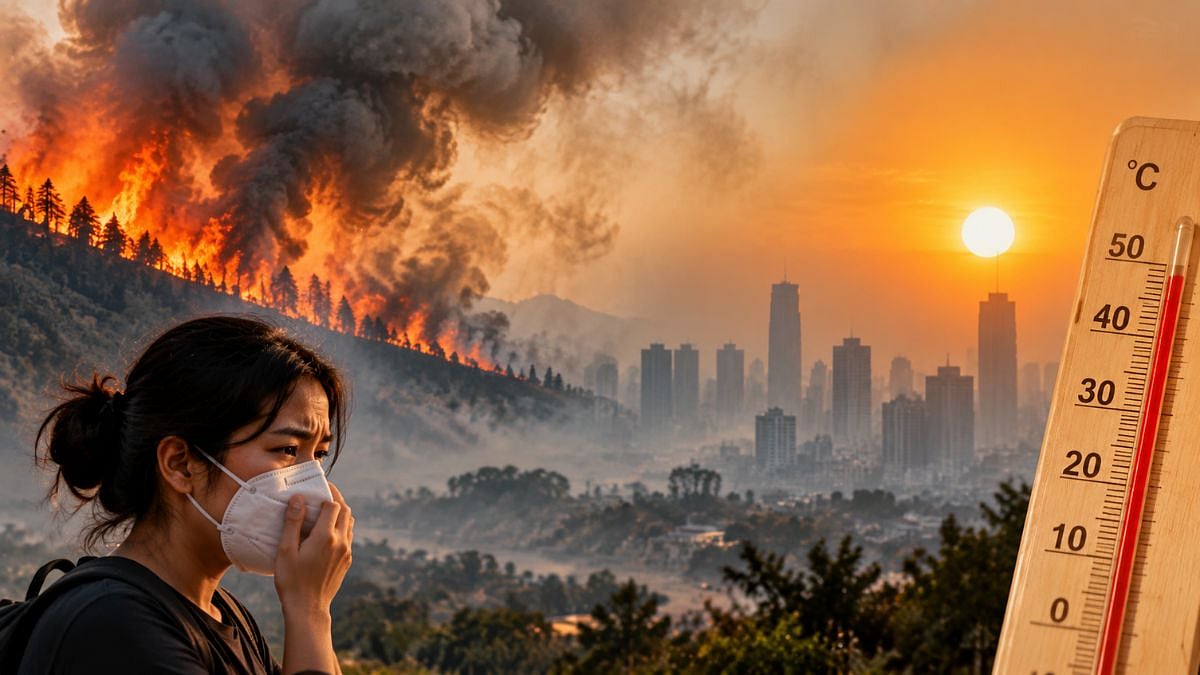
The WMO says rising wildfire smoke and heatwave-driven ozone pollution are posing an increasing threat to public health worldwide | AI Generated Representational Image
New Delhi, September 7, 2026: Rising wildfires and increasingly intense heatwaves fuelled by the climate crisis are undermining improvements in air quality worldwide and creating serious health risks, according to a new report from the World Meteorological Organization (WMO).
Regions that have succeeded in reducing pollution from vehicles and industrial activity are increasingly being exposed to wildfire smoke. At the same time, higher temperatures during severe and prolonged heatwaves are increasing concentrations of ground-level ozone.
Pollution generated by climate-related events can itself contribute to climate change, creating a feedback loop that could intensify warming and further damage air quality.
“Air quality and climate cannot be treated as separate subjects; they are deeply intertwined and have to be treated together,” said Lorenzo Labrador, a scientific officer at the WMO.
Wildfire Smoke Poses Growing Health Threat
The WMO publishes its Air Quality and Climate Bulletin annually to coincide with the UN's International Day of Clean Air. The latest report warns that increasingly severe wildfires are producing toxic smoke with significant consequences for human health.
The trend, “driven by a feedback loop between climate change and fire-conducive weather conditions”, represents an “urgent and growing public health threat”, the report said.
Wildfire smoke contains high concentrations of fine particulate matter and can cause oxidative stress in the human body.
“Systematic reviews and experimental studies consistently link wildfire smoke exposure to increased asthma attacks, hospitalisations for chronic obstructive pulmonary disease (COPD), spiked respiratory medication use, as well as impacts on mental health and birth outcomes,” the report said.
One study cited by the WMO found that a tripling of wildfires since the 1990s contributed to almost 100,000 deaths annually between 2010 and 2018.
Heatwaves Drive Ozone Pollution
The report also highlights the threat from ground-level ozone, which increases during intense and prolonged heatwaves such as those experienced across Europe this summer.
“Ozone is a very powerful oxidant,” Labrador said. “So once it gets to the lung, it essentially oxidises lung tissue and causes inflammation and circulatory problems, and eventually heart problems.”
In heavily polluted regions, about one in five deaths from chronic obstructive pulmonary disease is attributed to long-term exposure to ozone, according to the report.
The WMO also examined anomalies in concentrations of PM2.5, microscopic particles and droplets measuring less than 2.5 micrometres that remain suspended in the air. They pose a serious health threat because they can penetrate deep into the lungs and enter the bloodstream.
PM2.5 comes from fossil fuel-based industrial activity, agriculture, domestic heating and transport as well as wildfires and dust storms. The combination of particulate matter and air forms aerosols, which can influence the Earth's climate by altering the properties, lifespan and brightness of clouds.
Soot Accelerates Ice Melt
Airborne particles eventually settle on the Earth's surface, where they can further affect the climate. Black carbon, or soot, deposited on snow and ice darkens the surface, reducing its ability to reflect sunlight back into space and accelerating warming.
The report describes a cycle in which rising temperatures and changes in land use increase fires and dust emissions. These particles then settle on snow and ice, accelerating melting and reinforcing global warming.
“Increasing aridity and land-use change are expected to enhance aerosol emissions, creating a powerful climate feedback loop where a warming climate increases fires and dust emissions, which enhances deposition on snow and ice surfaces, which in turn accelerates melt, thereby ultimately reinforcing warming.”
Also Watch:
ALSO READ
Climate And Clean Air Action Linked
The WMO stressed that efforts to address climate change and air pollution should not be treated separately because reducing fossil fuel use and greenhouse gas emissions can simultaneously improve air quality.
“Which is not terribly hard because if you abate emissions of greenhouse gases, you are at the same time reducing emissions of air quality degrading substances,” Labrador said.
“And that leads me to the best solution that there is, which is a general abatement of global greenhouse gas emissions and fossil fuel burning.”
To get details on exclusive and budget-friendly property deals in Mumbai & surrounding regions, do visit: https://budgetproperties.in/
RECENT STORIES
-
-
-
-
-