Georgia To Suspend US-Sanctioned Iranian Airline Flights From September 21, Affecting Tbilisi And Batumi Routes
Georgia will suspend flights by US-sanctioned Iranian airlines from September 21, affecting direct services to Tbilisi and Batumi. The move follows US sanctions on 27 Iranian carriers and nine service providers. Iran’s ambassador said Tehran respected Georgia’s choice but reserved the right to make its own decisions.

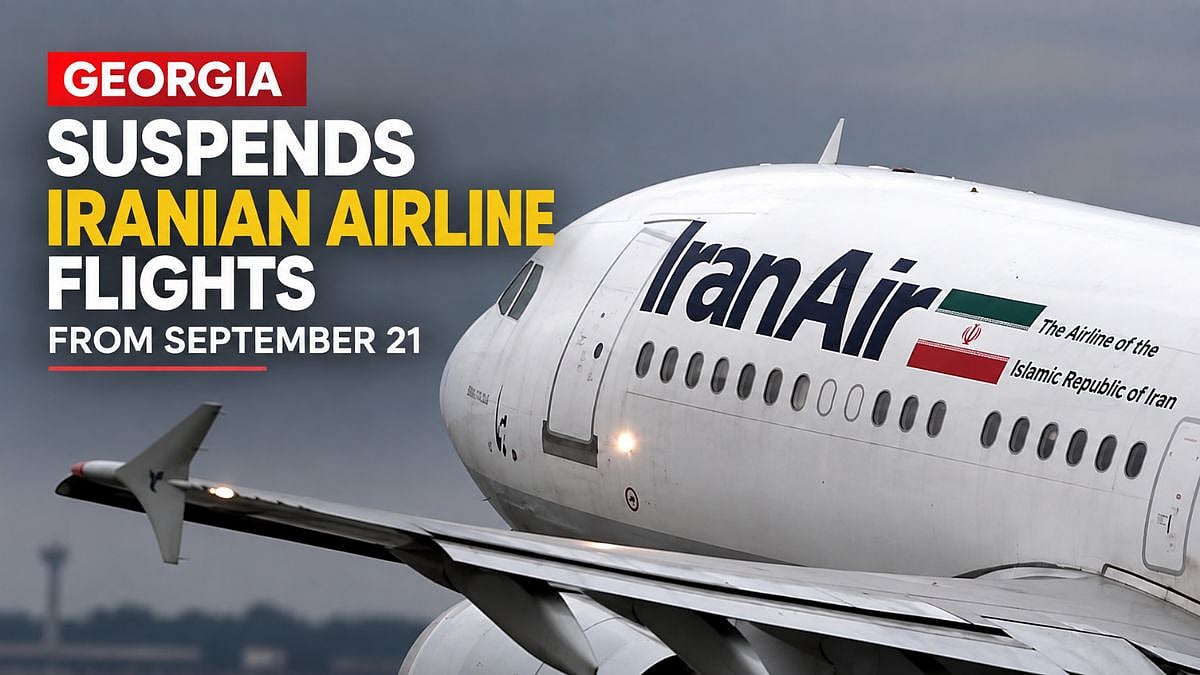
Direct Iranian air services to Tbilisi and Batumi face disruption as Georgia moves to enforce US sanctions on Iranian carriers | AI Generated Image
Tbilisi, September 16, 2026: Iran’s Ambassador to Georgia Ali Mojani said Tehran reserved the right to make its own choices after Tbilisi announced that it would comply with US sanctions on Iranian airlines, Iranian media reported on September 14.
The move will shut down one of the few remaining direct air connections between Iran and Georgia, with the route currently accounting for about 10 round trips a week to Tbilisi and Batumi. It could also affect Iranian leisure travel to Georgia, which has emerged as a visa-free, short-haul destination for Iranian travellers.
The decision comes as Tbilisi faces scrutiny in Washington over its ties with Moscow, Beijing and Tehran, including the handling of Russian crude at the Kulevi terminal. Compliance with the airline sanctions gives the Georgian government an opportunity to demonstrate adherence to US measures at a comparatively limited cost.
Iran Signals Right To Choose
Mojani said Iran respected Georgia’s decision as the choice of an independent country. However, he noted that respecting the choices of others did not mean disregarding one’s own.
He said Iranian travellers consider security, cost, convenience and mutual respect when deciding where to travel.
Mojani also said Iranian tour operators had approached the embassy seeking clarity over the future of travel to Georgia.
Prime Minister Irakli Kobakhidze, meanwhile, defended his government’s adherence to international sanctions.
Georgia Backs Sanctions Regime
Georgia’s Civil Aviation Agency said it would act in full compliance with the sanctions regime. The agency said it had used US sanctions lists as a monitoring tool for years and had previously restricted several airlines under the same mechanism.
The agency did not specify when the restrictions would take effect, while its press office declined to comment when approached.
The US Treasury announced the designations on September 8 under what it calls Operation Economic Outcast. The sanctions cover 27 Iranian carriers and nine service providers, with Washington citing support for an aviation sector allegedly used to transport weapons, personnel and illicit cargo.
Treasury Secretary Scott Bessent warned companies dealing with the sanctioned airlines that they risked losing access to the global financial system.
Iranian Carriers Continued Flights
Sanctioned airlines continued operating in the days following the designations. A Sepehran Airlines flight from Tehran landed in Tbilisi on September 9, while further services by Qeshm Air and Varesh were scheduled for the same day.
Six Iranian airlines operate flights to Tbilisi and Batumi.
Also Watch:
ALSO READ
Iranian Tourist Arrivals Already Down
The restrictions come as Iranian tourist arrivals in Georgia have already declined sharply.
About 29,300 Iranian visitors arrived in Georgia during the first half of 2026, a 49 per cent fall year on year. Revenue from Iranian visitors dropped 65 per cent to $19.9 million during the period.
To get details on exclusive and budget-friendly property deals in Mumbai & surrounding regions, do visit: https://budgetproperties.in/
RECENT STORIES
-
-
-
-
-