From Bandar Abbas to Salalah: Why US-Israel And Iran War Is Leaving No Major Port Safe For Business In Middle East
Strategic strikes on global maritime hubs from Shuwaikh to Jebel Ali have systematically dismantled the regional energy supply chain since late February. This infrastructure warfare forces nations to invoke force majeure as terminal degradation effectively paralyses the world's most critical waterways

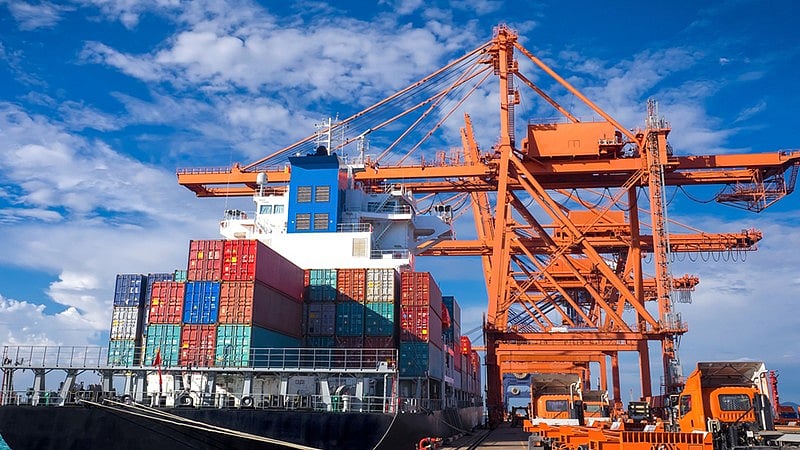
Shuwaikh port is the main commercial port in the State of Kuwait | Image courtesy Al-Rashed Group
The escalating conflict involving the United States, Israel and Iran has increasingly targeted commercial infrastructure, leaving businesses in the energy and maritime sectors most vulnerable to the fallout.
Kuwait: Mubarak Al Kabeer and Shuwaikh ports targeted
Kuwait suffered two strikes on its Mubarak Al Kabeer and Shuwaikh ports on Friday with Iranian projectiles hitting the facilities.
According to Kuwait’s Ministry of Public Works, the infrastructure in the Mubarak Al Kabeer port on its Bubiyan Island was attacked by hostile drones and cruise missiles which resulted in material damages, but no casualties.
Earlier in the day, a significant escalation occurred when Kuwait’s primary commercial gateway, Shuwaikh Port, sustained damage from a drone strike at dawn.
Following the strike, emergency response protocols were immediately activated in coordination with national security agencies. In an official statement shared on X, the Kuwait Ports Authority noted that initial assessments indicate the physical impact was localised. While the damage to the port's structural assets is being evaluated, officials are closely monitoring all maritime operations to ensure that the flow of goods remains steady despite the heightened security risks.
As one of Kuwait’s most critical maritime hubs, Shuwaikh port plays a central role in handling the nation’s commercial cargo and sustaining domestic supply chains. The targeting of such a vital economic artery highlights the growing precariousness of regional trade routes. For industries reliant on the stability of Gulf shipping lanes, incidents like these shows a shift where geopolitical volatility translates directly into physical threats against logistics and energy infrastructure.
Beyond the confirmed strikes on Mubarak Al Kabeer and Shuwaikh ports in Kuwait, regional hubs across the Arabian Peninsula are grappling with unprecedented operational strain and physical damage as regional tensions continue to rise.
UAE: Sustained pressure on logistics hubs
The United Arab Emirates has absorbed a heavy volume of aerial strikes, with the Jebel Ali Port and the Ruwais Complex facing repeated disruptions that threaten their status as global trade anchors. Jebel Ali, one of the world's busiest container hubs, reported significant port-of-loading delays and a surge in transshipment rollovers due to fires caused by intercepted debris and direct drone impacts.
Furthermore, the ADNOC Ruwais refinery and its associated port facilities were forced to halt export operations earlier in March following a targeted strike that severely impacted refinery output and terminal safety. Despite these challenges, Emirati authorities have maintained a high security posture, utilising bonded land bridges to move critical cargo from relatively sheltered eastern ports like Fujairah and Khor Fakkan.
Similarly, Khalifa Port has dealt with transshipment delays and late departures as vessels are forced to navigate around high-risk zones.
Oman and the workaround crisis
Oman’s maritime scenario is currently split between operational resilience and active kinetic threats as it attempts to serve as the region's primary safety valve. While the ports of Salalah and Sohar have emerged as critical workaround gateways for cargo bypassing the volatile Strait of Hormuz, they are now operating under extreme technical and security strain.
Salalah has seen a nearly 200 per cent spike in transshipment delays as it struggles to absorb diverted volumes from the upper Gulf while maintaining its own defence perimeter. Conversely, Duqm Port faced a total suspension of operations earlier in the month following a sophisticated drone strike on specialised oil storage tanks. The reliance on Omani ports as a fallback is currently limited by these capacity constraints and the constant threat of long-range UAV incursions that disregard national boundaries.
Bahrain: Mina Salman and Khalifa Bin Salman ports
Bahrain has been directly impacted by the shadow war, particularly at Mina Salman Port, where an Iranian missile strike killed a shipyard worker and set the MT Stena Imperative, an American-managed oil tanker, on fire.
The strike caused substantial infrastructure damage and led to the activation of emergency response measures across the capital's maritime district. Additionally, Khalifa Bin Salman Port saw a suspension of operations by major carriers like Maersk following a wave of drone and missile interceptions, as authorities work to secure maritime gateways against persistent threats from enemy drones.
Iran: Terminal degradation and coastal collapse
The most severe and concentrated destruction has occurred at Iranian maritime facilities, particularly at Bandar Abbas and the critical energy hub of Kharg Island. Since the start of Operation Epic Fury on February 28, coalition strikes have reportedly neutralised a significant portion of the Iranian Navy, hitting high-value assets while they were still moored at their piers.
Bandar Abbas, the operational heart of the IRGC Navy, has been described by military analysts as "severely degraded," with major command networks, dry docks and naval infrastructure dismantled by precision strikes. Allied forces have also systematically targeted the energy export terminals at Assaluyeh and Bushehr, aiming to cripple the regime's war-sustaining economic capacity and terminate its ability to project power into the surrounding waterways.
Universal vulnerability of maritime infrastructure
The current theatre of conflict has fundamentally altered the security calculus for global trade, demonstrating that port infrastructure remains a high priority target regardless of a nation's direct involvement in hostilities.
The weaponisation of maritime bottlenecks has turned every harbour into a potential front line, where the destruction of a single gantry crane or storage silo can paralyse the logistics of an entire continent.
Even ports positioned far from active frontlines now face the persistent threat of overflow strikes, where intercepted debris or miscalculated trajectories cause significant collateral damage to civilian docks and storage terminals.
Economic fallout of port insecurity
Beyond the immediate physical destruction, the systemic risk to maritime assets has created a chokehold economy that penalises global trade through sheer uncertainty.
When a port is targeted, the impact is rarely confined to the host country; instead, it disrupts the intricate web of transshipment schedules and just-in-time delivery models that the modern world economy relies upon.
The resulting dead zones in shipping lanes and the skyrocketing costs of war-risk insurance have effectively turned every major maritime gateway into a potential flashpoint.
This systemic fragility highlights the reality that in a theatre of total infrastructure disruption, no harbour is truly safe from the reach of modern conflict, as the economic ripples of a hit in the Gulf are felt instantly in markets thousands of miles away.
Published on: Friday, March 27, 2026, 03:30 PM ISTRECENT STORIES
-
-
-
-
-